Full article about Pereira: Where Rice Fields Steam at Dawn
Mondego floodplain village slow-cooks IGP rice with Marinhoa beef under stork-patrolled skies.
Hide article Read full article
A Slow Smoke Rises from the Wet Fields
Dawn over Pereira smells of damp earth and yesterday’s wood smoke. The rice fields, flooded the night before, reflect the sky like shards of broken mirror; inside the low white houses, pans begin to murmur as the grain swells, absorbing river water and yesterday’s bone stock. No one is in a hurry. The Mondego’s floodplain turns on an older clock—seed, inundation, harvest—than the one that governs Coimbra twenty minutes away.
Rice and Beef with Papers
The parish lives by two protected names. The first is Arroz Carolino do Baixo Mondego IGP, a long, whole-grain rice bred for slow casseroles: duck and sausage, eel and mint, the Sunday arroz de cabidela finished with chicken blood. Its texture comes from the river itself—mineral-rich, sluggish, and channelled into a chequer-board of paddy fields that tint the landscape an almost violent green in May.
The second passport is Carne Marinhoa DOP, beef from the cream-coloured Marinhoa cattle you will see grazing the salt meadows towards Cantanhede. Extensive grazing on wild clover and ryegrass gives the meat short fibres and a gentle marbling; locals braise it overnight in clay with tomato, red wine and a branch of bay from the garden. Come lunchtime, the two ingredients meet in the same dish—rice loosened with meat gravy, beef falling into fibres, the whole strewn with parsley chopped seconds before serving.
Between Fields and Silence
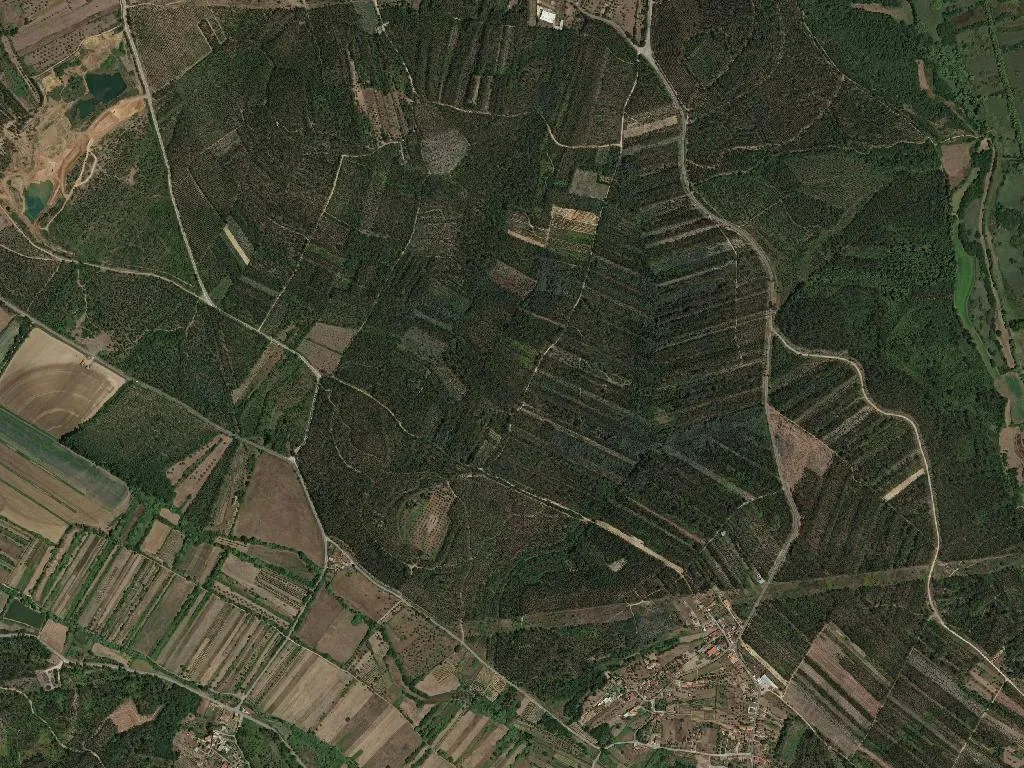
Pereira sits on a low ridge only 52 m above sea level, yet that is enough to survey the horizontal world that surrounds it. Some 3,500 people are spread across twelve square kilometres of allotments, rice checks and lanes where storks land on telegraph poles. Children—679 according to the last census—pour out of the primary school at 4 p.m., their voices carrying over the allotments; 621 pensioners follow the shade, moving the bench as the sun swings round.
There is no drama in the topography, only a slow shift of colour: emerald seedlings in April, straw-gold stubble in September, the glint of irrigation water every month of the year. Silence here is the absence of traffic, broken by a combine reversing or the sudden clap-clap of a heron lifting off a drainage ditch.
Everyday, Unfiltered
The parish’s single guest flat and one three-bedroom villa are booked mostly by visiting agronomists or grandchildren returning for the harvest. Pereira does not need outsiders to justify its rhythms: tractors start at seven, the parish priest intones the 8 a.m. mass, the bakery sells warm pão de leite until it runs out.
If you arrive mid-morning someone may hand you a tiny glass of bica and point you towards the raised footpath that runs between paddies; by late afternoon you will be offered a bowl of beef rice and told firmly to sit down. The place offers itself without commentary—a working chapter in the Baixo Mondego’s 2,000-year-old manual on how to feed both soil and people.
Evening brings the same scent that woke the village: rice simmering, a trace of wood smoke, meat caramelising in its own fat. It is memory and supper in one, served at a table where there is always room for one more chair.