Full article about Santo Varão’s rice plains echo with tractor hymns
Whitewashed church, gold paddies and Cantares ao Menino ring above Mondego’s slow mirror
Hide article Read full article
The sound arrives before the image: the metallic clatter of the farm gate, the distant drone of a John Deere, a heron lifting off the paddies at seven sharp. Santo Varão lies 2.7 m above sea level—barely a ripple above the Mondego—where the light is white, shadowless, and ricochets between the flooded plots and the limewashed church that rises above the eucalypts.
The grammar of the floodplain
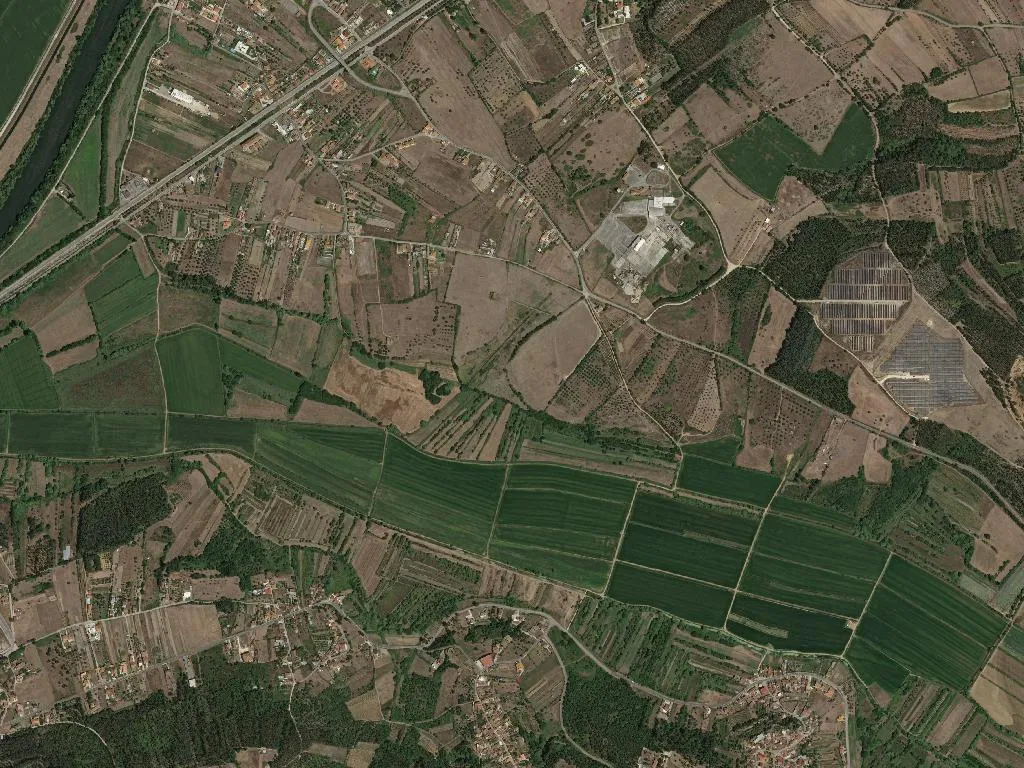
Time slips back to the Middle Ages, when these alluvial fields already fed the region with wheat and pasture. The name—Santo Varão—honours a patron saint no one can now name. Unlike neighbouring settlements, the village has never been swamped; a lattice of sluices and levees has tamed the river for centuries. Its 1,916 souls are scattered across 1,200 ha of gardens and orchards, their days still set by tractor engines and rice seedlings.
Carols that fill white walls
The mother church is modest, yet every January it overflows for the Cantares ao Menino, a cycle of Nativity songs kept alive for forty years by the Rancho Folclórico Centro Beira Mondego. Guest groups arrive with mandolins and accordions; the sound bounces off whitewashed stone. Rehearsals are Tuesday nights in the parish hall. They’ve sung in France and Switzerland—this is living culture, not a tourist turn.
Rice that grows with wet knees
Between September and October the paddies flare from green to gold. The Arroz Carolino do Baixo Mondego—protected by its own IG—grows ankle-deep in water, irrigated to mimic the river’s natural flood. At Tasca do Zezé or Café Central the order is duck rice topped with Carne Marinhoa DOP, beef the colour of burgundy that tastes of meadow herbs. Pair it with a razor-sharp Bairrada white; the acidity scythes through the fat.
Tracks between levees and ponds
There are no way-marked trails, but the dirt lanes that dice through the paddies make perfect sense. Follow the path beside the Ribeiro de Taveiro weir and you’ll spot herons and mallards on the seasonal ponds. During October’s harvest, ask politely and a driver will let you ride the trailer. The geometry is hypnotic: rectangles of green and brown that shift with the sun, water channels, rows of poplars.
At dusk, when the low sun ignites the puddles and the church bell rings the Ave Maria, Santo Varão becomes exactly what it is: a place of patient labour, repeated gestures, voices raised because tradition is not kept behind glass—it is lived in chorus, hands in soil, feet in water.