Full article about Alvoco das Várzeas: Where River Song Echoes Through Chestnut
Granite bridge, Blue-Flag river beach and Jesuit chestnuts in a Coimbra mountain hollow
Hide article Read full article
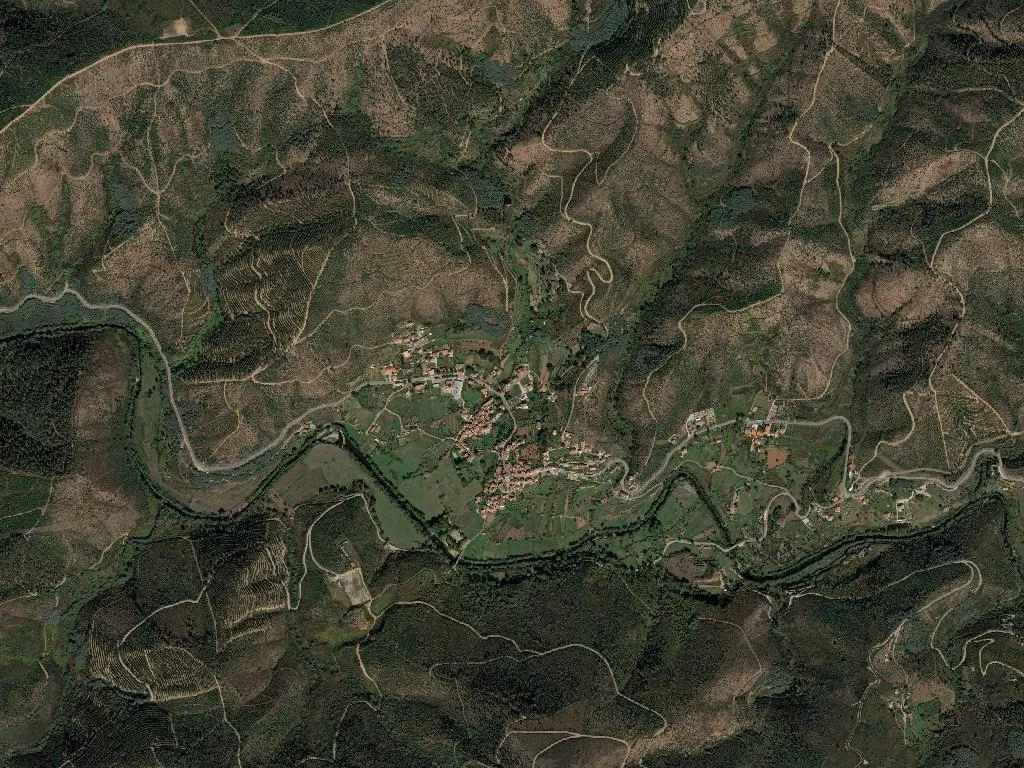
The first thing you hear is water: a cold, constant hush over slate-grey stone, audible long before the Alvoco comes into view. It loops round watermeadows and chestnut terraces, then slips beneath a single granite arch thrown across in the 1500s. The bridge—listed since 1982—is no museum piece; carts still rattle over its uneven deck, and moss still colonises the joints where 18th-century traders once blocked traffic with linen stalls and grain sacks. Stand in the middle and the chill rises through your soles while footfall and river murmur braid into one echo.
Flood-plain and mountain wall
“Alvoco” signals open ground; “das Várzeas” flags the low, damp soils that winter floods from the Xarrama turn briefly into inland marshes. At 283 m the valley unfurls between Jesuit-planted chestnut groves and centenarian olives, the Serra da Estrela ridges closing the horizon like a saw. Way-marked trails—part of the Geopark since 2015—climb the old mule track to Chão Sobral’s communal granary or hop east to Aldeia das Dez, passing stone-walled terraces abandoned after the 1974 revolution. You can still read “1973 – Ano do Trigo” painted on a crumbling schist shed; only wind in the chestnuts that grandparents planted for mushroom spawn disturbs the hush.
Blue Flag, cold water
Inland river beaches rarely earn Blue Flags; this one has kept its since 2015. Susana’s bar (open since 1998, €1.20 for a draught lager, €3.50 for a Serra cheese bap) and a lifeguard post arrive with June and leave with September. The water refuses to climb above 18 °C, forcing slow, gasping entries under the plane trees the council planted in 1993 and the willows that survived the 2001 floods. Come July the riverside morphs into the RDSGames obstacle course and trail-running festival; by October it reverts to the chapel bell of Nossa Senhora das Necessidades drifting down from Chão Sobral, paid for in 1948 with donations from Brazilian emigrants and still marking time for the parish’s 314 souls—169 of them over 65.
Lamb, cheese and Dão
The valley’s menu is dictated by altitude and granite. Roast Serra da Estrela lamb is booked ahead for weekend tables at O Brasão, its whey-fed meat scented with bay and vine-pruning smoke. Casimiro’s village grocery sells buttery DOP Serra cheese at €6 a kilo when the season allows; Dona Lurdes strains requeijão on Thursdays; orchards on the road to Coja yield perfumed Beira Alta apples. Chanfana—goat stewed in red Dão until the clay pot turns ebony—has simmered at O Brasão since 1987, while Sunday’s kid crackles at Vale do Rossim and the Carvalho family still smoke chouriço in a schist lean-to after returning from Angola in 1975. Dense maize bread from Avô’s wood oven and wines from the limestone escarpments around Santar—mineral Quinta da Pellada whites at €8, velvet Douro reds—complete the plate.
The bridge hasn’t shifted since the day it was built; the river, measured by Coimbra University in 2019, lowers its bed by three centimetres a century. At 19:30 on a July evening the granite catches the slant light like burnished pewter, cold rising from the water, silence pooling in the valley. Romans, Moons, Napoleon’s stragglers in 1810—all crossed and disappeared. The stone and the current remain, indifferent, constant, waiting for whoever comes next.