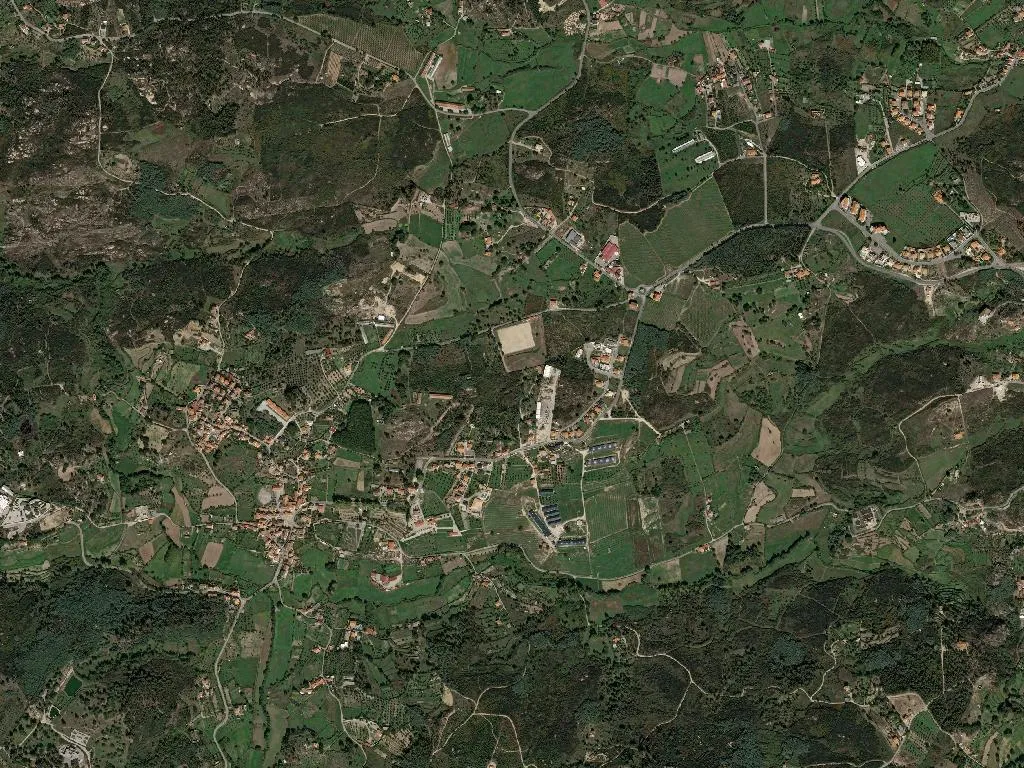
Full article about Bobadela: Roman granite & olive-scented air
Walk Bobadela’s Roman arch, plunge from the granite bridge, taste Dão wine where Splendidissima Civitas once stood.
Hide article Read full article
Granite that smells of toast
The afternoon sun strikes the stone and the granite gives off the scent of newly-toasted bread. Step beneath the Roman arch and the temperature drops five degrees, even in August – a granite mouth still breathing after two millennia. On the far side, a corkscrewed olive tree wakes from its own long sleep; green fruit no larger than a peppercorn oozes sticky gum that children pick off in long strings while they play hide-and-seek among toppled blocks of the forum. Bobadela, 426 m up in the Beira Alta, is not a set of ruins; it is the smell of scorched earth after pruning, the dry click of heels on mosaics, the tannic snap of an olive leaf crushed between fingernails.
Once 'Splendidissima'
The Romans called the place Splendidissima Civitas – the Most Brilliant Town – and the boast still stands. A first-century inscription now sheltered in the interpretation centre once lay face-up in the church aisle, doing duty as a step into the choir. Elderly parishioners knew the slab only as "Dona Amélia’s stone", the spot where she perched to nurse her baby while waiting for her husband to walk back from the weekly market in Oliveira do Hospital. Only in 1878 did an antiquarian notice the Latin. Inside the church the air is beeswax and frankincense, the same perfume that drifted through seven-sail masses when the priest prayed for rain and for sons who had emigrated to Paris.
The single granite arch of the Roman bridge is the village swimming school: children cannon-ball from the parapet into water that smells of wet moss and is cold even in late July. A grandfather in knitted braces stands guard, towel over shoulder, warning of the hidden potholes that swallow legs. The parish church keeps its side door ajar; inside, the sacristy floorboards groan like the knees of the old men who once knelt on them.
Dão in the glass, Serra on the plate
Behind the village the Touriga Nacional vines face south-east, the thin skins splitting between the teeth to ink lips with blackberry. Chanfana – goat slow-poached overnight in an wood-fired clay pot with an entire bottle of red – is not a dish for the cautious; the aroma clings to clothes for days. When the Serra da Estrela cheese is perfectly ripe it slumps off the spoon like clotted cream, tasting of warm milk and the pastures where the bordalesa sheep graze. Breakfast in the kitchen meant dark rye, mountain honey and requeijão, while wood smoke crackled and the radio gave yesterday’s football scores from Porto.
Between amphitheatre and stream
Locals cut straight from the museum to the Roman amphitheatre along a path that skirts fig-studded walls and an irrigation channel that still carries water in August. Rosemary and rockrose release oils so pungent you can feel them at the back of the throat. At dusk the crickets strike up and the light turns molten – the same gold that once sent me to fetch the chickens while my grandmother stirred the pot. In the Rio de Cavalos pools we learnt to tickle lampreys, a technique handed down like the warning to avoid the "glass eyes" – smooth, deceptive stones – that guard the riverbed.
Quinta do Encontro is part winery, part village hall: cousins marry there, grandparents are buried in the adjoining cemetery. The tasting room looks over vines my uncle planted in 1994; he swears the granite soil gives the wine its spine, but insists conversation does the rest. The dirt-track cycle route to Lagares lifts a fine dust that powders the lips and tastes of mica. En route you pass mills whose walls still ooze the scent of fire-roasted chestnut, though their wheels seized long ago.
Granite has memory
Census returns list 704 inhabitants, yet everyone knows the true figure doubles in August when the France and Lisbon contingents roar home on new motorbikes, filling shuttered houses with petrol fumes and late-night laughter. Ninety residents are under fourteen and still use the amphitheatre steps as a grandstand for games of tag; 180 are over sixty-five and hold court beneath the olive, arguing over the price of milk and the latest austerity package. Houses painted the traditional azul-cerúleo still carry handprints in the whitewash – prints that smell of lime and sweat even when the fingers themselves have long been still. Walk beneath the Roman arch with the sun on your back and you feel the weight not just of stone, but of every departure, every return, every christening and funeral that the village has witnessed since the Legions first stamped their sandals on these rocks.