Full article about Lourosa: Cork Capital of Portugal’s Granite Hills
Morning mallets echo through cork yards, olive terraces and dry-jointed chapels above the Mondego.
Hide article Read full article
The first thing you hear is the percussion of mallets on cork—sharp, syncopated notes that ricochet between granite warehouses long before you see a single worker. At 372 m above sea-level the dawn mist still pockets the olive terraces when Lourosa’s cork yards stir to life. The air carries a scent impossible to bottle: bitter-green bark, wood-smoke from curing sheds and the metallic tang of freshly stripped bark that clings to the back of the throat. No marketing copy conferred the village’s unofficial title—“Cork Capital”—it was earned, season by season, by families who still prise, boil, grade and slice bark as their grandparents did.
Stone, Lime and Belief
The parish church squats at the village’s heart, a no-nonsense block of Beira granite trimmed with lime-wash the colour of fresh curd. National-monument status hasn’t softened it: walls are shoulder-thick, windows arrow-slit, the roofline dictated by the same wind that scours the Mondego valley. Inside, dusk is perpetual; heels click on flagstones hollowed by centuries of Sunday processions. A ten-minute walk south, the lone chapel of São Sebastião rises from a sea of olive roots, its masonry so dry-jointed it looks geologically extruded rather than built. Both buildings make their point without ornament: faith here is a structural material, as essential and unshowy as the schist walls holding back the terraces.
Between Streams and Cork Oak
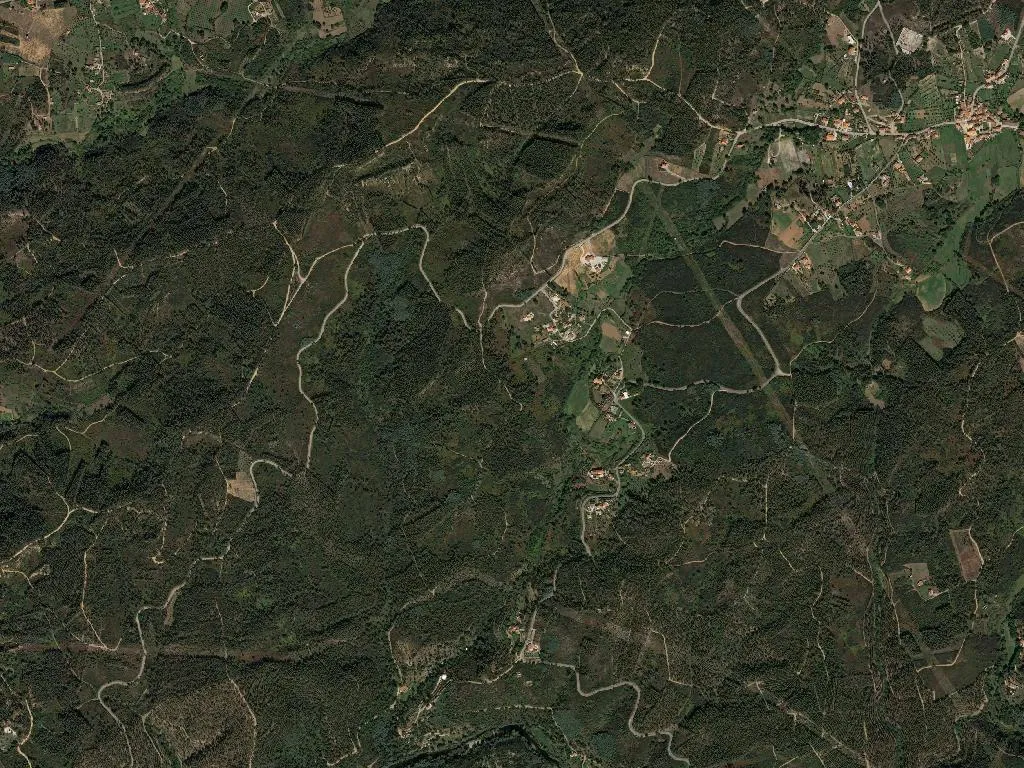
Signed footpaths fan out from the yards, dropping into narrow ribeiras where water slips over moss-cushioned schist, then climb through open montado—cork oak savannah patched with wild broom. Spring pastures glow almost violently green; by August the same slopes have bleached to biscuit and the oaks stand flayed, their trunks the raw umber of fresh cork waiting to be hauled downhill. The route is stitched into the Geopark Estrela interpretative network, so every kilometre comes annotated: Ordovician quartzites, glaciated tors, the strike of the Seia fault. Even so, the landscape withholds drama, preferring a low murmur of geological time.
Tastes with Postcodes
Breakfast in Lourosa is a master-class in protected origin. Serra da Estrela DOP cheese arrives at café temperature, bulging like a Camembert and spoonable at the edges; its whey sibling, requeijão, is spread over slices of warm maize broa while the butter still steams. At lunch the same sheep contribute DOP lamb, slow-roasted in a wood-fired oven until the exterior lacquers and the fat seasons the rosemary-scented flesh. Pudding might be Beira Alta PGI apple—russet-skinned, sharp enough to cut through smoked chouriço—washed down with a granitic Dão red whose tannins taste of the very stone the vines cling to. Chanfana (goat braised in red wine and juniper) and roast kid complete a culinary syllabus that needs no cheffy footnotes: the raw materials already carry PhDs in terroir.
Living the Quiet
The 2021 census counted 559 souls; 165 of them are over 65, only 55 under 14. Empty houses outnumber voices, yet Lourosa refuses the usual rural swan-song narrative. Nine guest units—scrupulously restored stone cottages, one cork-insulated loft—let visitors inhabit the silence long enough to recalibrate. You can walk the entire parish between one coffee and the next, pausing to read the temperature in the colour of the oaks, to trace 18th-century initials carved on a chapel door, to taste rain in the wind before the first drops fall. When the yards close at dusk and the last mallet is hung up, the village smell lingers: tannic, flinty, stubbornly alive—an olfactory signature no airport gift-shop will ever replicate.