Full article about Meruge: Granite, Smoke & Dão Wine at 385 m
Schist-roofed terraces, centenarian vines and oak-wood chimneys scent this Estrela Geopark hamlet.
Hide article Read full article
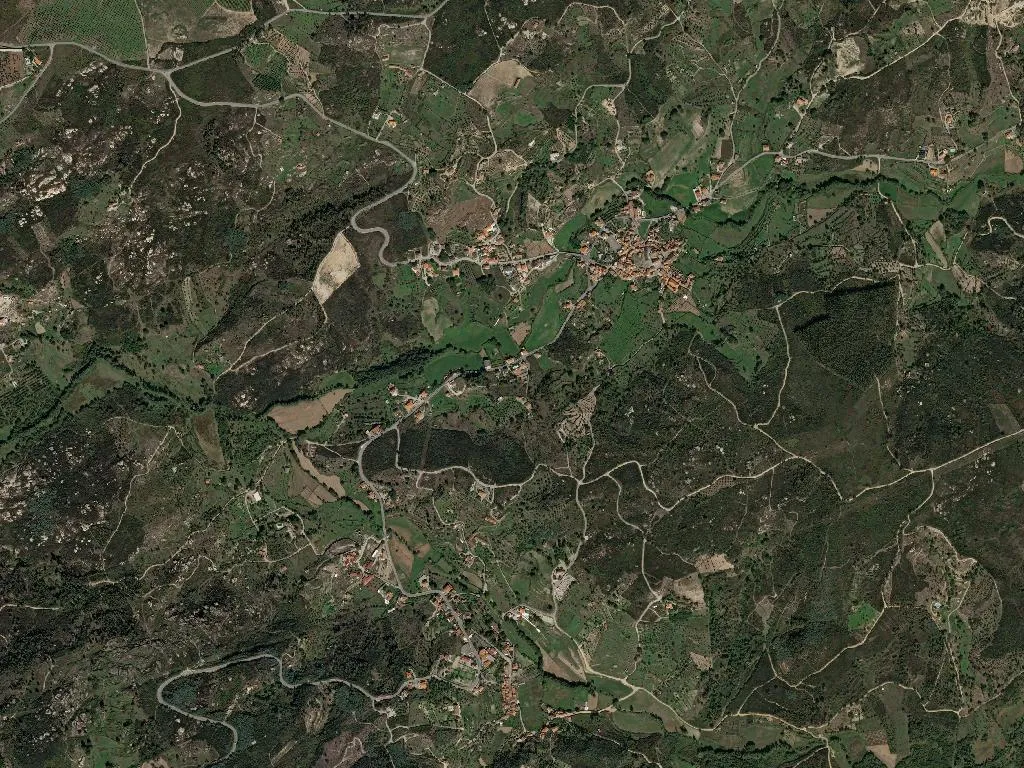
Smoke threads the winter air above Meruge. At 385 metres, the hamlet’s stone chimneys exhale into a pewter sky, each plume rising like a signature before unravelling over the Dão valley. Terraces of schist-roofed houses grip the slope with ancestral stubbornness; below them, vineyard rows score the hillside in strict geometry.
Meruge counts 490 souls across seven square kilometres—roughly one inhabitant for every rugby pitch. Two-thirds are past retirement age; barely one in ten is under fifteen. The arithmetic tells the same story heard across northern Portugal: the young leave, the old remain, memory thickens.
Taste of place
The parish has lain inside the Dão demarcated region since 1908, and the calendar still bends to the vine. Harvest runs 15 September–15 October, when leaves flare copper and ochre. Sun-warmed granite between the rows stores daytime heat, releasing it after dusk—nature’s own diurnal thermostat that gifts the wines their poised acidity.
Yet Meruge’s larder stretches beyond the cask. Absorbed into the Estrela Geopark in 2020, the village sits within grazing distance of three mountain-born DOP staples: buttery Serra da Estrela ewe’s-milk cheese, cloud-light fresh curd requeijão, and pale roasts of Estrela lamb. Add Beira Alta IGP apples, fattened by 700–800 mm of Atlantic rain, and you have a miniature terroir in one hillside.
Stone, vine, hearth
Three granite cottages are licensed for guests—numbers low enough that the postman still knows every surname. Walls 80–100 cm thick keep interiors at a steady 18 °C in August and a tolerable 5 °C in January; you wake to oak-wood smoke and the single toll of São Tiago church, consecrated 1758. Narrow lanes climb and drop like an ECG, hemmed by dry-stone walls that have shifted boundaries little since the 1514 royal charter. The EN230 links Meruge to Oliveira do Hospital eight kilometres away—close enough for groceries, distant enough for silence.
Afternoon breeze carries the metallic click of a gate and the resinous scent of leaf-pruned vines. Forty kilometres east, the Serra da Estrela draws a blue chalk line across the horizon. Life is measured in vintage years, in cheeses turned for sixty days on granite shelves, in lamb that drips onto embers inside the 1952 communal oven. Meruge offers no spectacle—only the slower pulse of somewhere that never learned to hurry.