Full article about Travanca de Lagos: granite, slate and woodsmoke
Stone-press hamlet in the Serra da Estrela foothills where chestnut beams shoulder winter cold
Hide article Read full article
A thread of smoke, a line of slate
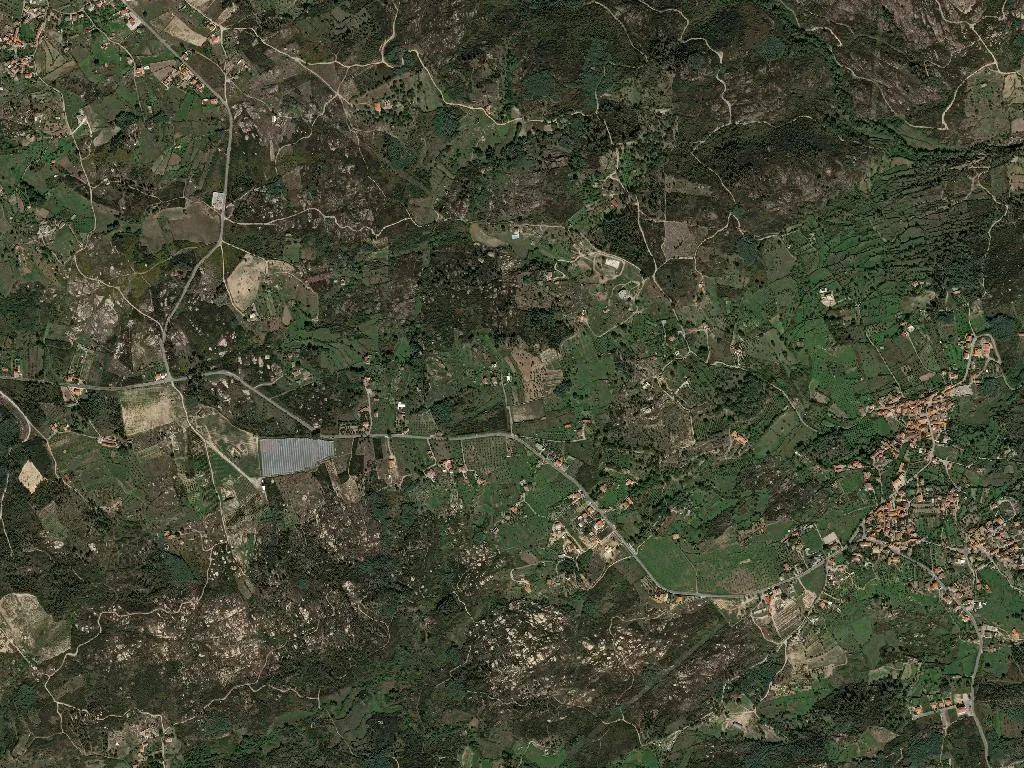
A single column of woodsmoke rises dead-straight from the chimney, scoring the pale winter sky. Below it, schist walls parcel the hillsides into terraces once planted with maize and potatoes, now surrendering quietly to oak scrub. At 380 m above sea-level Travanca de Lagos never quite surrenders to August heat; nights arrive early, heralded by drifts of cold air that slide off the Serra da Estrela and settle in the valley bottoms. The parish covers 1,582 hectares of this high granite backbone, a topography UNESCO recognised in 2020 when it incorporated the entire area into the Estrela Geopark.
What the place-names remember
Lagos has nothing to do with lakes. It signals lagar—the stone olive and wine presses that underpinned the local economy for centuries. Travanca carries the Latin trabs, a beam, and timber is still the default architecture: dark-wood balconies, north-facing doors thick enough to blunt the winter wind, chestnut rafters carrying four-pitched roofs. Outcrops of granite crown the ridges while slate defines the terraces, two lithic diaries of pressure and deep time.
Human presence is just as stratified. The 2021 census logged 1,124 inhabitants, only 108 of them under fifteen; 326 have passed retirement age. Density averages 71 people per km², but the map reveals a scatter of solitary farmsteads linked by footpaths and silence. Conversations outside Dona Alda’s grocery are unhurried; vegetable plots are weeded plant by plant.
One chapel, no signposts
The only listed building in the parish is the sixteenth-century Capela de São Brás, granted protected status in 1977. You reach it by a municipal road that wriggles past Cepos, then by asking Sr António who runs the village repair shop, or by following the postman’s memory. No brown heritage arrows point the way. Inside, a single nave shelters a Manueline altarpiece that survived both the 1755 earthquake and nineteenth-century “improvements”. Restraint is the local aesthetic: function before flourish, use before display.
Granite ballast, cheese buoyancy
Shopping is inseparable from conversation. Queijo Serra da Estrela DOP is sold from the front room of D. Lurdes in Outeiro: €8 a kilo when still wobbly, €12 after three months’ cave-ageing. Requeijão, the cloud-light fresh cheese, is spooned out on Sunday mornings before it has time to collapse. The same pastures supply Borrego Serra da Estrela DOP, mountain lamb slow-roasted in the wood-fired oven of O Cortiço in Lagos—book two days ahead, it is the parish’s only restaurant. Apples carry the Beira Alta PGI label; the orchards are low, frost-resistant thickets rather than industrial rows. Every transaction includes an appraisal of ewes, rainfall and the price of diesel.
Where to stay, what you hear
Nine self-catering properties—three cottages, six apartments—offer legal shelter, but no hotel, no bar crawl, no crowds. The church bell in the 1835 parish tower marks the hours; at dawn you wake to its seventh strike, then to the scrape of a bakery van door and the soft thud of yesterday’s bread being swapped for coins still warm from a dressing-gown pocket. Walk any rural track and you may meet Sr Carlos in Valverde treading jaen, alfrocheiro and tinta amarela in a granite lagar built by his father, the wine then ageing in 500-litre oak barrels under the house. The afternoon light strikes the granite threshold, stores heat, releases it long after the sun has slipped behind the ridge. A hinge creaks, Zé Manel’s dog barks twice, stops. Nothing else is promised, nothing else is required.