Full article about Vila Franca da Beira: dawn cheese & oak-smoke
Granite lanes echo sheep bells while fresh Serra curd drips in linen over wooden pails.
Hide article Read full article
Morning light slips through the warped slats of oak gates and lands in precise, bright bars across the granite threshold. Apple leaves in the kitchen gardens still carry their overnight silver, and a faint metallic jingle drifts up the lane — a shepherd coaxing his flock uphill, knowing every bend of the schist track as you know your own hallway. Vila Franca da Beira wakes without haste; wood-smoke lifts from chimneys, and the Serra’s cold, thin air waits for the sun to warm it.
Portugal’s newest civil parish
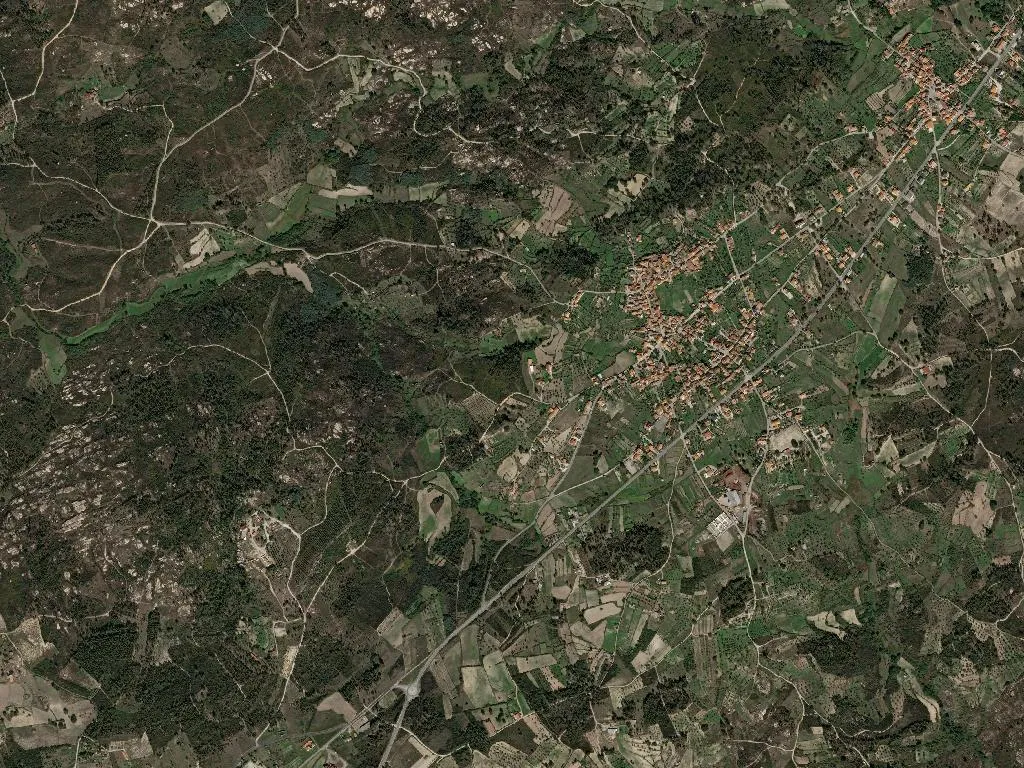
Carved from the larger municipality of Ervedal da Beira in 1985, Vila Franca is still only 39 years old on paper. The name — literally “Free Town of Beira” — nods to a medieval market privilege and to its position on the southern edge of the Beira Interior, where granite escarpments begin to relax into oak scrub and smallholdings. Just 639 people occupy a little over seven square kilometres, a population density so low that silence behaves like a second landscape. Yet the grid of lanes follows 12th-century foral rights that once funnelled wool, rye and olive oil down to Coimbra and the Atlantic.
Milk, curd and mountain lamb
Food here is inheritance, not invention. The butter-yellow wheels of Serra da Estrela DOP cheese start with milk from Bordaleira ewes that graze the water meadows before dawn; by mid-morning the curd is being ladled into linen cloths and left to drip over wooden pails. Requeijão — a loose, ricotta-like fresh cheese — is still sold warm, wrapped in waxed paper. Spring brings IGP-status Beira Alta apples, high-altitude fruit that keeps its bite and perfume long after harvest. Order borrego de leite in any farmhouse kitchen and you receive mountain-reared suckling lamb, slow-roasted in a wood-fired oven until the skin freckles and the potatoes beneath have drunk the dripping. Local Dão reds — Touriga Nacional driven by granite freshness — slice neatly through the fat of cured cheese and the sweetness of the meat.
Inside the Estrela Geopark
Vila Franca sits at 355 m on the western margin of the Estrela Geopark, a UNESCO-branded canvas of glacial valleys and 350-million-year-old schists. There are no sign-posted river beaches within the parish boundary; instead, the Alva’s tributaries thread quietly between meadows, feeding small orchards where the microclimate allows peaches to survive nights that still touch freezing in April. Walk east along the unpaved lane to Ervedal da Beira and you trace a medieval driftway: no way-marks, just the sound of water over granite and the silhouette of the range rising like a wall.
No ticket office required
Tourism has not yet been packaged here. You can wander lanes lined with Beirã granite cottages, their doorways painted the traditional ox-blood red, then stop at a smallholding where the cheesemaker will lift the muslin to show you the set of the curd. Geo-guide leaflets exist, but most visitors simply ask at the parish council for the key to the old threshing floor — from there a stony path leads to an outcrop striped by Ordovician ice. No queues, no audio guides, no closing times: just the slow rhythm of people who will pour you a glass of red before you have time to explain you were only passing through.
By late afternoon the sun drops behind Marofa and the temperature falls fast. Wood-smoke braids into an orange sky; apple trees stand still as posts; a farm dog circles once on the granite step before settling. The silence layers itself, thickening like the cheese in the dark cellar beneath the house.