Full article about Cabril: Dawn Wood-Smoke Over Chestnut Valleys
Cabril, Pampilhosa da Serra’s highest cluster, bakes wood-fired bread in schist hamlets where chestnut groves outnumber people.
Hide article Read full article
Fog lifts from the valley at dawn and lingers among the chestnuts. At 669 m above sea-level, Cabril wakes slowly, wood-smoke braiding itself into the mountain’s cold breath. Silence here has mass – broken only by a distant dog or the metallic clap of a stable door.
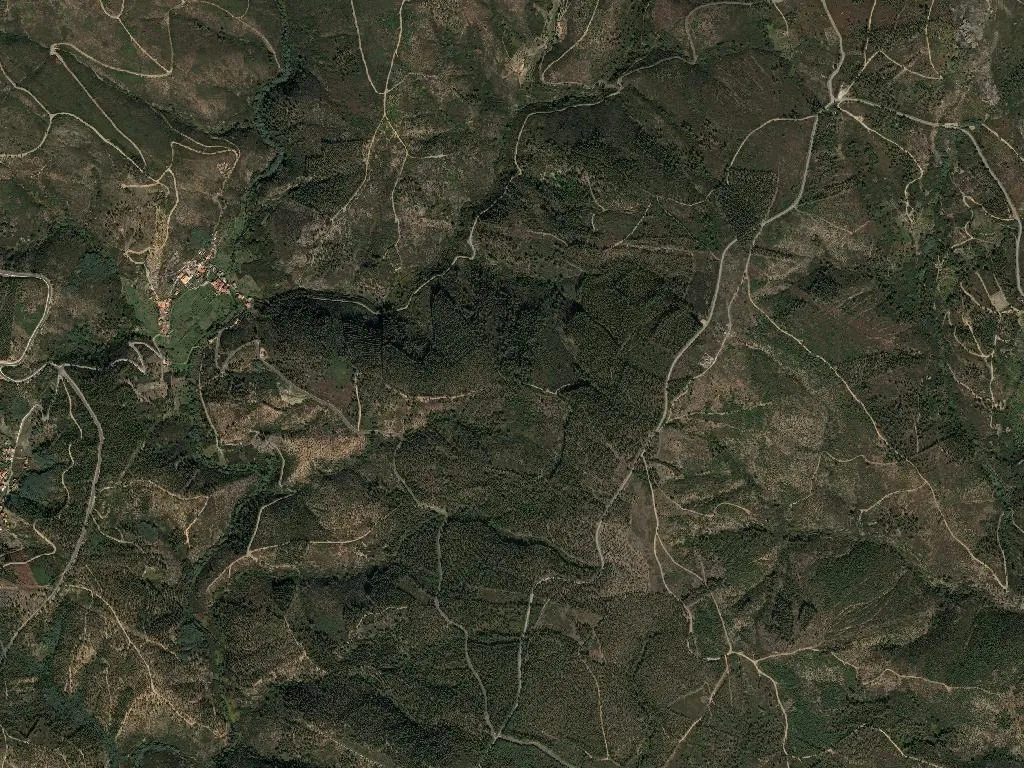
This is the highest hamlet cluster in Pampilhosa da Serra, spread across 3,519 ha of slope where schist ribs push through dark pine and, in autumn, the copper flare of chestnut groves. Population density is below seven people per square kilometre; of the 244 on the parish roll, 104 are older than 65 and only eight are under 14. The arithmetic tells a familiar Beira story – out-migration, ageing, the quiet endurance of those who remain.
Living between valleys
Houses huddle in pockets – Paradela, Vilarinho, Chãs – their schist walls capped by wide eaves that shrug off Atlantic rain. Granite frames doorways, polishes stair treads, forms thresholds dished by generations. Occasional dark-tarred granaries and stone threshing floors stand empty; rye is no longer threshed by hand. Vernacular physics is strict: small windows, thick walls, an angle that traps the low winter sun.
To walk Cabril is to negotiate the vertical. Cobbled paths switchback across abandoned terraces now swallowed by broom and bramble. Water runs in deep-cut streams – Ribeiro de Pé de Cabril, Ribeiro do Barranco – heard long before they are seen. Summer heat pools in the valleys; winter frost lingers on the fields until noon.
The weight of years
Children are known by name to every household. The primary school closed in 2009; the only café, Aurora in Paradela, lifts its shutters on Saturdays and Sundays. Stubbornness keeps the place alive – vegetable beds hand-watered from the well, smoke-blackened hams in the attic, a demijohn of red for the table pressed from backyard vines.
There are no tasting menus or DOP labels, just the cadence of domestic skill: António’s wood-fired loaf in Chãs, Rosa’s goat cheese when someone still tends her animals, chestnuts roasted in their jackets after the October harvest. Recipes arrive by muscle memory – the wrist that knows when the dough is done, the eye that judges when the stew has reached its point.
Where the mountain exhales
Nature dictates the timetable. No way-marked trails, no selfie-deck, yet every bend risks a tableau: the saw-tooth of the Açor ridge across the valley, the dark spill of native oak on a cliff too steep for pines, a griffon vortex turning on a thermal.
At dusk, when the sun skims the crests and gilds the smoke again, Cabril seems to hover between centuries. A single bell from São Pedro’s chapel strikes the hour – a dry iron note that rolls down the slope and dissolves into the emptying light.