Full article about Silence & slate: Portela do Fojo-Machio breathes slow
Eight-point-five souls per km², goat-cheese scent drifts from 80 cm schist walls
Hide article Read full article
The Weight of Silence
The silence here is physical. It presses between the 73 slate roofs of Fojo and the 49 of Machio, broken only by the single bark of Sr António’s mongrel – the only soul who still walks Rua da Igreja all year round – or the scrape of the abandoned primary-school door, bolted since 1987 when the last eight pupils were bussed away to Pampilhosa da Serra.
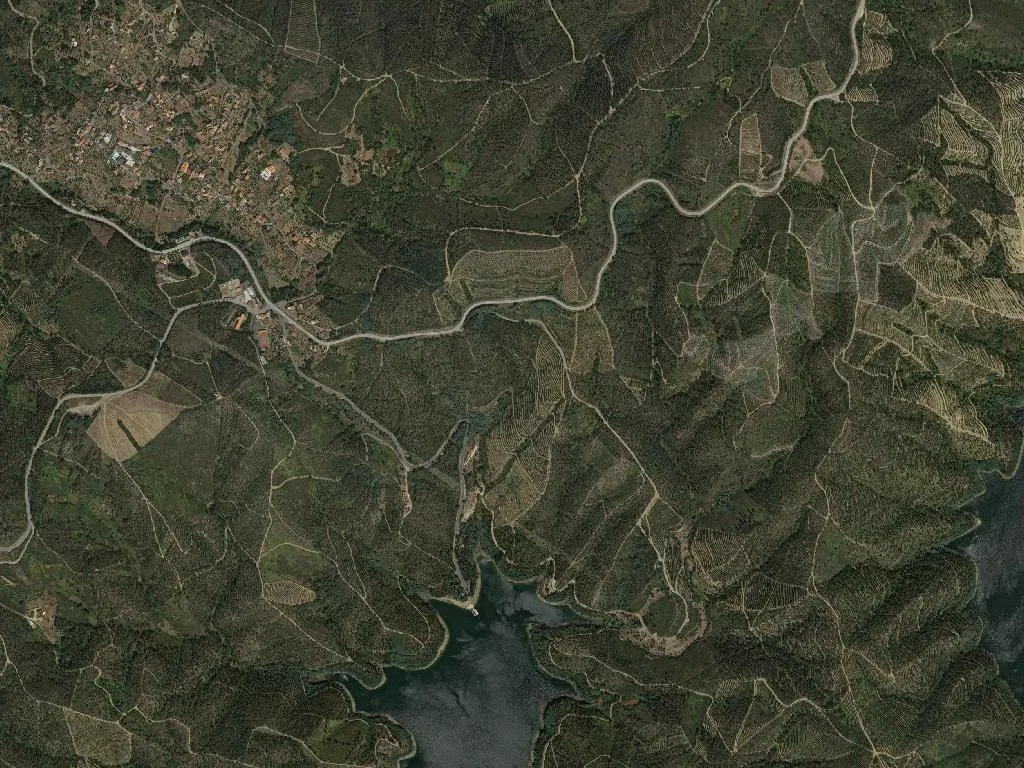
Spread across 5,284 hectares between the Ribeiro de São João and the Ribeiro do Fojo, the parish counts 8.5 people per square kilometre. The 2021 census logged 452 inhabitants; 273 are over 65. Thirteen children attend the after-school club that opened in 2019 inside the former post office – the only new public building here in four decades.
Stone on Stone
All 122 schist houses were raised between 1923 and 1968, the final one in Cortiçosa finished the year Portugal’s dictator Salazar entered his last illness. The Gomes family still live inside, the last household crafting queijo de cabra artesanal: 120 small wheels a week, driven to Coimbra’s covered market in a Peugeot Partner with 380,000 km on the clock. Walls 80 cm thick keep the interior at 18 °C even when Storm Filomena dropped the mercury to –3 °C in January 2021.
The 2.3 km dirt lane linking Fojo to Machio was cut by the public-works board in 1954; beside it, a dry-stone retaining wall bears the inscription “A.P. 1959”, scratched by a political prisoner working on the National Road 2, the 738 km route that stitches the country from Chaves to Faro.
Minimum Daily Life
Guest books at the two tourist cottages – Casa do Xisto and Monte da Portela – recorded 147 bed-nights in 2023. Neither property offers a television; heat comes only from Serra logs split by 82-year-old Joaquim with his father’s 1947 axe, bought for 42 escudos in the blacksmith’s at Sobral de São Miguel.
There are no restaurants, but three cafés suffice. Bar do Fojo opens at 06:00 for the EDP linesmen who tend the 1978 high-voltage pylons; Café Central in Machio serves the single daily dish – green-bean soup with a thread of beaten egg, recipe of 78-year-old Dona Rosa; Bar do Cruzeiro hosts the twelve members of the Tuna da Portela, a village band founded in 1993 whose entire repertoire fits in a single A4 folder.
When the sun drops behind the Caramulo at 18:47 on the winter solstice, the thermometer falls seven degrees in half an hour. Forty-two chimneys exhale at once; the scent of warming schist mingles with eucalyptus smoke, and for a moment the parish feels exactly as it did in 1964 when Father Cunha closed the ledger on 1,200 souls.