Full article about Figueira de Lorvão: Where Silence Weighs More Than Stone
Terraced granite, mossy walls and river-echoes above Penacova
Hide article Read full article
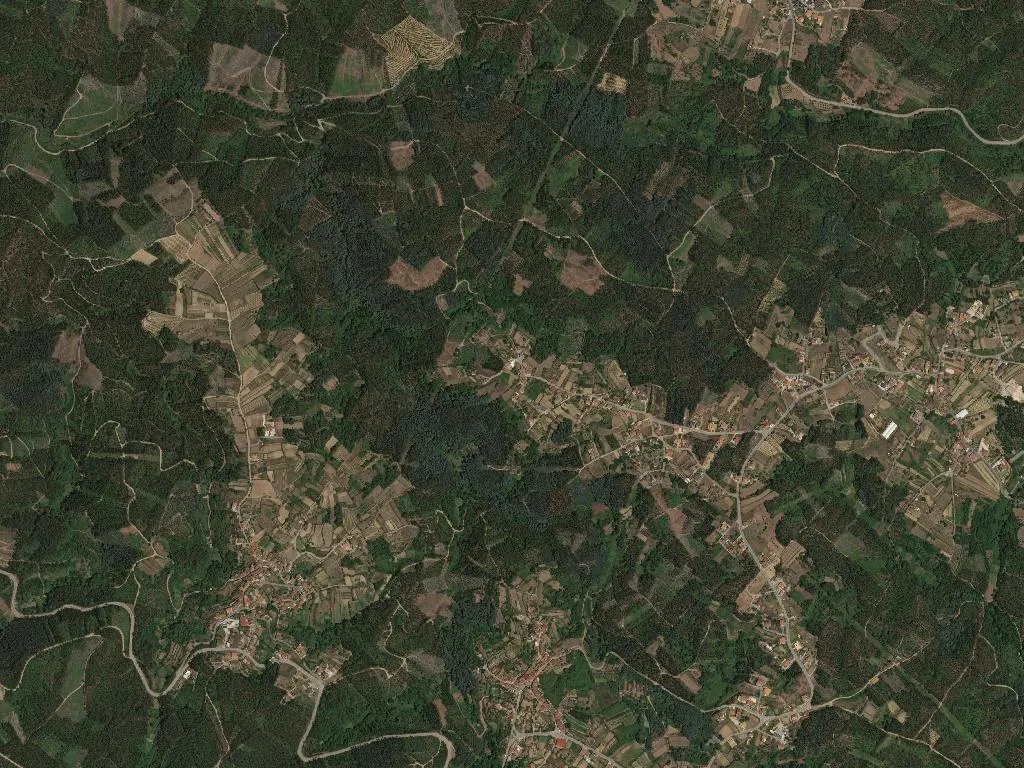
The granite slabs climb between stone walls blotched with moss that looks like atlases of countries no cartographer ever bothered to invent. The smell is immutable: damp earth and firewood hissing in a hearth somewhere, because in Figueira de Lorvão central heating is still whatever the land provides. The church bell—always punctual—strikes three times as if to announce, “Still here,” and the note tumbles 275 metres down to the Mondego, the river that slipped away from the village centuries ago and never came back.
Two thousand three hundred and seventy souls cling to this ridge outside Penacova, terraced houses shouldering each other like commuters on the 8:05 to Coimbra. Yet, measured in cubic metres of silence, the parish is enormous. Empty space carries weight here: a cat asleep on a chapel step occupies as much psychic geography as any cathedral.
The path that cuts through
The Torres stretch of the Portuguese Camino passes straight through the main street, but don’t expect scallop-shell way-markers or albergues with tumble-dryers. The infrastructure is four spare rooms in family homes and a wave from someone who doesn’t care where you started or why. Tractors and open-bed pickups still use the same cobbles; salvation and the school run simply take turns. Sacred and ordinary share the stone without awkwardness, and that, frankly, is rarer than any cathedral treasure.
Life folded into valleys
The topography is an essay in stubbornness: hand-built terraces, vegetable patches wedged into any level inch, olive and orange trees kept alive by shoulder strength. When the sky rinses itself clean, the view stretches west to the Buçaco ridge; the Mondego mutters below, audible though invisible. Demographics come in emotional percentages: forty per cent suited to families, thirty-five to solitary re-invention. Translation: bring children, bring a lover, or bring a crisis—there is room for all three and a dog that barks on a timetable only it understands.
Textures of place
There are no Michelin stars, only dinner invitations. Accept a bowl of caldo verde from a neighbour and you’ll understand why no restaurant score matters. The surrounding Mata Nacional do Lorvão delivers forty per cent measurable green—eucalyptus, oak, acacia—plus a lungful of resin at every bend. Granite wayside crosses, 17th-century fountains and the odd Roman milestone sit quietly in hedgerows; history here doesn’t audition for Instagram. Come late afternoon, when the sun tilts and schist walls warm to rust, the valley fills with blue shadow. Chimneys release parallel threads of smoke, a hinge squeals somewhere, and the whole hillside seems to start a story it has no intention of finishing.