Full article about Lorvão: Nuns, Echoing Bells & Egg-yolk Cigars
From vanished convent organ to pasteis perfumed with almond, explore Penacova’s valley cloister.
Hide article Read full article
The midday bell ricochets down the valley, ricochets again off the schist walls, then dissolves where the Arcos stream bends out of sight. A tabby on the cloister parapet doesn’t flinch; it has heard the same note every day since the last Cistercian nun locked the gate behind her in 1834.
Where the Order Became Female
Princess Teresa, daughter of King Sancho I, imported the sisters in 1211 and turned Lorvão into Portugal’s first women-only Cistercian house. The present baroque church rises on their foundations—inside, cobalt tiles narrate scripture in comic-strip panels. Manuelino stonework in the cloister is scalloped and rope-twisted; two centuries of sandalled feet have scooped shallow basins into the bottom step. Abbess Catarina de Eça (1471-1521) acquired relics of the Holy Martyrs that still parade through the lanes every October. After the 1834 dissolution the convent’s twenty-stop organ vanished overnight—no invoice, no trail, just silence where the wind chest had been.
A Valley of Extremes
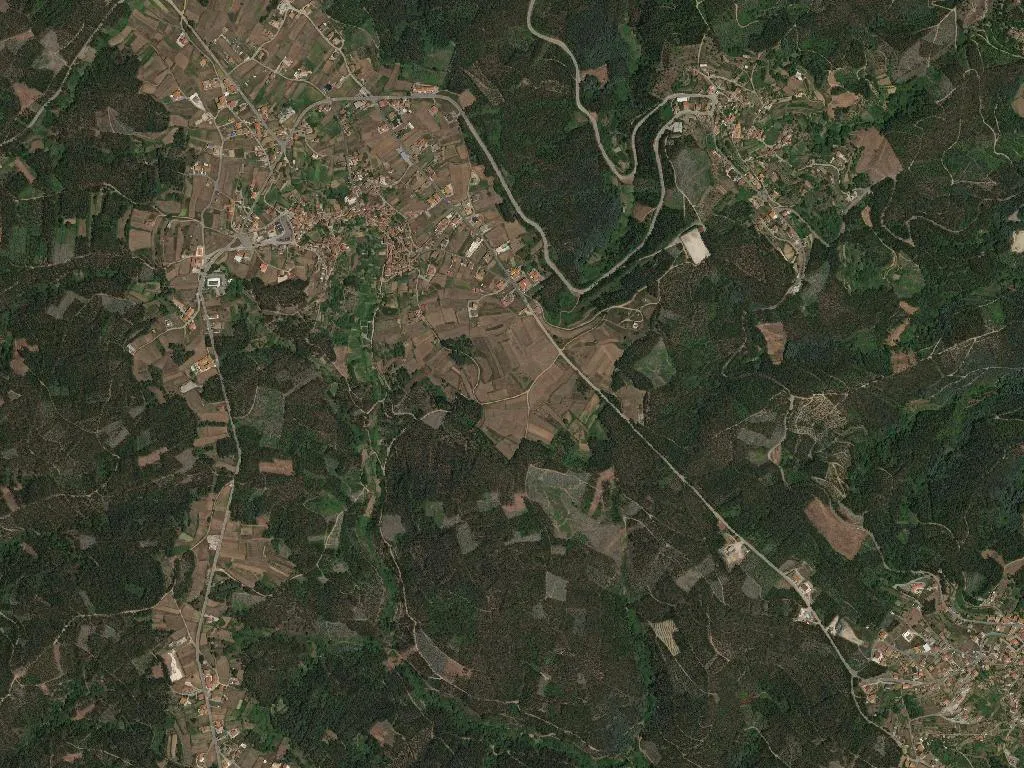
Lorvão contains Penacova’s lowest point (70 m at Foz do Caneiro) and its highest (613 m on Alto do Roxo). The Arcos irrigates small allotments where potatoes and kale are still planted with a hoe and measured in covas, fist-wide holes spaced by foot-length. The 6 km PR4 footpath threads three stone water-mills and a bridge whose single ogival arch is said to have been completed in twenty days to outrun a plague. Grey herons stand motionless among the reeds; the air smells of wet loam and someone’s living-room fire.
Convent Sweets that Never Left
Pasteis de Lorvão—filo cigars filled with egg-yolk jam—are still sold in the bakery that was once the nuns’ postigo. Add almond “cigarettes”, gila tulips, requeijão cheesecakes and suspiros that collapse on the tongue like meringue snow. Lunch might be Beira pork-chouriço stew sharpened with sweet potato, or cod whose skin crackles from the wood oven. In August the eels caught a hundred metres away arrive in caldeirada thickened with maize broa and washed down with vinho verde from across the Mondego.
A Calendar Measured on Foot
First weekend of May: the Feira de Tradições, inland Portugal’s oldest craft fair—folk groups, concertinas, rye-straw verga hats.
Last Sunday: produce market in Largo de Lorvão.
Second Sunday: wheat-threshing display at Eira do Trigo, Aveleira.
Lent: door-to-door Easter blessing.
June: São João bonfires, children leaping the flames.
Nine chapels form a six-kilometre loop—São Sebastião in Chelo, São Mamede, São Vicente in Chelinho, Nossa Senhora do Livramento, Conceição in Aveleira, Amparo in Paradela—best done before the sun reaches the schist. By late afternoon the lime-wash turns molten gold and the levadas still chatter with the same water the nuns listened to when Teresa was a name rather than a street sign.