Full article about Sazes do Lorvão: maize terraces & wood-smoke at dawn
Walkers on the quiet Caminho de Torres find slate cottages, communal ovens and 713 souls.
Hide article Read full article
Morning on the Mondego slope
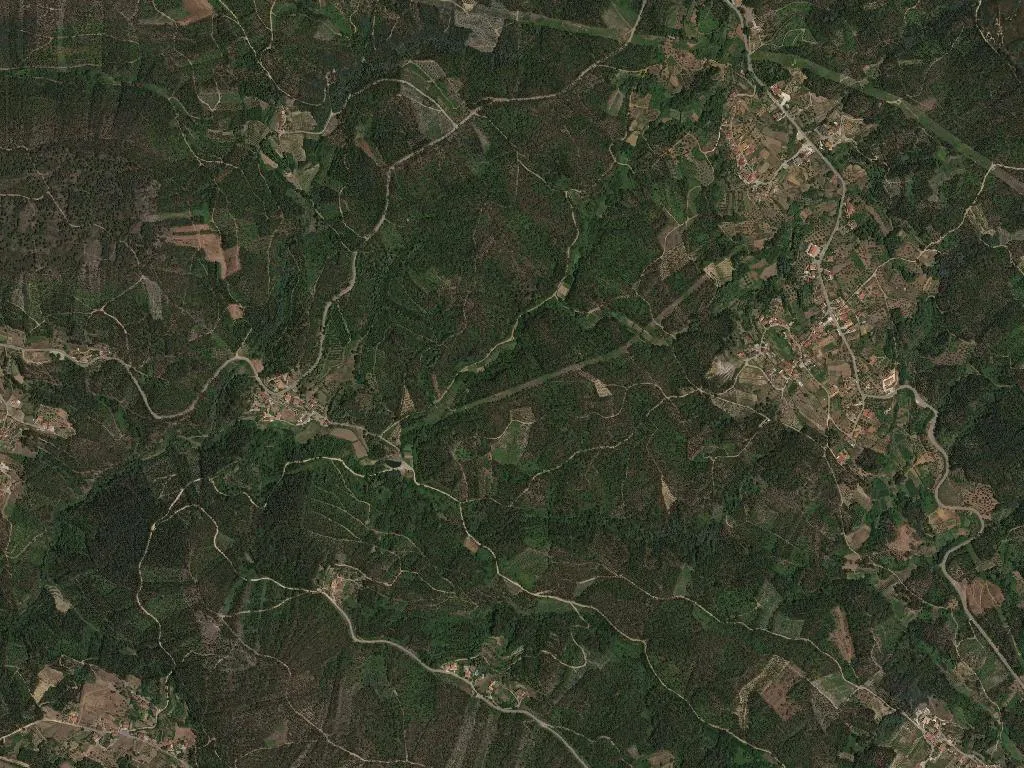
Dawn light slips through maritime-pine tops and lands on the still-damp EN 339. A cock crows somewhere beyond the eucalyptus; the only other sound is the groan of Café Central’s aluminium shutter rolling up on Praça da República. Sazes do Lorvão spreads across 1,785 ha of creased hills: pine plantation giving way to hand-width strips of sweetcorn, then a clutch of slate-dark granite houses whose pantiles are veiled in sulphur-yellow lichen.
Wayfarers and stayers
The parish sits on the Caminho de Torres, one of the least-trodden Portuguese spurs of the pilgrimage to Santiago. Walkers emerge onto Rua do Cabeço, rucksacks dusted with wheat chaff, and follow a route that threads between loose-stone walls and cow tracks. Last year only 312 people signed the ledger in the village cultural centre; proof of passage is subtler: a trekking pole propped against the 17th-century Capela de São Sebastião, a boot print baked into red clay.
Number of permanent residents: 713. Of those, 223 are over 65; just 73 children still file into the single primary school. Population density hovers at 40 per square kilometre – space enough for a buzzard’s cry to carry unbroken from the valley to the ridge.
Between stove and soil
Elevation is a modest 169 m, yet the air thins and cools as maize terraces tilt toward the Serra do Lorvão. Small plots survive: runner beans trained on birch twigs, vines that scramble up poplars in the old enforcado system. Woodpiles are stacked chest-high against kitchen walls; chickens patrol stone water troughs; wood-smoke sharpens at dusk.
There are no tasting menus or chef-led conversions. The only public place to eat and drink is Café Central, run since 1978 by António Augusto. Families still bake at the communal oven on Rua do Forno and time the pig-kill to the first November frost. Flavours linger: peppery chouriço from Correia’s smokehouse, potatoes roasted in the bread oven’s embers, olive oil from the Penacova cooperative poured from dark-green flagons.
A bed with no filter
The parish lists two legal lodgings – both spare rooms in village houses, no plunge pools, no breakfast trays of single-estate coffee. You wake to the smell of wet schist, dogs barking across the ravine, damp air rising from the Mondego before the sun clears the pines.
There are no signed viewpoints, no way-marked PR trails. Instead, cobbled mule tracks climb to clearings where silence has weight, and nameless streams braid between moss-covered boulders. The Instagram index is low; textures reward the patient: the dark-ochre geometry of maize terraces, evening light burnishing whitewash, pine resin glittering on fingertips.
At dusk, chimney smoke draws vertical lines in still air. Women’s voices drift from doorways; a tractor murmurs home in low gear. Nobody rushes to bolt the front door. The last light clings to the eaves, reluctant to leave.