Full article about Espinhal: Where Pine Smoke Clocks the Altitude
Above Penela’s 529-m corkscrew road, silence weighs more than people and cheese arrives by van.
Hide article Read full article
The climb that begins with scent
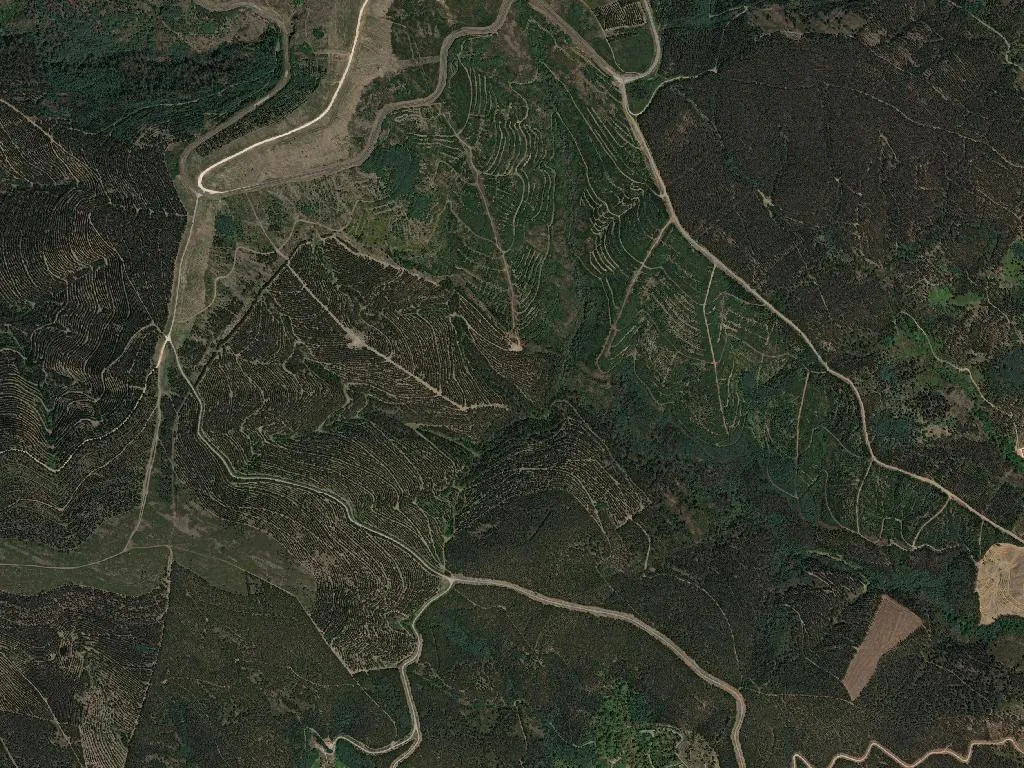
The road corkscrews skywards, 529 metres in little over five kilometres, and Espinhal announces itself long before the first roof appears: wet pine needles first, then the resinous hush of eucalyptus smoke slipping from chimneys. Ears pop as if on take-off; the stomach gives a small, delighted lurch. Up here the air thins and time loosens its grip. The mobile clock still ticks, but the body synchs to a different metronome—hens sauntering across the tarmac and cows whose bells you hear long before their shapes materialise through the mist.
Silence you can weigh in the hand
Seven hundred and thirty-three people are scattered across almost 3,000 hectares. Translation: there are stretches where silence has a measurable density, a pressure against the eardrums. Walk Rua da Igreja and you hear your own pulse. The stonemason’s house, windowless for decades, seems to have grown in stature since the ivy took over the lintels; the plant now holds the walls upright. On the cement bench outside the café, 83-year-old António—denim shirt bleached to a web of fibres, two teeth holding the fort—remembers when “we queued for bread”. The communal oven is cold now; the aroma of rising dough returns only when someone fires up a wood stove to bake broa.
Cheese that arrives by van
Rabaçal DOP rolls in from Tábua or Ansião, wrapped in nothing grander than grease-proof paper. It wasn’t made here, yet Espinhal is where it is sliced with a stubby knife while still dewy on the rind, eaten standing at the counter. The first mouthful rasps the throat; the second tastes of high-altitude pasture, of goats that browsed among gorse and sheep that slept under open sky. Accompaniments: sun-dried maize bread, toasted on the burner until it cracks, and a tumbler of Bairrada red that Afonso pours with the shrugged endorsement: “Nothing fancy, but it warms.”
Eleven front doors and a dog on strike
There are eleven households that take guests, yet no plaques announce the fact. Enquiries are made in the café or by leaving a note at the stationers. Dona Amélia lets the upper floor of her parents’ house: cotton sheets patterned with tiny roses, a mountain-wool blanket, and a china cruet set that no one touches. Morning bread arrives wrapped in a checked cloth, still sweating; the butter is so yellow it looks artificial. Wi-Fi hasn’t climbed this far, yet the balcony chair offers a preview of the local crow—heard before it is seen. The neighbour’s dog has given up barking; he simply lifts one ear, rolls over, and concedes the territory.
Fog that boils uphill, sun that flares and dies
At five the valley fog begins its slow, milky ascent. First the chapel disappears, then the lone poplar is swallowed whole. Dusk strips the sky back to a rinsed blue, and for five suspended minutes the rooftops glow like newly minted copper. Tractors are silent; the children who commute to Coimbra have not yet wound their way home. All that remains is the tick of burning logs inside salamander stoves. The mist returns, colder now, carrying the smell of damp earth and leaf-rot. Espinhal has no monuments, no viewing platform with safety rails. It offers instead this hinge-moment—brief as a blink—when the world below vanishes and the ridge floats, fingertip-close to the sky.