Full article about Alfarelos: where woodsmoke and rice paddies meet
In Soure’s quiet parish, villagers still bake in an 1895 brick oven amid Mondego-valley paddies
Hide article Read full article
Woodsmoke drifts up from the domed oven before you even turn into Rua do Fonte. It is early September, and the pale plume lingers above the brown-tiled roofs, braiding itself with the scent of loaves just dragged from the mouth of the 1895 brick kiln. For one weekend only the communal oven of Alfarelos is fired again; neighbours book their slots weeks ahead, arriving with trays of risen dough and the easy gossip of people who still shape time with their hands. Dawn light, still slick with Mondego-valley dew, skids off the uneven cobbles.
Ovens that remember
The parish name carries a Moorish echo—"alfar", kiln, not the Latin "furnus" scholars once assumed. The oven’s red-brick vault is original, its iron door still scorched from 129 years of kindling. Beside it, the parish church of São Pedro, rebuilt after the 1755 earthquake, keeps its gilded baroque altarpiece—spared, locals say, because the masons hid it behind sacks of rice while Marquis de Pombal’s anti-Baroque decrees raged. The Manueline doorway of the tiny Capela de São Sebastião, restored in 1998, is the meeting point on Sundays when the priest cycles over from Soure to say mass.
Only three manor houses survive. The most conspicuous is Casa do Coreto on Praça da República, erected in 1873 by a summering circuit judge who liked his azulejos cobalt and his coat of arms larger than the bell tower. Downstream, the granite bridge over the Alfarelos stream was pieced together in 1767 with funds from the Royal Board of Trade; the mason’s mark—an open hand—is still visible on the downstream parapet.
Rice, eels and slow water
At 40 m above sea level the land billows into paddies created by the 1934 Mondego Irrigation Companies. The stream murmurs through the village, sliding finally into the river whose name it carries. From October the combine harvesters work at night, headlights floating like lanterns above the water table. In the kitchens the result is arroz malandrinho—slack, soupy rice laced with river eels, each grain drunk on fresh-water broth. Chanfana, goat stewed in black clay with red wine, garlic and bay, originates from winter pig-killings when only kids could be spared; it spends six hours in the wood oven until the meat subsides at the nudge of a fork. Roast kid arrives scented with pennyroyal and lemon thyme, paired with sharp Rabaçal DOP cheese and pear-rocha jam from Quinta do Viso. Every plate is a map: Arroz Carolino do Baixo Mondego IGP and Carne Marinhoa DOP taste of alluvium and salt-marsh.
Waterways and wingbeats
The Caminho do Mondejo, way-marked by Soure town hall in 2018, runs eight kilometres east to the castle town, threading flood-meadows where glossy ibis and purple herons stand winter sentinel. From October to March the paddies become a casual observatory: spoonbills sift for tadpoles, marsh harriers tilt above the cane. Hire a bike at the café opposite the closed railway station and pedal six flat kilometres to Rebolia’s river-beach; horizon widens, silence broken only by wind rattling the reeds. Sunset happens at the 1952 fertilizer wharf—copper light pours down the Mondego, turning the water the colour of a newly-minted cent.
Drums, fado and Easter steps
On 29 June the romaria of São Pedro packs the churchyard with sardine smoke and trumpet voluntaries. After open-air mass a procession shoulders the silver-crowned saint through lanes hardly wider than a handcart, halting at every house for a glass of moscatel. The Folklore Group, founded 1978, dances the vira until two in the morning, white handkerchiefs flicking like gulls. At Easter the Compasso patrol moves from door to door sprinkling holy water on fields and front gardens, a ritual the parish improvement society has logged since 1923. August brings ‘Fado & Petiscos’ in the old primary school: one table, two guitars, endless tiny glasses of white wine. The January Kings, rehearsed since November in the community hall, still sing at every threshold, collecting dried figs and coins for the village fund.
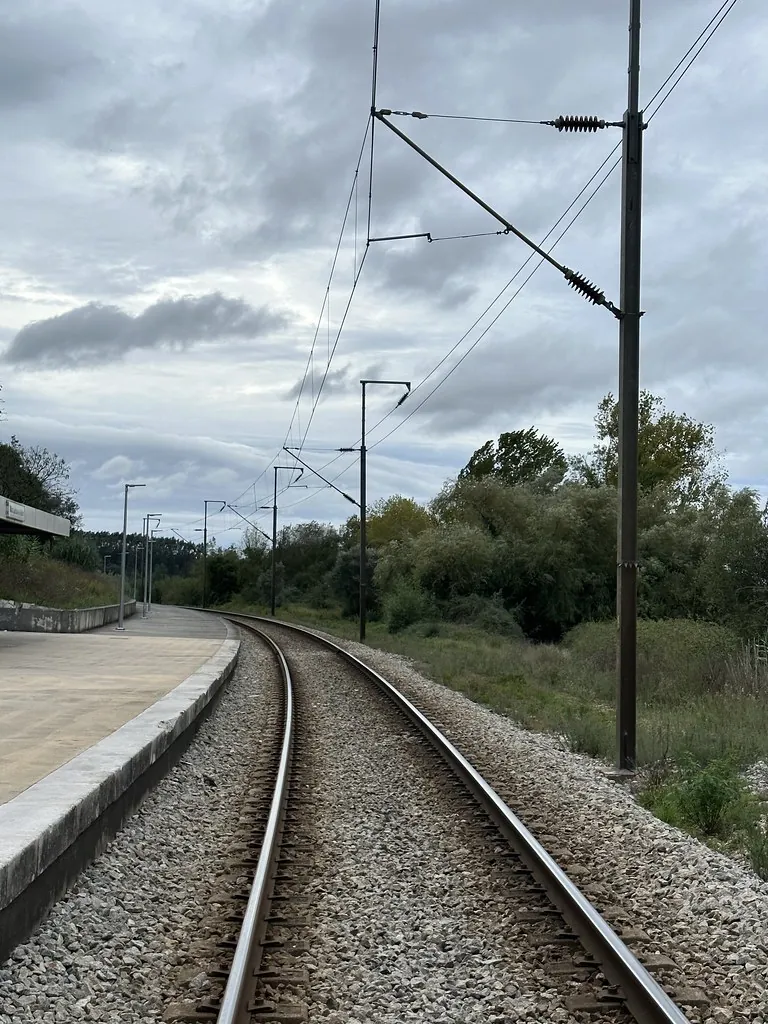
The railway branch that once carried rice to Coimbra closed in 1989; the station clock stopped at 14:37 and never restarted. Yet on the first weekend of September you can follow your nose down Rua do Fonte: if the air is ribboned with woodsmoke, Alfarelos is still baking its own bread.