Full article about Figueiró do Campo: Rice Mirrors & Marinhoa Beef
Mondego’s glassy paddies, slow-cooked chanfana and white-walled hamlet hush
Hide article Read full article
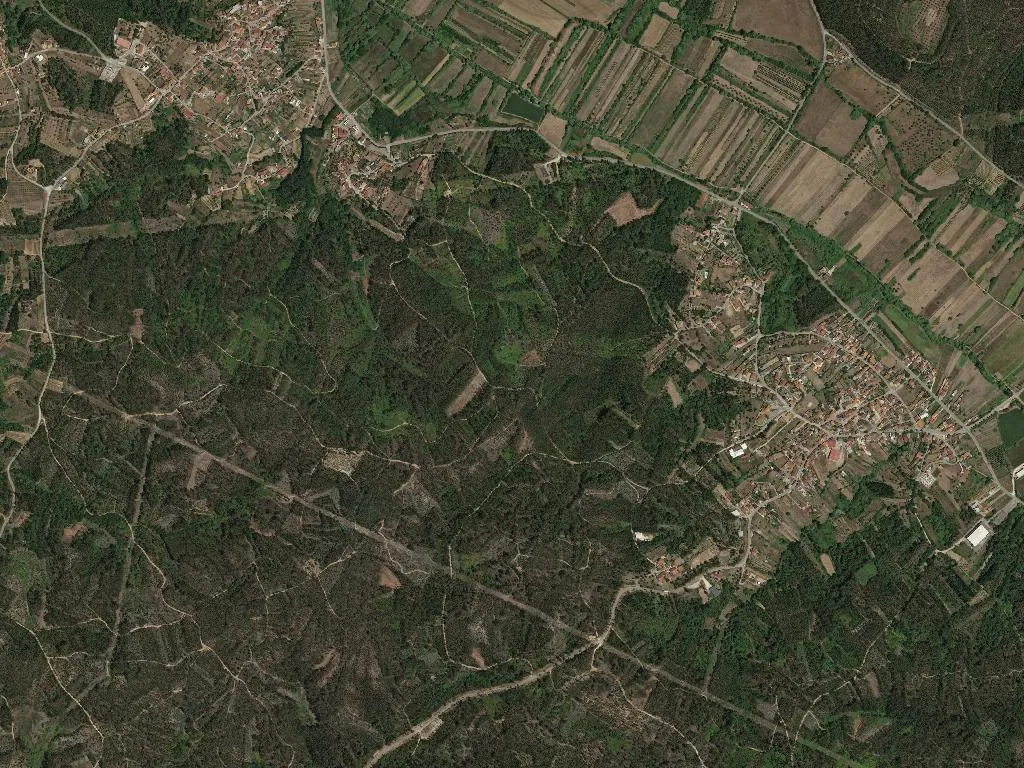
The Mondego flood-plain unrolls at 71 m above sea level, a chequerboard of long, narrow plots stitched together by drainage ditches that throw back the late sun like strips of mirror. Rice leaves shiver, their colour flipping from jade to chrome with each gust; nothing lyrical, just daylight doing geometry. Figueiró do Campo arrives without ceremony, a scatter of white walls between dirt tracks and sprinkler pipes—one of those parishes cartographers forget to bold.
What you’ll see
Everything obeys the water table. Fields are laser-levelled so seedlings never drown; pasture for Marinhoa cattle occupies the slightly higher ridges. The 2021 census logged 1,288 inhabitants—430 of them over 65, only 118 under 20. People live either in the hamlet core or in isolated casais, the traditional long-house still paired with a stone sty and a backyard vegetable plot.
What you’ll eat
Rice here carries the protected IGP stamp—Carolino variety, shorter grain, built to absorb stock. It turns up in caldos (brothy soups) and seafood risotos across the district. The same pastures fatten Marinhoa DOP beef, served as posta (thick rib-eye) or slow-cooked in chanfana, a claret-dark goat-or-beef stew thickened with red wine. Sheep-and-goat Rabaçal DOP cheese, cured twenty days minimum, arrives in brittle wedges with cornmeal broa. You won’t find a restaurant in the parish; order these things in Soure’s tascas or buy them straight from the fridge of the village grocery.
Where to sleep
Two rural guesthouses, three bedrooms each—nothing else. Book early in summer; academics from Coimbra and surfers bound for Figueira da Foz have started using the hamlet as a silent base.
How to get here
Leave the A1 at junction 12, follow the N1 to Soure, then swing onto the CM1145 for 8 km. The final 2 km are compacted earth—passable in winter but expect clay on your wheel-arches.
When to come
May–September: dry soil, minimal farm traffic. October–November: combine harvesters on the road from 07:00, air thick with rice dust. December–April: fields deliberately flooded, luring glossy ibis and black-tailed godwits—bring wellies.
What you won’t find
Viewpoints, gift shops, festival programmes. The parish café opens at seven, shutters at eight, and serves only coffee and gossip.