Full article about Tapéus: where rice fields outnumber people
In Soure’s quiet parish, paddies shimmer and clocks lose twenty minutes
Hide article Read full article
The silence that weighs
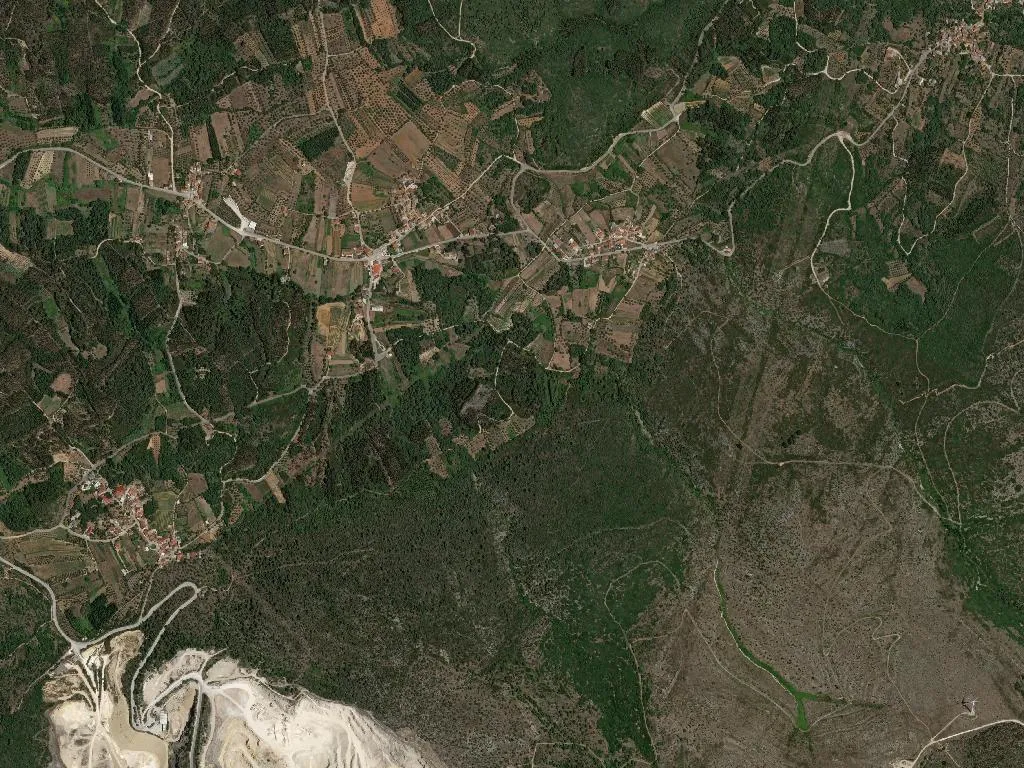
At 121 metres above sea-level the Baixo Mondego feels closer to sea than sky. Stand on the raised flood-bank outside Tapéus and the world tilts: 1,386 ha of rice rectangles shimmer like polished steel, their colour chart running from jade seedling to pale-straw stubble according to the month. Poplars file along the drainage ditches; the only verticals are the concrete pylons of the 1950s pumping station that still drains the marsh for the Misericórdia of Soure. Sound is reduced to wind brushing reeds, the low hydraulic hum of the sluice gates, and, at dusk, a single cicada drilling into summer.
Three hundred and twenty-six people live here, 127 of them over sixty-five. That statistic is visible in the calendar of front doors: closed against the midday sun, open at five for the slow passage of neighbours and the exchange of a lettuce or a newspaper. There are two guesthouses—both converted farmhouses, both booked by word-of-mouth rather than algorithm. No coach parties, no souvenir stalls, no interpretive centre; just the invitation to match the local cadence.
What the ground gives back
The soil is what passes for topography. River silt deposited by the Mondego has built a plateau of nutrients so obliging that the rice carries its own postcode: Arroz Carolino do Baixo Mondego IGP. The grain is medium, not long—“carolino” as opposed to “agulha”—and cooks to a cream-tender finish that holds the sauce of the wood-oven “malandrinho” stews still served in Soure on Fridays. Around the paddies, blond Marinhoa cattle graze for DOP-certified beef; further inland, sheep’s-milk wheels of Queijo Rabaçal DOP dry on pine shelves. All three products pre-date the 1933 drainage; they are the edible archaeology of a wetland tamed without losing its memory.
Horizontal time
The parish church clock is twenty minutes slow and no one corrects it. Seasons are read in the mirror of the fields: March glass-green, June waist-high and rattling, October stubble burning to copper under a low sun that stretches every shadow to cathedral length. Houses keep the coastal-plain grammar—whitewash, terracotta pan-tiles, a fig tree in the yard—while the 1952 bandstand, painted municipal green, waits for the annual feast of Nossa Senhora da Graça when the square fills with accordion music that lasts until the first tramontana wind of autumn.
Between feasts the programme is self-assembled: follow the farm track that doubles as the Caminho de Santiago, cycle the levada where herons stand like grey punctuation, or simply sit on the flood-bank and let the landscape perform its slow-motion pageant. Night brings a sky big enough for both hemispheres; the Milky Way is a second river overhead, reflected in the still water of the paddies until field and firmness dissolve into one dark acre.
Leave before sunrise and you will meet the rice grower unlocking the sluice, boots laced with plastic twine, headlamp carving a tunnel in the mist. He has never heard of Tapéus described as a destination, only as a workload. Yet he is the custodian of the view travellers now cross postcodes to witness: a horizon so wide the eye learns to breathe.