Full article about Vila Nova de Anços
Vila Nova de Anços (Soure, Coimbra) runs on handcrafted irrigation channels, 1950s engineering and a 16th-century church that still rings the farming hours
Hide article Read full article
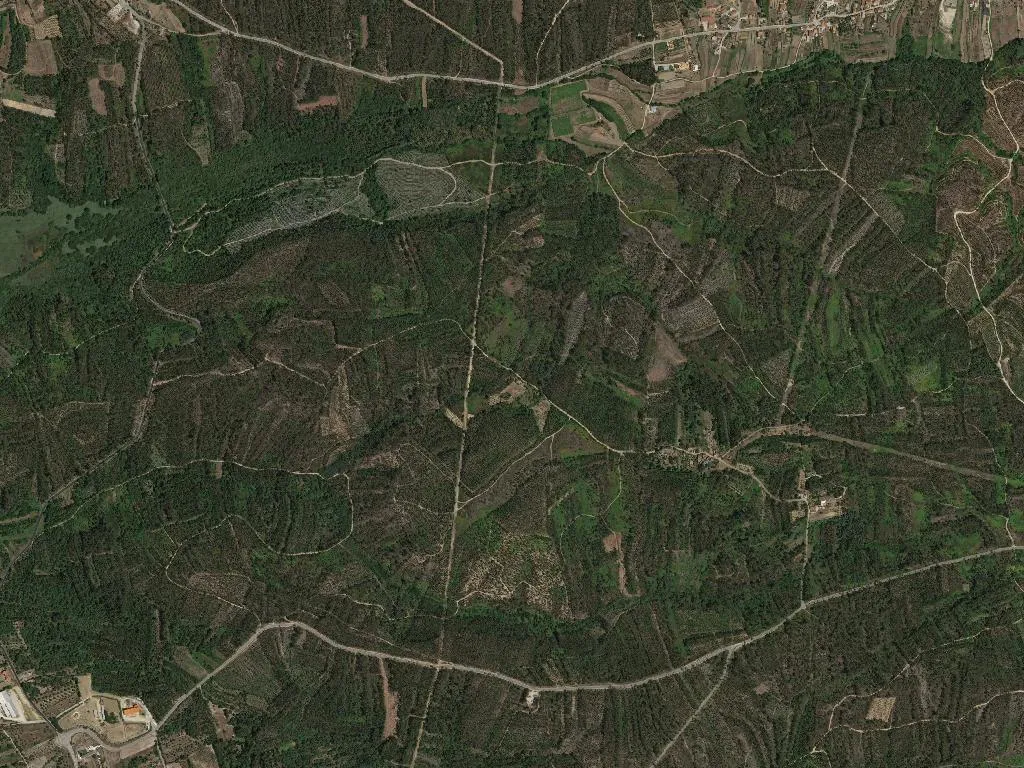
The Water Ledger
Cement channels score the flatland like ruled paper, carrying Rio da Serra water across sixty hectares of Carolino rice. Nothing is hurried: the liquid advances by gravity, gate by gate, watched by men who can read a slope of two centimetres in a hundred metres the way sailors read wind. At each sluice they pause, lift a wooden panel, and let the next measured portion escape. The sound is barely a sigh—more breath than river—yet it is the metronome for 928 residents who have learned that everything arrives on water’s schedule.
Engineering that Refuses to Show Off
The irrigation lattice was scratched into the alluvium in the 1950s, but its real author is persistence. For eleven years José Carlos Valente, head of the local water association, lobbied every ministry he could spell until the Porcão dam was commissioned on 28 June 1997. The structure is modest—twenty-three metres of concrete holding back a narrow arm of water—yet it doubled rice yields and gave the volunteer fire brigade a reliable hydrant. Walk the embankment at dusk and you will see herons hunting frogs among the rice stubble, the dam’s reflection trembling like a second, inverted village.
Stone Left Out in the Rain
There is no castle to Instagram here, only the parish church standing square to the wind. Built in the sixteenth century over a medieval chapel, it lost its baroque ornaments to time and budget, so what remains is limestone and limewash, flaking gently. Inside, a single nave smells of candle wax and wet stone; the bell still rings the agricultural hours—first light, mid-morning, sunset. Around it, a handful of stone crosses mark crossroads where medieval processions once paused; the names have worn away, but the grooves for candles remain sharp.
The place-name itself is a palimpsest: the Romans called it Anctia; the Visigoths kept the root; medieval charters added Vila Nova—“new town”—to distinguish the fresh settlement from whatever village the river had erased. For centuries the land answered to the Chapter of Coimbra, paying tithes in grain and lambs, a ledger of obligation that still sits in the local archives on parchment the colour of dried rice stalks.
Tastes that Keep their Own Hours
Rice arrives at lunch as Carolino grains plump with duck stock, or as a fish stew thickened with river eels that slip through the sluices at night. Lamb is Marinhoa, one of Portugal’s two protected breeds, reared on the flood-meadows and simmered for three hours with red wine, bay and the mild piri-piri the cooks insist is “for perfume, not heat”. The cheese course is Rabaçal, a buttery, slightly sharp sheep-and-goat blend that dissolves on the tongue faster than you can say its name. Desserts wear the habits of vanished convents: pastel de Santa Clara, its shell of puff painted with egg-yolk glaze, or trouxas de ovos—sugar-syrup threads wrapped like miniature hay bales around a yolk centre.
Calendar of Water and Seed
Forget fireworks and folklore parades. The year turns with the rice cycle—seedbeds flooded in April, green armies marching through June, harvesters humming in September. Sunday Mass and grandchildren’s birthdays punctuate the timetable; 37 per cent of the population is over sixty-five, so every tractor comes with a mobile phone clipped to the dash for the weekly call from Lyon or Newark. Population density is forty-five souls per square kilometre, which translates into long views, slow conversations, and the luxury of leaving a gate unlatched because you will hear any car approaching in time to wave.
Pause on the dam wall and the horizon dissolves into rice mirrors and pasture the colour of vintage Chartreuse. There is no mountain backdrop, no Atlantic glitter—only the flat certainty that tomorrow the water will arrive again, gate by gate, carrying the next line of the ledger forward.