Full article about Poiares (Santo André): clay-pot goat & Alva gossip
Poiares (Santo André) in Vila Nova de Poiares, Coimbra: taste clay-kid stew, hear 1874 brass bands, walk valley where villagers won back their town hall
Hide article Read full article
A village that lost – and won – its own council twice
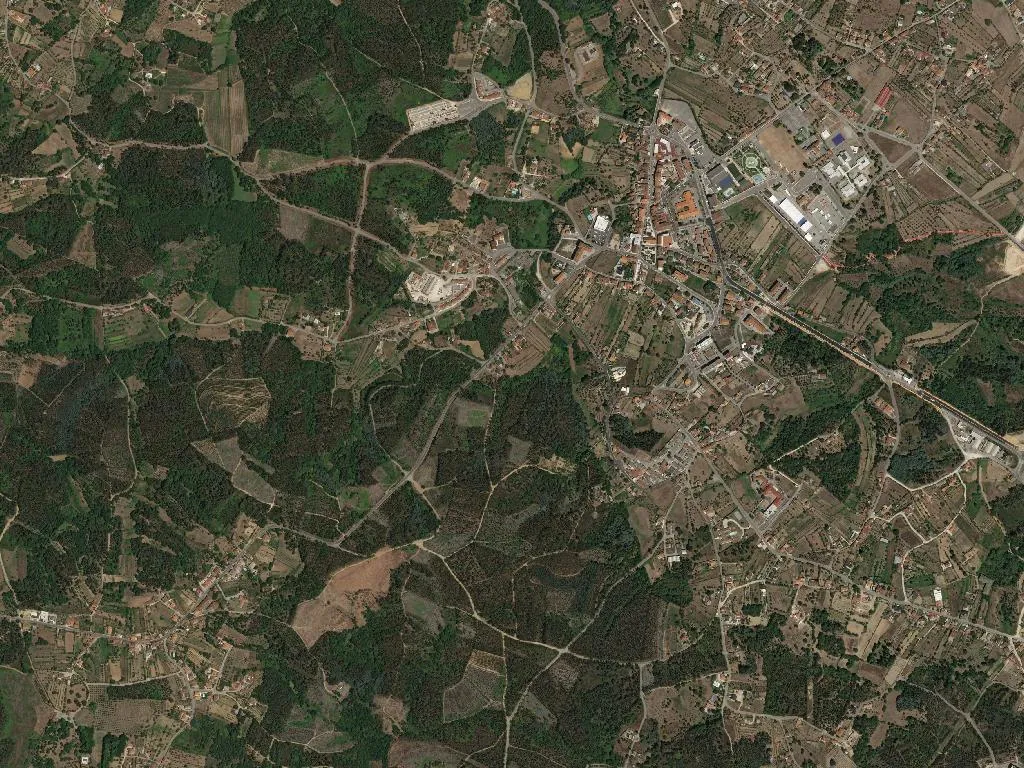
By noon the air above Poiares (Santo André) smells of sun-warmed clay. At the rear of every tasca, black earthenware pots exhale steam: kid goat and red wine collapsing into one another under a slow quilt of pork fat. The clatter of forks drifts out; beyond the last row of houses the Alva keeps up a low, metallic gossip over its stones. The parish sits exactly where granite tracks from the Serra do Açor surrender to the valley’s rye-coloured meadows, 22 km south-east of Coimbra.
A village that lost – and won – its own council twice
Local history bends like the mountain road. On 18 September 1836 the liberal government of Passos Manuel rewarded Santo André’s support in the civil wars by granting it full municipal status. The victory was brief: in 1855 slices of land were peeled away to Penacova, Lousã and Miranda do Corvo; in 1895 the entire council was abolished. Three years later, petitioning by townsfolk and cash from Brazil-returned emigrates forced Lisbon to restore Vila Nova de Poiares as a municipality – a rare reversal in Portuguese administrative history.
The 1865 town hall, a sober two-storey rectangle of yellow plaster, watched it all. In 1909 Dr Alfredo Montenegro – physician, insomniac, covert philanthropist – opened the Hospital de Beneficência Poiarense next door; patients arrived at night, treated by lamplight and never presented a bill. Inside the parish church, gilt carved acanthus catches the sideways Atlantic light that once fell on farmers praying for rain at the right hour and merchants praying for the council’s return.
Brass bands, processions and improvised verse
The weekend closest to 30 November belongs to St Andrew. The brotherhood band, founded 8 September 1874, still leads: tubas blaze, snare drums mark the glide of the saint’s palanquin down Rua Central. Side-stalls sell egg-yolk sweets, candied pumpkin and chestnuts spitting in oil-drums; sardines blacken over pine-needle fires. In January the rite repeats for St Sebastian, smaller but louder in the dark.
Summer nights are given to desgarrada – a sung duel of improvised couplets. Two voices trade rhymes like fencers, the winner the one who wounds without discourtesy. Spectators judge timing, wit and the precise moment a cork is drawn from a bottle of tinto.
The Alva and its silent mills
A riverside footpath, shaded by alder and mimosa, leads west to the small beach of São Sebastião. Along the way, water-mills stand gutted: wheels missing, grindstones moss-slick, their timber rotted into the current. Grey herons pose on the stones, waiting for trout to betray themselves. Eastward, the ridge of Buçaco forms a jagged horizon; the land rolls between 100 m and 300 m, granite giving way to schist, the silence broken only by wind in eucalyptus or the echo of Senhor António’s dog barking at itself.
Clay, kid and rye bread
Chanfana is non-negotiable. The meat – usually Serrana-breed kid – is sealed in a black clay caçoila with garlic, bay, paprika and enough red wine to drown it, then baked for four hours in a wood oven until it collapses into gravy. First-timers are warned: “She doesn’t like to be rushed.” Serve with broa, a dense rye-and-maize loaf that steams when cracked open. Eels from the Alva appear fried or in a coriander-rich stew; bola de carne, a loaf stuffed with pork, must be fetched from the bakery by eight o’clock or it is gone. Finish with a thimble of medronho firewater or a glass of herb liqueur poured from a wide-mouthed demijohn.
When the sun slips behind the roofs, wood-smoke rises again. The band rehearses in the distance; the river turns its stones; cold air climbs the valley like a reminder that time here is neither bought nor sold, only waited for.