Full article about São Miguel de Poiares: granite cobbles hum with stories
Mid-slope village where schist plots, 1873 bells and ox-drawn sweet rice survive
Hide article Read full article
Dr Ernesto de Paula’s granite sings underfoot
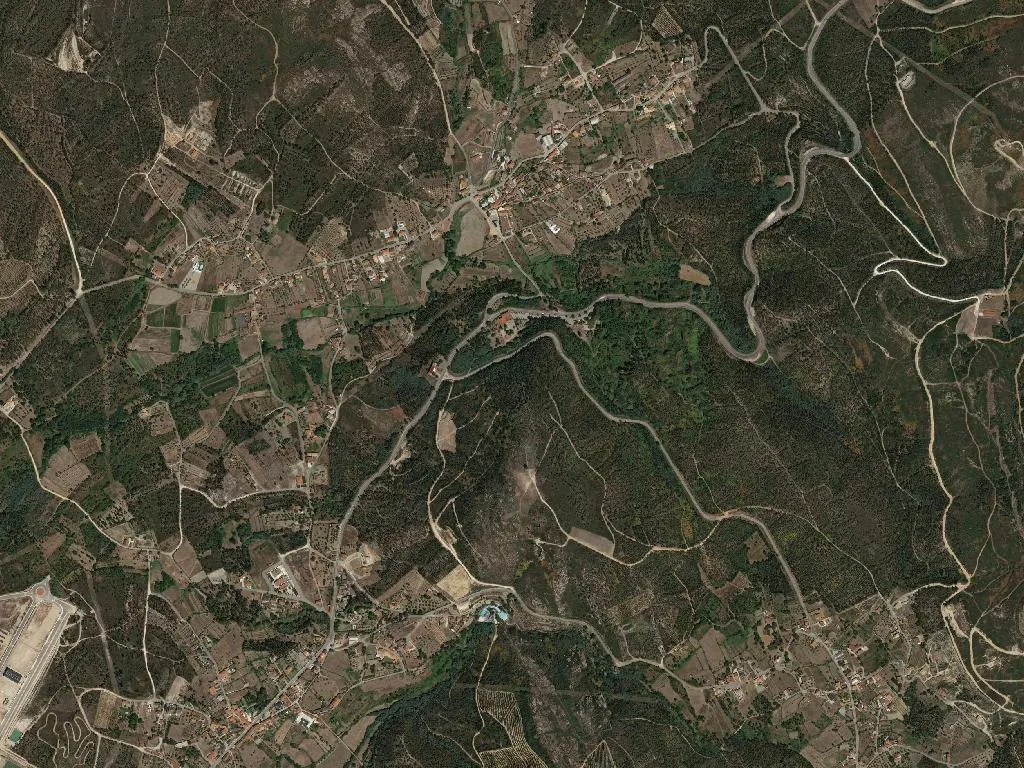
The cobbles of Dr Ernesto de Paula Street click like abacus beads: centuries of boot leather have burnished the Ançã stone to a gun-metal sheen. At 256 m, São Miguel de Poiares is neither mountain eyrie nor valley floor, but a mid-slope pause where the Ribeiro de Poiares meets the cork-dark ridges of Serra do Bussaco. Maritime pines throw long shadows over schist-walled vegetable plots that once fed wages from the Val da Igreja coal seams. The parish wakes in one audible moment: 7.30 a.m., when the AVIC No 42 bus drops a clutch of teenagers at the foot of the hill—daily envoys to Coimbra’s royal-era grammar school.
Between ridge and river plain
Twenty square kilometres hold 1,299 souls, a demographic haiku: 351 pensioners, 155 children. Density is low enough for every household to keep a row of runner beans for the Friday market on Avenida Doutor Luciano de Sousa, yet high enough for Dona Alda’s parish day-centre to ladle turnip soup at 12.30 sharp. Wait for the eighth Sunday after Easter and you’ll witness the Festas do Espírito Santo: white-dressed imperatrices parade with crowns of fresh bread while a brass band marches behind ox-drawn carts of sweet rice.
Stone, lime and a side chapel of exile
The parish church earned its protected status in 1982, but its bones are older. Two bells cast in 1873 at Ferreira de Aves still swing in the belfry; inside, a 1724 gilded altarpiece frames a Marian statue smuggled here from Marrazes after French troops torched the original chapel in 1810. Step into the forecourt and you stand where the old royal road to Porto once crossed the National Road 17; the 1897 granite cross still marks the junction. At No 23 Rua da Igreja, the weather-beaten Pamplona coat of arms recalls a family that held these lands until the municipality confiscated them in 1834.
Footpaths that end in mid-air
The Schist Trail begins beside a primary school closed since 2009 and climbs 3.2 km to Portela de Poiares. From the ridge you can trace the ghost-earthworks of the A13 motorway—budgeted, half-built, abandoned. Granite way-markers stamped CMVC 1998 guide you past a cork oak whose bark still holds ceramic ashtrays left by shepherds descending from Curral de Vacas. White-clawed dippers flit above the 1953 irrigation levada once built for the Companhia Industrial de Fumos’ tobacco plots; the water still runs, though the company folded long before cigarettes lost their glamour.
Sleep inside walls that once kept pigs
Six legal lodgings operate, all conversions of labourers’ cottages. Casa da Ladeira keeps its bread-oven irons; Casa do Lavrador still smells of 1932 chestnut floorboards. Over coffee in Largo do Chafariz, Dona Odete serves rye from the 1967 wood-fired bakery smeared with pumpkin jam from the Estoril factory across the river. Dawn begins at 6.45 a.m. when Sr António fires the chestnut-smokehouse behind the grocery: the scent of Setúbal-cured blood sausage drifts through medronho-leaf smoke, a perfume that clings to your coat long after you’ve boarded the bus back down to Coimbra.