Full article about Santiago Maior: Olive Groves & Quiet Conversations
Rolling cork plains, medieval hamlets and 24-month air-dried ham in Alentejo’s least-crowded parish
Hide article Read full article
What it is
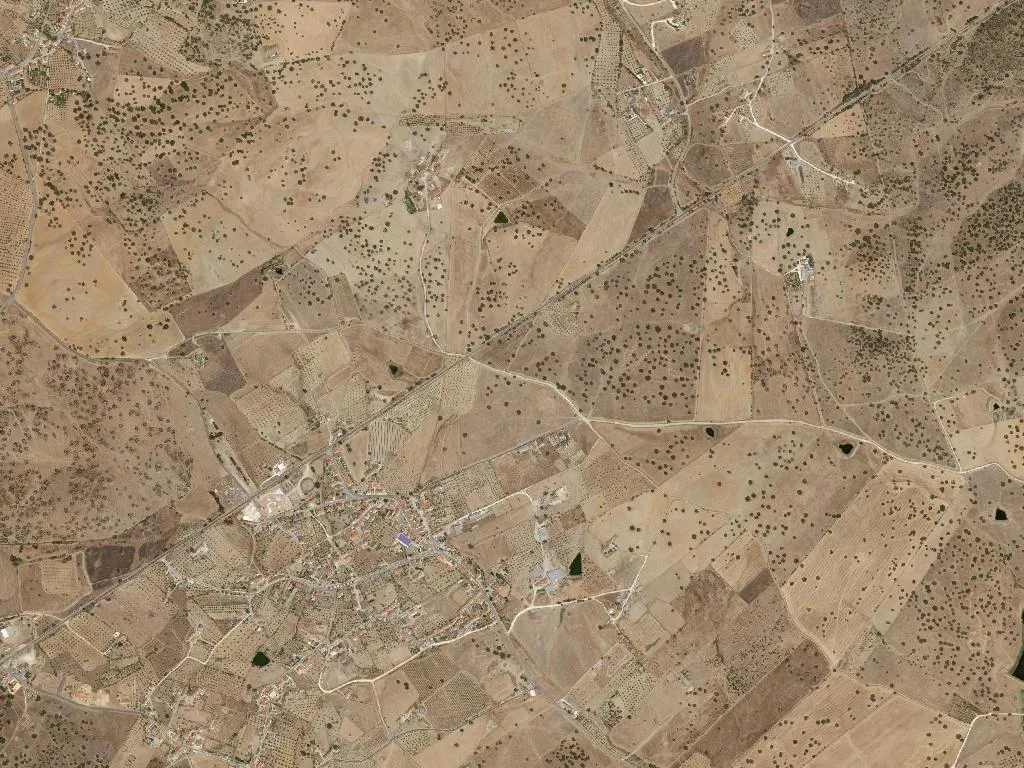
Long shadows stripe the olive terraces at dawn; the air carries the warm scent of baked earth and the faint tang of cork bark. This is Santiago Maior, the largest civil parish in Alandroal—113 km² of montado and meadow shared by fewer than 1,900 people. Population density is 16 souls per square kilometre, low enough to turn every passing greeting into a five-minute conversation.
The place names read like lines from a forgotten ballad: Cabeça de Carneiro, Aldeia das Pias, Casas Novas de Mares. Each hamlet is a loose cluster of white-washed dwellings separated by kilometres of cork and holm oak. Medieval in origin, the parish belonged to the Knights of Avis until 1836, when it was folded into Alandroal after the smaller municipality of Terena was dissolved. The result is a territory with no obvious centre—just scattered farmsteads stitched together by dirt tracks and dry-stone walls.
Altitude is a modest 273 m, yet the land rolls enough to create theatre. North-facing slopes are dressed with centuries-old olives; southern exposures have been replanted with Syrah and Alicante grapes fed by drip-line from the Alqueva reservoir. Beyond the vineyards, the horizon dissolves into open cereal steppe where great bustards tread between wheat stubble.
What you eat
Breakfast arrives as a slab of Queijo de Évora DOP—a small, firm ewe’s-milk cheese cured for at least 30 days until it tastes of toasted hay. Mid-morning snacks might be a slice of Chouriço Grosso IGP, smoked over holm-oak and thick as a child’s wrist. Lunch is migas: breadcrumbs pan-fried in pork fat with spare-rib nuggets and a confit of orange peel. The parish’s black-footed pigs roam the oak groves; their ham is air-dried for 24 months until it blushes the colour of garnet. Wines are from the nearby Reguengos sub-zone—concentrated reds that leave a trace of schist and wild rosemary on the tongue.
What is changing
Drip irrigation has tempted a new generation into pomegranate, the fruits swelling to the size of cricket balls. Three organic olive estates—Lagar de Varas de Fojo, Monte da Castelhana and Espargueira—now open for timed tastings; visitors leave with cloudy early-harvest oil that catches the back of the throat like green chilli. A handful of country houses have quietly converted into five-room guest cottages: solar-powered, lime-washed, with infinity pools that reflect the Milky Way. Santiago Maior still feels undiscovered, but the infrastructure for slow tourism is slotting into place.
What to bring back
Drive 15 minutes south and the Guadiana widens into Lake Alqueva. Yachts tack between the river beaches of Azenhas d’El Rei and Monsaraz, but nightfall is the real draw. The parish sits inside the Dark Sky Alqueva Reserve; light pollution is nil, the horizon 360°. With a pair of 10×50 binoculars you can split the Pleiades, watch the ISS glide overhead, or catch Andromeda’s dust lanes. Pack a down jacket—even in July the steppe cools fast once Orion rises—and lie back on a car bonnet. The only soundtrack is the soft thud of falling olives and, somewhere in the dark, the low bell of a grazing donkey.