Full article about Igrejinha: Where Bronze Bells Ring Through Indigo Dawn
In Arraiolos’ tiniest village, a 1792 bell, faded tiles and a queen’s mantle guard Alentejo time
Hide article Read full article
Seven O’Clock Bronze
The bell strikes seven and the note doesn’t travel in kilometres; it travels in memory. First it rattles the cold air that clings to the holm oaks, then it slips down the ridge and in through the low-slung windows of the houses still painted the indigo their grandmothers chose. The man pulling the rope is Sr Joaquim, 78, once the priest’s altar boy, now the solitary keeper of a 1792 bronze that hangs thirty metres above the village square. The key to the tower weighs in his pocket like a pocket-watch full of years. While the vibration is still fading, the girl at the café slides out of bed to heat the milk for the first bicas; the shepherd re-ties his boots and whistles the dogs towards the cork slopes.
Gilded Wood and a Queen’s Mantle
The parish church of Nossa Senhora da Conceição gives little away from the outside – lime-wash, a wooden gate that groans at the same hinge it has complained at since 1932 – but inside the nave snaps shut like a dark book. Wait three heart-beats and the gold leaf on the side-altar begins to glow, afternoon light raking across 17th-century carving so deep it looks almost molten. The tiles are not the postcard blues of Lisbon; they are water-colour faded, the white turned tobacco, the cobalt diluted with cistern water, yet they still spell out the life of the Virgin for anyone who never learnt to read.
In the sacristy an Arraiolos carpet, twenty-five square metres of wool, is folded in half because it outgrew the table. Dona Amélia’s grandmother started the stitching at fifteen; she is ninety now and still claims the flowers were copied from a book she once saw in the capital. The mantle on the statue of the Virgin really did belong to Queen Maria I, though the gilt thread has dulled to the colour of burnt honey and the catechism children stroke it without recognising royalty.
Two kilometres towards Évora, the hermitage of São Brás stands alone in a rectangle of wheat stubble. On 3 February mothers bring their children to be blessed against sore throats – a pre-antibiotic ritual that survives because, as one grandmother puts it, “we’ve always come”. The drum corps has been replaced by a wind-up cassette player carried by the sacristan, but the line of families still stretches back to the road.
Bread, Clay Pots and Sheep’s-Milk Cheese
Dona Rosa’s loaves leave the wood oven at noon sharp. They have no name: ask for “bread” and you receive a crust that breaks open like a firecracker when it is right. At the Taberna “A Cabana” the açorda is only made with salt cod when Zé drives the 120 km to Setúbal and returns with a handsome loin; otherwise it is bacon, or coriander and egg, or whatever the kitchen garden offers. Wine fermented in clay talhas is not poured into crystal; it is served in rough terracotta cups that powder your lips with red grit. First-time visitors politely ask whether the taste of earth is intentional; the reply is a shrug.
Dona Albertina’s cheese is curdled from the milk of the sheep she still walks out to graze each dawn. It matures in a locked bedroom under a damp towel and is ready – “when it decides”, she says – for the Tuesday market in Arraiolos, where her stall is wedged between dried figs and shoelaces. No PDO sticker, just her thumbprint pressed into the centre to prove it is soft enough.
Cork Oaks and Great Bustards
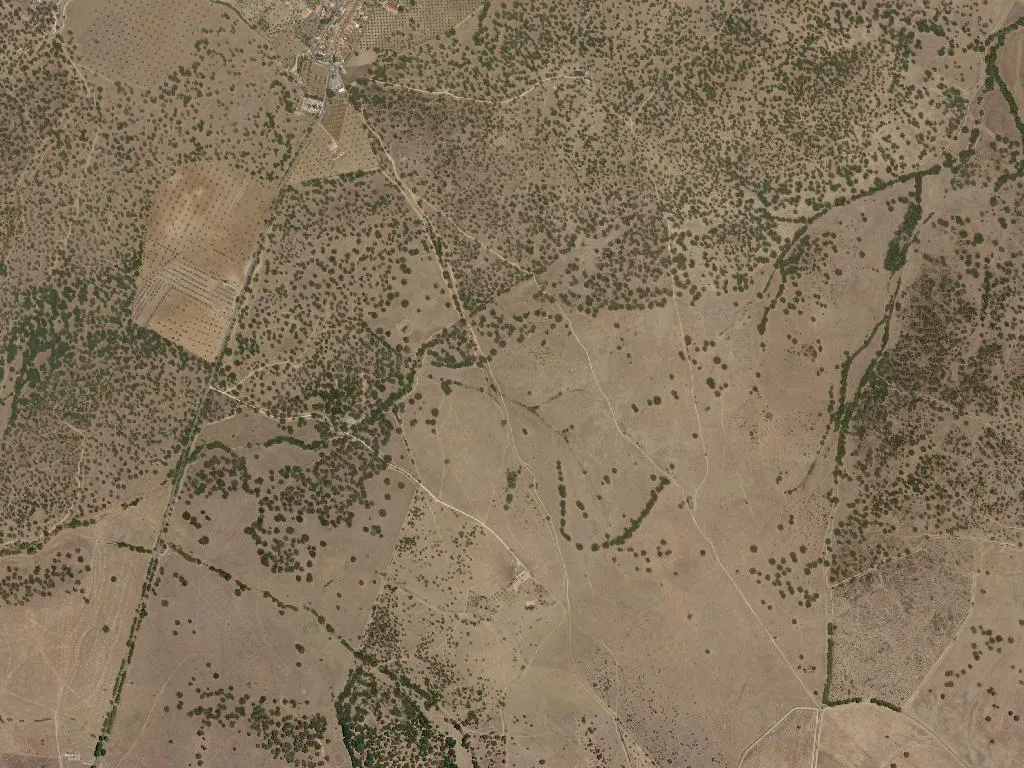
The montado is not scenery; it is larder, firewood, pig feed, beehive, inheritance. Each cork oak is individually numbered; each holm oak remembers a christening or a funeral. The National Forest is where generations sneaked out to gather strawberry-tree fruit and where parents now warn that “it isn’t like it used to be”. A great bustard appears when it pleases; Sr António claims he saw one in April, though it might have been an overfed partridge. The Igrejinha stream is more stones than water – in August the only damp patch is the trough upstream where cattle slurp and churn the ground to chocolate.
The PR4 footpath begins behind the cemetery, marked by a painted arrow on a boulder most people miss. Eight kilometres, three hours if you march, but no one does. Halfway along, a cork-cutting hut roofless since 1974 offers shade; bring a plastic bottle of moscatel and the ruin feels almost ceremonial.
Song and Silence
The cante singing circle happens in the village hall, but not on the last Friday – on whichever evening enough voices turn up. Sr Toninho (the one with the Brazilian viola) picks the first chord, the other Sr Toninho (the tenor) lifts his chin, and the women weave the chorus. It is not a performance; it is the nightly alternative to a television signal that barely stretches past the church. Verses are older than the road, though the names inside them change. Whoever forgets the words joins the refrain; whoever tires of singing drifts to the kitchen for a glass of aguardiente with the women.
At sunset the same bell tolls again, softer now, a bronze exhale that tells the chickens to hop on to their perches, the dogs to stop barking, the gates to close. The note thins until there is only wind in the oak tops, the faint charcoal breath of a neighbour’s fire, and the unspoken certainty that tomorrow Sr Joaquim will climb the tower again – provided the stairs still agree with him.