Full article about Sabugueiro: Alentejo silence at 235 m
Nine souls per km², clay-pot lamb, Évora cheese: life in whitewashed Sabugueiro
Hide article Read full article
The scent of damp earth still hangs in the air as morning sun warms the whitewashed walls. Sabugueiro unfurls across the Alentejo plain at 235 m above sea level, where the horizon drifts like a slow sentence punctuated by terracotta roofs. Population density is less a statistic than an abstraction: nine souls per km², ample room for silence to grow muscle.
All 370 residents recognise one another by footfall. Time is measured by the eight bells of São Bartolomeu at seven o’clock, by Bobi barking two lanes away, by the parish hall gate that has squeaked for oil since 2019. Thirty-four children still career between Rua da Igreja and Rua do Chafariz; 123 weather-lined faces carry living memory—arithmetic more accurate than any clock.
Anatomy of a Plain
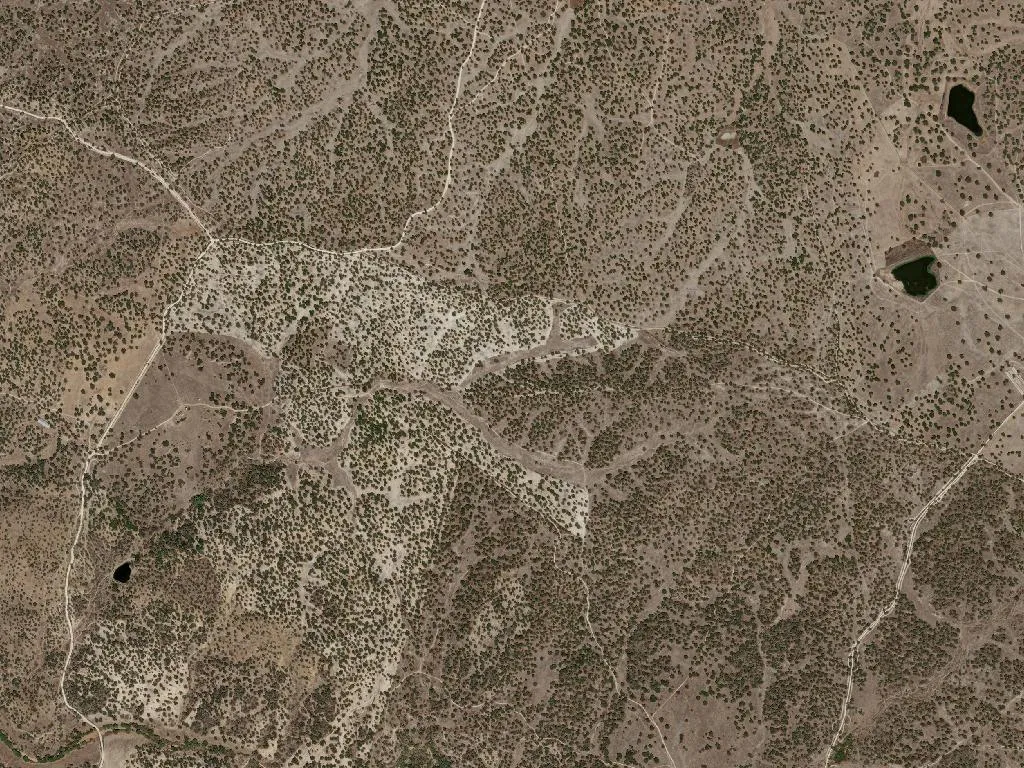
The parish stretches across 3,735 hectares of pasture and vineyard. Rows of Merlot and Aragonez at Herdade do Pinheiro slice the land into clean geometry, a counterpoint to the meandering ochre tracks that pre-date the Romans. Five millennia back, someone raised the Anta da Pedra dos Mouros, a dolmen that now keeps watch between kilometre-marker 12 on the M521 and an irrigation reservoir. Limestone outcrops on the Serra do Monfurado glare white at noon; darker schist edges the Arraiolos stream. Mid-day light is merciless—shadows shrink to stubs, colours bleach to dust. At dusk the plain dissolves into cadmium and rust.
What the Land Tastes Like
Flavour is postcode-specific. Évora DOP sheep’s-milk cheese firms up in the cellars of Celeste and Zé Paulo: semi-curd, straw-coloured, a peppery finish lent by native merino pasture. IGP lamb from Montemor-o-Novo grazes the herb-scented fields of Herdade da Serrinha and reappears in the clay-pot stews at O Moinho, thickened with coriander and late-harvest garlic. Inside kitchens, smoke-cured chouriço and morcela hang like dark commas from ceiling beams; hams cure slowly in the old olive press. Dense Alentejo corn bread, crust an inch thick, underpins açorda—garlic-laced broth with an oozing poached egg—served at Café Central on Thursdays.
Getting Here, or Not
Practical distances: Arraiolos, famous for its hand-stitched carpets, is 12 km east; Évora’s Roman temple and chapel of bones 23 km south on the N4. The 07:15 Alentejo bus is the weekday umbilical cord to the outside world; the Saturday run was axed in 2018. Crowds are theoretical: visitor numbers rank among the lowest in Portugal. People come precisely for the interval—between one footstep and the next, between the wind in one olive grove and the next.
When shadows lengthen and the heat loosens its grip, the 800-year-old olive trees of Olival do Pêro rustle with a dry, metallic whisper that mingles with sparrows under the church eaves. Stay long enough and that small, precise sound becomes the village’s second silence.