Full article about Évora Monte (Santa Maria)
Évora Monte crowns a granite outcrop with a Gothic-Manueline castle, pillory chapel and horizon-wide Alentejo views.
Hide article Read full article
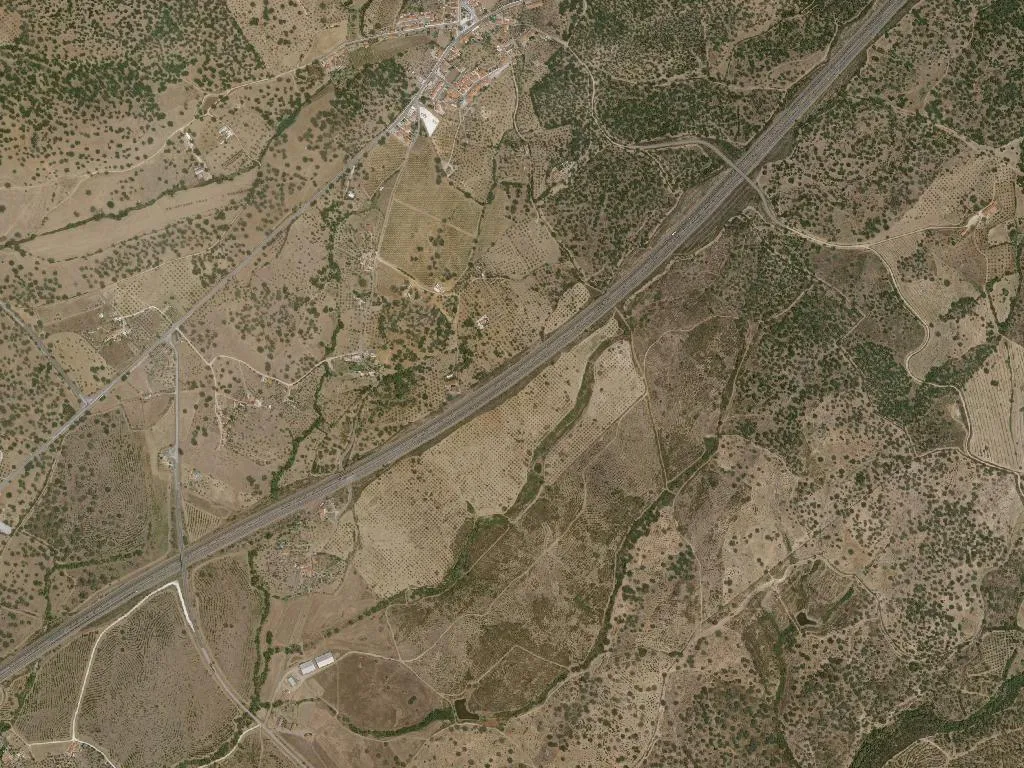
The road corkscrews upward until, on the final bend, granite bursts into view: a single, obdurate block of battlements and dwellings fused to the rock as if geology itself had decided to build. At 352 m the wind has the run of the Alentejo—wheat chessboards and olive grids below, nothing between you and the horizon but the smell of warm resin and dust.
Évora Monte (Santa Maria) is one of the few settlements that refused to come down from its hill. While neighbouring medieval towns crept onto the plain, this one stayed clamped to its granite outcrop, loyal to the twelfth-century military logic that placed it here. After Dom Afonso Henriques captured Évora in 1166 he handed the site to the Knights Hospitaller to police the corridor between the Tagus and Sado basins. A royal charter arrived in 1200, was confirmed by Sancho I, refreshed by Manuel I in 1516, then quietly revoked in 1855 when the village was absorbed by Estremoz. Today 506 souls occupy 9,938 ha—barely five people per square kilometre.
Stone upon stone, memory upon memory
The National Monument castle is both keep and compass. Its square tower, Gothic crenellations ribbed with Manueline reinforcements, rises from dressed blocks the colour of burnt cream. Inside, the barrel-vaulted cistern still gathers winter rain; from the parapet Estremoz glints white and serrated in the distance. Beside the gate, the parish church of Santa Maria—sixteenth-century, rebuilt over an earlier temple—hides a gilded Mannerist altarpiece that catches the nave’s dusk like a struck match.
In the main square a perfectly proportioned Manueline pillory stands in pale limestone, one of the finest in Alentejo. A few paces away the seventeenth-century Chapel of Our Lady of the Good Death keeps its doors locked for all but the annual festa, its whitewashed façade the very image of rural discretion. Outside the walls, the Chapel of São Bento das Perdizes marks the spot where an autumn pilgrimage once drew whole hamlets.
Larder of protected flavours
Despite its size, the parish holds nine certified origin labels—an Iberian record. Chouriço Grosso de Estremoz and Borba, farinheira, blood sausage, paia (loin or belly), Queijo de Évora and Norte Alentejano olive oil all cure in backyard smokehouses. Ameixa d’Elvas—plump, garnet-coloured plums—are sun-dried on reed screens before being poached in syrup dense enough to spoon. There are no gastro-bars or paint-box taverns; you eat here by invitation or by chance, at tables where the wine arrives in clay talhas and the cheese is sliced with a pocket knife.
Whitewash, narrow lanes, stone stairs
The street plan is medieval: irregular steps, limewashed walls, brick coping that sketches a saw-tooth roofline against the sky. Forty per cent of residents are over 65; children number fewer than fifty. Eight guest units—two apartments, a pair of cottages, four rooms in a small guest-house—absorb the trickle of visitors who climb the castle and leave the same afternoon. Those who stay hear the granite exhale after sunset, the dry night air rattling shutters, the silence so complete you catch the pulse in your ears.
At dawn the wind returns, carrying the scent of newly turned earth, a tractor’s distant growl, a blackbird’s three-note reveille. And the stone—always the stone—keeps its grip on the hill, holding whatever secret made it worth refusing the plain.