Full article about União das freguesias de São Bento do Cortiço e Santo Estêvão
Walk the merged Alentejo parish where cork oaks bleed amber, wine vats rumble and migas steam.
Hide article Read full article
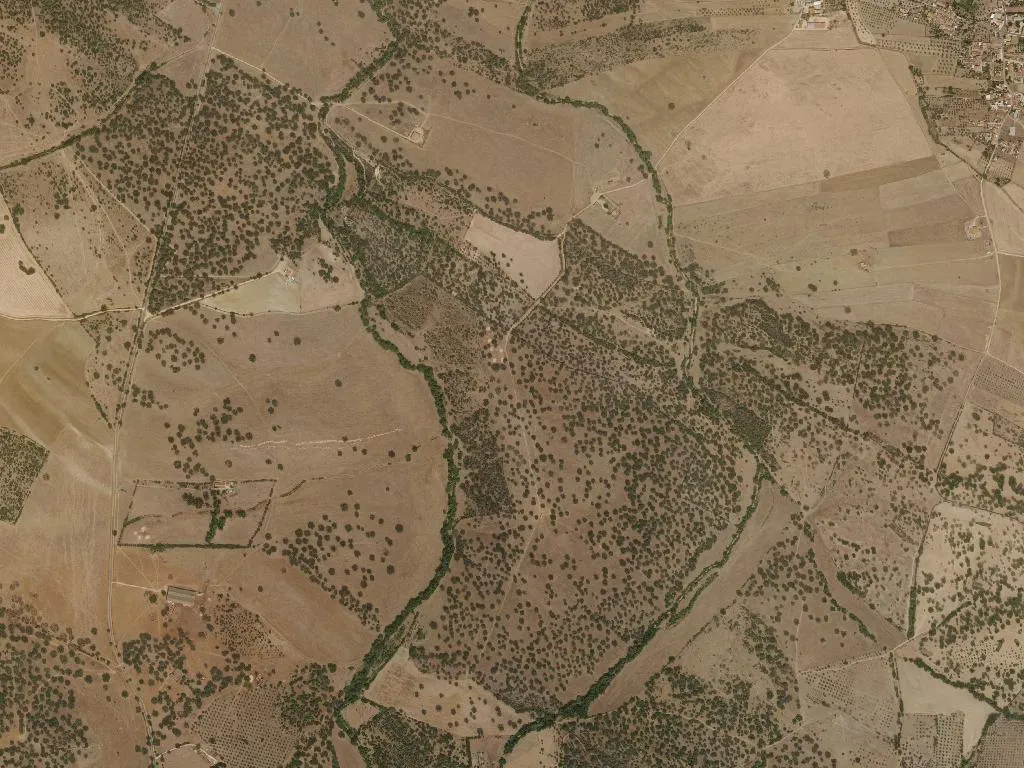
The scent arrives before the sight: dry earth like yesterday’s bread, holm-oak resin, the metallic tang of must fermenting in a roadside cellar. Here, in the merged parish of São Bento do Cortiço and Santo Estêvão, the Alentejo offers itself without stage make-up—an open table of cork and wheat, silence clipped only by the low boom of a great bustard, heat that settles in the knees the way stairs do after the third flight. At barely 300 m above sea level the views pour out as slowly as olive oil from a jug; the cork oaks, still flayed the colour of a fresh graze after summer’s stripping, mark the calendar on the landscape like chalk tallies on a wall.
Cork, vines and the rhythm of the montado
The name tells the story: São Bento do Cortiço—Saint Benedict of the Cork Shed. Faith and bark, church and axe. More than 5,000 hectares of cork oak roll away in every direction, the single largest concentration in the borough of Estremoz, an expanse large enough to swallow a flock and still leave canopy for shade. Harvest still follows the nine-year rule: nine years of waiting, one month of careful axe-work tapping the trunk like a friend who takes an age to answer the door. Santo Estêvão—Saint Stephen the Martyr—supplies the other half of the 2006 merger, yet it is the land that governs. Seasonal streams, drier than wet, drain towards the Guadiana basin; no river is navigable, only just enough water to keep the vines alive and to feed the cooperative winery at Borba, which swallows twenty tonnes of grapes from a single quinta. Locals joke it is “a harvest big enough to fill São Bento church—if the wine were holy”.
At table, northern Alentejo style
Food is what the soil volunteers, no permission asked. Migas—rustic breadcrumbs fried with pork and coriander—arrive folded like laundry, each forkful a hot baking tray; lamb stew simmers as slowly as café gossip. Évora DOP cheese, butter-yellow like an old school wall, is served at the end with pão de rala, a convent sweet born of surplus eggs and sugar. Chouriço thick as a wrist, farinheira that leaps in the pan, blood pudding dark as fountain-pen ink hang in the smokehouse like coats in a hallway. November olive oil lands green and peppery, a throat-burn reminiscent of strawberry-tree aguardente. Plump Elvas plums—candied since the 1500s for export to the courts of Europe—finish the meal, either as jam or cheek-to-cheek with cheese, asking silent questions. Borba reds behave like the men who make them—structured, unapologetic; whites say little and expect you to keep up.
Paths shared by eagles and bustards
Walking here means entering a timezone without urgency: a shepherd moving sheep like parcels of news, holm-oak shade sliding across the track like a cat at a window, a golden eagle hanging overhead to decide if descent is worth the effort. No national park status is required; the montado is a reservoir of everything—great bustards that fly like sacks of blankets, hares exploding like startled lids. Trails, equally suited to boots or mountain bikes, unwind among oaks that have seen more bicycles than ox-carts. In July the air smells of toasted rockrose; in February wet earth steams of mushroom and promise.
Slow-motion experiences
Visiting a family winery feels like dropping in on a neighbour: bring time, bring chat, bring an empty bottle to fill. Borba’s municipal tasting room stocks wines that have not yet realised they are good; the village abattoir shop sells charcuterie like a secret—only to those who know to ask. The A6 motorway is your escape hatch: Estremoz is twelve kilometres away, half the time needed to heat a bread oven; Borba is twenty, the exact length of a pot of rice. Population density works out at 0.12 humans per hectare—more oaks than neighbours, which for many is the very definition of holiday. In 2025 the parish council cancelled a fado night for lack of chairs—proof that even at the edge of the map you still need to book.
Come late afternoon, when sunlight settles on trunks like butter on toast, the parish’s soundtrack emerges: wind in holm-oak leaves, sheep hooves scuffing baked earth, a church bell that seems to say, “go, but come back”. Nothing more, nothing less.