Full article about Woodsmoke & Marble Silence in Mamporcão
Between Estremoz marble ridges, two hamlets cure pork and time in oak smoke
Hide article Read full article
The Smell of Burning Wood
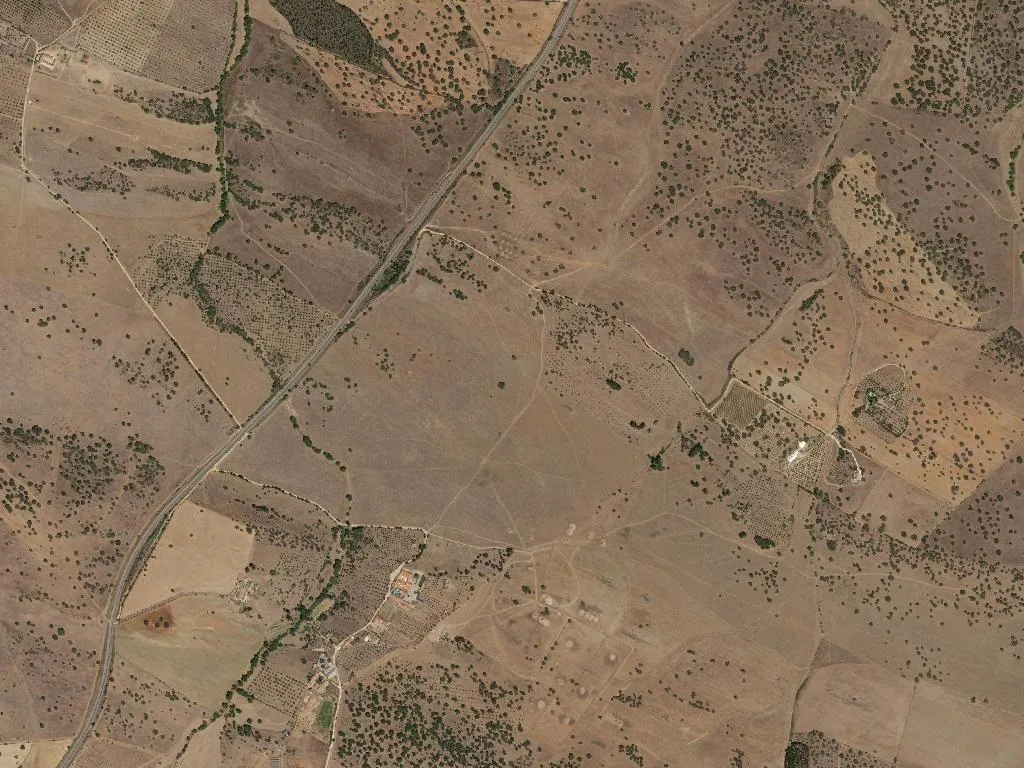
A drift of woodsmoke meets the resinous scent of curing pork as dawn lifts over the marble-fronted ridge north-east of Estremoz. Instead of the Alentejo’s familiar wheat ocean, the land rolls – 4,340 ha of corduroy vineyards, olive groves and scattered cork oak, all stitched together by dry-stone walls the colour of yesterday’s bread. Two hamlets, São Lourenço de Mamporcão and São Bento de Ana Loura, were merged by administrative fiat in 2013, yet their identities remain stubbornly separate, sharing only the same deep silence and a population density of ten souls per square kilometre.
What’s in a Name
“Mamporcão” still sounds like a lost Moorish settlement, though linguists shrug; the suffix –ção is common enough in medieval Portuguese. The saintly prefix honours Lawrence, gridiron martyr, while Ana Loura – “Anne the Blonde” – survives only in a 1596 baptismal ledger and on today’s road sign. There are no baroque façades or tourist panels; memory lives in whitewashed edges, in the single-nave churches whose bells ring the agricultural hours, and in chimneys that exhale the season’s first acorn-fed pig.
Smokehouse & Cellar
Nine protected delicacies are coaxed from this pocket of schist and marble: Chouriço Grosso de Estremoz, morcela blood sausage, farinheira, three cuts of paia (loin, belly, plain), Queijo de Évora, Norte Alentejano olive oil and the candied Ameixa d’Elvas. In timber smokehouses, fat drips slowly onto embers of holm oak; below, clay talhas and French barriques rest in granite cellars first hacked out by Romans attracted to the same iron-veined marble that later built the Jesuit college at Évora. The resulting reds – dense, plum-dark, gently resinous – need no introduction to anyone who has eaten pork in Portugal.
Clocks Without Hands
The 2021 census logged 449 inhabitants; 154 are over 65, only 43 under 20. Mid-summer streets fall silent as the asphalt shimmers; life resumes at five when cane chairs appear on doorsteps and the evening breeze carries the clink of coffee cups. There are two guesthouses – both restored farmsteads – and no itineraries. You arrive because someone mentioned the smokehouse, or because you followed the marble quarry road until it turned to dirt.
A Corridor, Not a Stop
The N114 cuts a discreet diagonal across the parish, shaded by umbrella pines. Coaches don’t pull in; pilgrims march past to Estremoz castle. Yet the ridge gives long, quiet views: olive grey, vine green, newly turned earth the colour of Ceylon tea. When the levanter wind rises it brings the smell of dry grass and hot schist, and you realise the place demands a decision – to linger long enough to taste the point at which cured loin sweetens, or to drive on before the cheese rounds are turned in their cloths.