Full article about Veiros
Cobalt azulejos, cork-oak shade and a vein of water thread this Évora parish
Hide article Read full article
The heat collects quietly
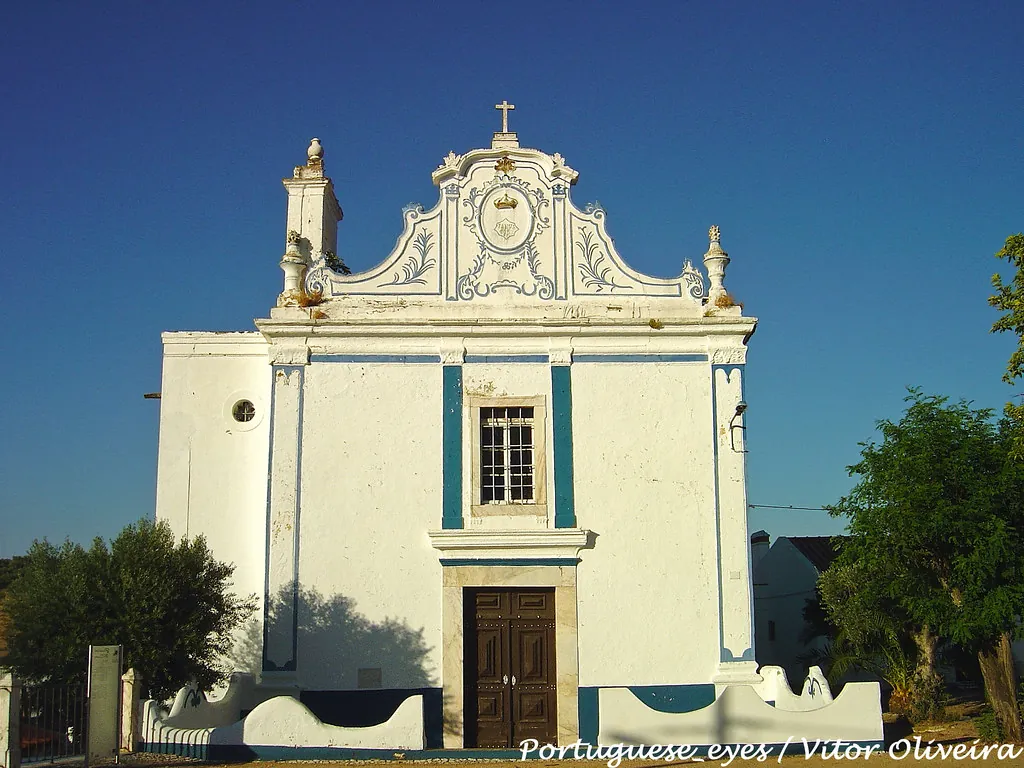
The heat collects quietly in the whitewashed walls of Veiros’ mother church. Inside, the air stays cool, thick with incense and the scent of seasoned timber. Blue-and-white azulejos glaze the nave, their cobalt enamel catching the sidelight that slips through the south door—brightness filtered to something almost liquid. Beyond the porch, the Alentejo plain rolls in grey-green waves: cork oaks with elephant-hide trunks, olive trees corkscrewed by decades of wind, low vineyards following the tilt of the land towards the Véio stream. The village perches at 280 m above sea level, unrushed, scattered along packed-earth tracks that link outlying farms to the limestone core. Silence here is not absence but density.
Water geometry
The Ribeiro de Véio draws the parish’s spine. The name comes from veio, a slender vein of water persistent enough to turn millstones and hydrate the montado. Along its banks, mirror-bright pools throw back the sky and, at dusk, attract grey-crowned shrikes. Black oaks—an out-of-place deciduous relic—survive in these damp scraps, roots sunk in dark clay. Higher up, the communal threshing floor keeps its earth packed hard; grain was trodden here until the 1950s before heading downstream to the mills. Now wind scuds across the bare surface and the perimeter stones remember a system that worked for centuries.
Gold leaf, lime wash
The 1720–48 Igreja Matriz, dedicated to Our Lady of the Conception, commands the square. Inside, a gilded baroque retable erupts in acanthus, cherubs and volutes, trapping candlelight like imprisoned sunlight. The parish museum, no larger than a side chapel, hoards polychrome wooden saints in stone niches. On 8 December the feast-day procession threads the lattice of alleys, ending in a courtyard supper of clay-pot stews and oven-roasted meats. Away from the centre, pocket-sized chapels—St Anthony, St Sebastian—stand sentinel on the white roads, their interiors smelling of candle stubs and rising damp.
Alentejo table
Kitchen calendars still follow the pig-killing season. Tomato açorda cushions a poached egg; wheat bread drinks the scarlet broth and coriander vapours. Lamb stew jostles with potatoes and carrots; migas crumbs soak up wild asparagus and discs of Estremoz-Borba IGP chouriço, smoked almost black. On the dessert plate, sericaia trembles under a drift of cinnamon; ricotta queijadas cool on wooden boards. Olive oil from Norte Alentejano DOP arrives green-gold and peppery; Évora DOP sheep’s cheese is firm, nutty, aged. Wines are strictly Borba: sinewy reds and flinty whites. Veiros itself claims only twelve certified hectares—Aragonez and Antão Vaz rooted in schist and granite—making it the smallest DOC pocket in the region.
Between dry-stone walls
There are no way-marked trails, just the farm tracks that stitch estate to estate. Dry-stone walls, built without mortar, set the property lines and accompany every footfall. Dust lifts with each step; in high summer the air tastes of thyme and esteva. During August the agricultural fair spreads under elm trees: rosemary honey, first-press olive oil, medronho firewater, Elvas plums preserved in syrup. Stallholders call their prices over the hum of bees drunk on sugar.
Afternoon drains away. On the old threshing floor, low sunlight drags shadows across the beaten earth. In the distance the stream murmurs—a thread of water crossing the plain without fuss, measuring time in harvests, not hours.