Full article about Nossa Senhora de Machede
939 souls, peppery oil, granite monuments—Machede waits 20 min west of Évora
Hide article Read full article
The Geometry of Light and Shadow
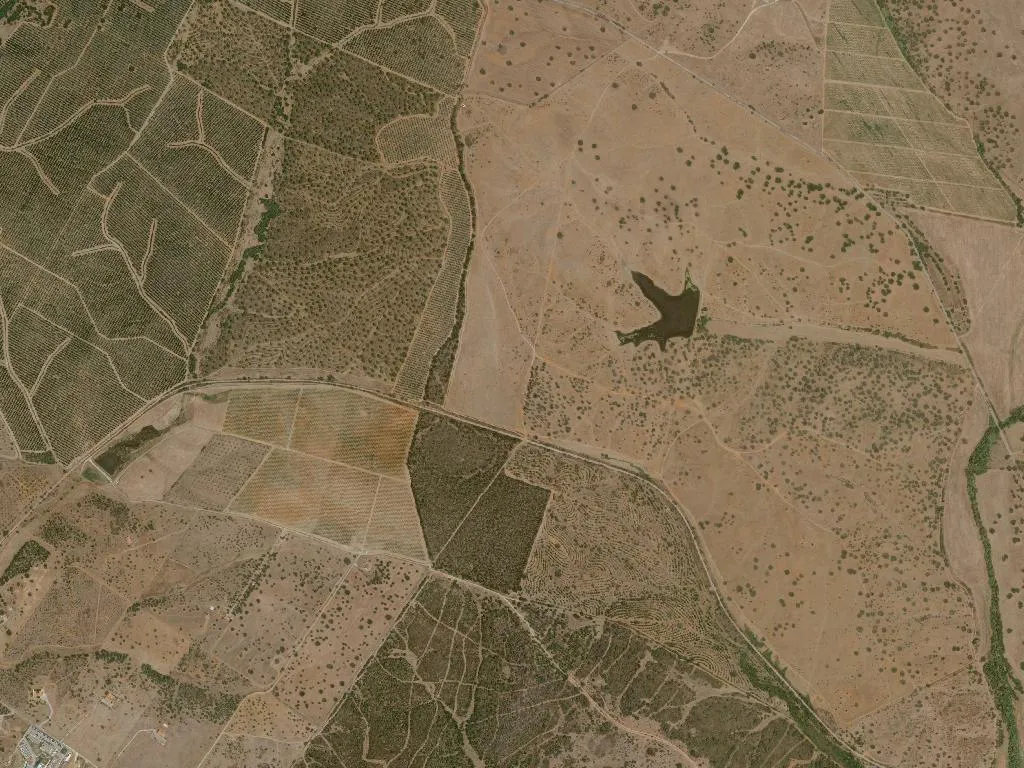
Sunlight skims the whitewash and an olive tree prints shifting lattices on the beaten earth – the same game of silhouettes we used to play with torch-beams against pub walls after last orders. At 231 m above the Alentejo plain, the morning hush in Nossa Senhora de Machede has the weight of demerara pressed into foil. Air smells of baked clay and the roadside rosemary that stains your shirt-cuffs when you spread a towel on the lawn instead of trekking to the coast.
The parish covers 180 km² – twice the footprint of Windsor Great Park – yet the only queue is for coffee at 8 a.m. Population 939, of whom 258 draw a state pension and only 115 are under 25. Do the maths: the village youth could fit in the back row of a single-decker bus. The census doesn’t record that even the dogs observe siesta, or that winter stars look like the brass studs on my grandmother’s bureau.
Memory Set in Stone
Twenty minutes west of Évora’s Roman temple lies a national monument I’ll leave you to identify – a granite-and-brick essay in endurance that has outlasted every bank account I’ve ever opened. Tour coaches bypass the turning, heading for UNESCO tick-boxes, yet Machede slips into the frame like the wedding guest who steals the photograph wearing a 1970s suit.
What the Plain Tastes Like
Nothing here is composed for Instagram. The olive oil is the peppery sort that makes sea-bass taste as if it’s just learned to swim; the DOP Queijo de Évora leaves the same tart pinch at the back of the jaw as a wine you didn’t have to pay for; and the lamb grazed where Google Maps fades to beige. There is no tasting menu – only the prato do dia. Arrive after two and you’ll get sopa da pedra, a smoky bean-and-pork stew that began as a monks’ prank and ended up lunch.
Beds Among Vines and Olives
Bedrooms come in three varieties: a 19th-century townhouse restored by a Lisbon architect who refused to sand the doors quiet; a low white villa where the host delivers still-warm bread at 7.30 sharp – “because that’s when I wake; afterwards you’ll have to walk to the café”; and a first-floor flat that smells faintly of Benuron and Avon because it still belongs to Aunt Maria, now in Toronto. No spa playlists, no pour-over stations. Just the Alentejo hush in which even the kitchen clock gives up pretending to hurry.
At five the bell rings – not the church, but Silvestre’s signal that the day’s labour is done. Dust lifts from the dirt road, fine as burnt toast. Open the shutters, let the sun settle on your forearm and decide the only question that matters: whether the next glass will be tinto or branco.