Full article about Cortiçadas de Lavre: where silence tastes of thyme-smoke
Ageing whitewashed hamlet under cork-oak shade, roasting Montemor lamb in clay ovens
Hide article Read full article
The Weight of Silence
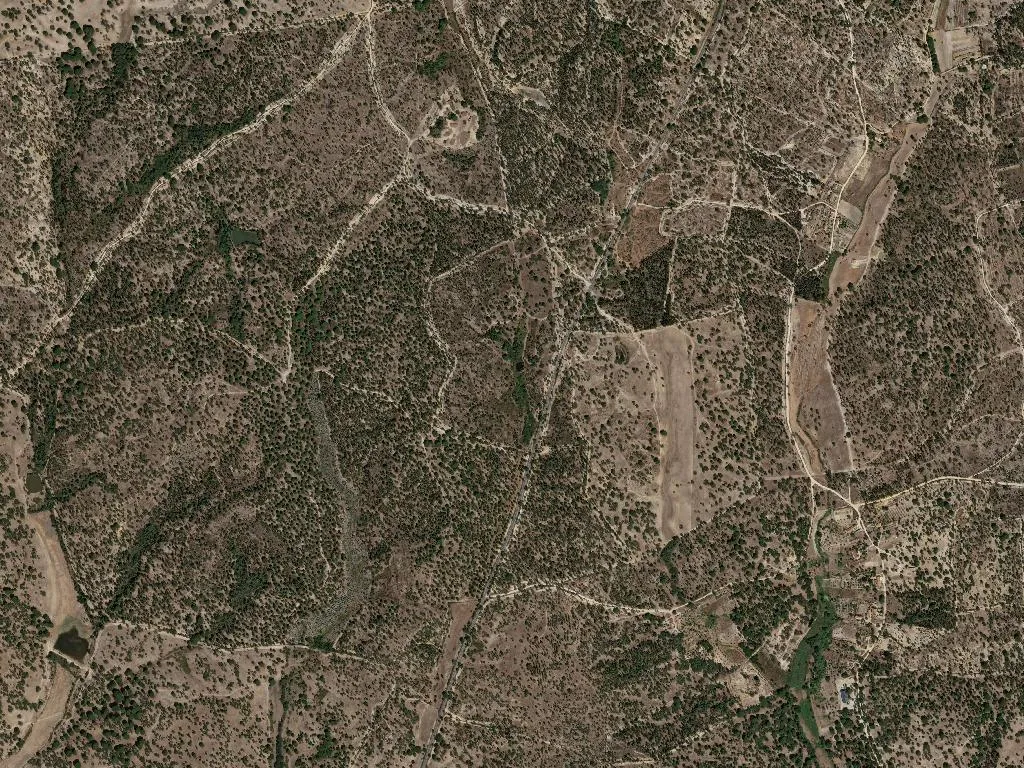
Silence lands differently here. It isn’t the absence of noise but the presence of a low wind that polishes the plain, the sudden crack of an holm-oak twig, a distant dog ricocheting through open space. In Cortiçadas de Lavre the horizon is an unbroken ruler scratched only by the vertical punctuation of trees and the white-lime houses that hug the soil as if they might otherwise blow away. Light arrives unfiltered: it slams into ochre earth, caroms off whitewash, cuts shadows that slide across walls with the patience of a sundial.
Living on the Plain
The parish spreads across almost 10,000 hectares of inner Alentejo, a territory where human density hovers at six souls per square kilometre. Of the 655 inhabitants clocked in 2021, 268 are over sixty-five; only 52 have yet to turn fifteen. The arithmetic sketches an ageing community, yet not a mute one: those who remain carry a mental OS map of every bend, borehole and terrace where vines still insist on growing despite summer heat that splits the ground like old porcelain.
Average altitude is a modest 123 m, but the feeling is of greater exposure. Without mountains to brake the wind or bank moisture, the climate shows its workings: dawn frost in winter, 40 °C by mid-afternoon in July. Holm oaks and cork oaks provide the only canopy – furrowed trunks, thick cork armour, shade just porous enough for cattle that graze untethered.
Alentejo on a Plate
Local gastronomy is not performance but sustenance promoted to ritual. Montemor-o-Novo lamb, protected by Geographical Indication, grazes these open fields on wild thyme and rosemary. Slow-roasted in a wood-burning oven, the meat relaxes into fibres that surrender at the nudge of a fork, perfumed by evergreen smoke and fat that trickles onto hand-thrown clay.
Évora DOP cheese appears in small, firm discs of semi-soft paste with a barn-yardy kick. It is eaten with Alentejo bread – crust like terracotta tiles, crumb dense enough to survive a day in a saddlebag – and Alentejo honey, the colour of barley sugar, collected from hives parked on the edge of dry-land cereal fields. Every product carries the terroir of aridity, forty-degree diurnal swings, and the patience required for time to do its chemistry.
Vines muscle through the same soils, trained in wide rows and shielded by knee-high walls of loose stone. Under an unrelenting sun the grapes shrivel slightly, concentrating sugars and tannins that translate into reds with shoulders, mature tannins and a finish that refuses to leave.
Staying
Cortiçadas de Lavre offers no marble-clad monuments or sign-posted heritage trails. The single listed building – an early-twentieth-century primary school granted public-interest status – blends into the landscape, valued more for continuity than exception. Experience is measured not in selfies but in the ability to down-shift to plain time: letting afternoon heat decelerate movement, listening until the silence separates into its component sounds – grasshoppers, a distant tractor, the click of cork expansion.
There are three guest rooms, all on working farms. GPS: 38.6791, -8.2834. Book early – there really are only three.
At day’s end, when the sun drops and the thermometer finally relents, the scent of oak-kindled fires rises from chimneys. It mingles with road dust and the coconut-suntan-lotion aroma of rockrose. The smell lodges in fabric, skin, memory – everything here is slow-release.