Full article about Silveiras
Alentejo village of cork oak, iron ghosts and a tilting church bell that still counts 3,612½ souls
Hide article Read full article
The White Light of Silveiras
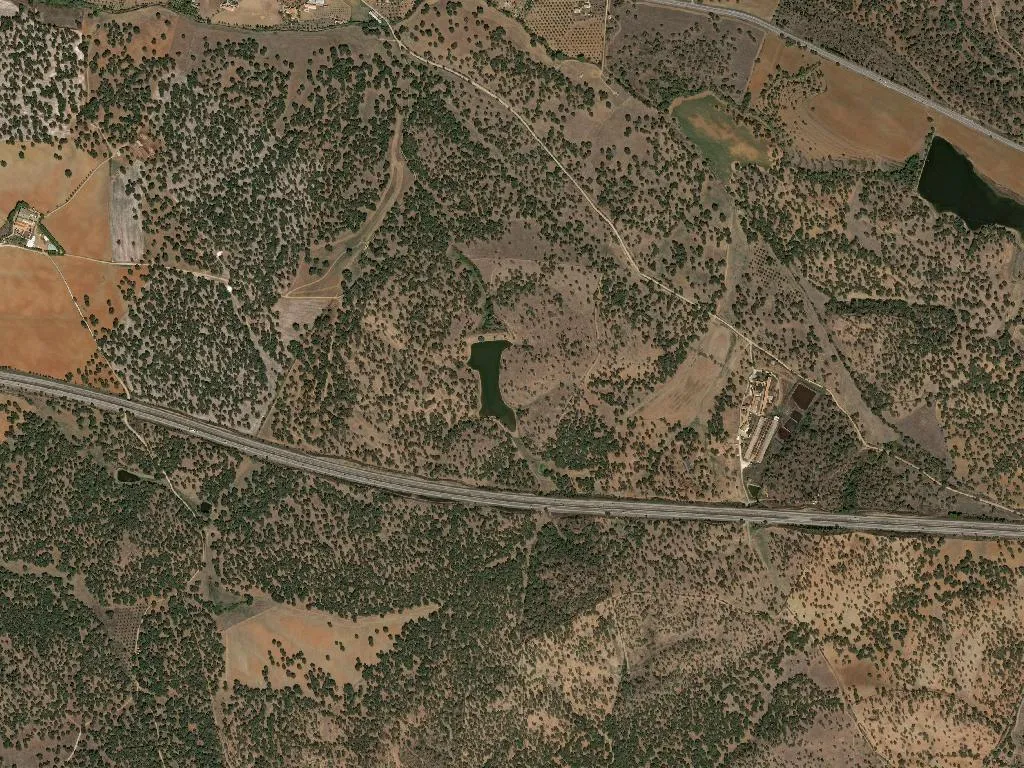
Morning light strikes the whitewash of Igreja de Nossa Senhora da Natividade and ricochets back so sharply it stings the eyes. The churchyard is empty; the only sound is the groan of Café Central’s door as Zé Pires steps out for the dawn bread run. Silveiras wakes reluctantly—first coffee lingers, first yawn stretches, first cigarette smoulders. Out on the Alentejo plain the horizon sits within arm’s reach: extend a hand and the cordon of cork oak is right there, sky stitched to parched earth like two pieces of badly matched linen.
The parish covers 110 km² of holm oak and cork, soil that splits like shattered crockery in August and turns to sponge come December. Officially 3,612 souls reside here—I counted them in the census—but the priest insists the number is higher; no one declares the grandmother sealed in the back bedroom. You feel the deficit anyway: gates welded shut by time, gardens where only bramble prospers, conversations that begin “d’you remember when…” because the present is often out of stock.
Iron, Stone and What Remains
At the Safira mines iron was being hauled out while my grandfather still wore short trousers. Wagons once clattered downhill to the yard where men—always men—rotated the world on muscle and bile. Today the adits are buried, yet rusted nails still surface when you plant an olive, and a spade will strike the black basalt tile that says: first came iron, then vines, then abandonment.
The Pedras Alvas quarry left a hole the rains converted into a green-tinged lagoon. New children don’t know it, but my elder brother lost a sandal there the day he dared the murky water. Locals swear entire machines lie on the bottom—conveyor belts, crushers, a drowned civilisation no one cares to salvage.
The parish church stands obstinate. Its bell-tilt to the north isn’t subsidence; even stone tires sometimes. Inside, beeswax and rosemary incense mingle with Sunday sweat. Generations have signed the pews: pocket-knife graffiti, dates no one celebrates, “Manuel + Rosa”—my cousin Rosa swears it isn’t her handiwork, but the blush betrays her.
At Table, the Real Alentejo
Borrego de Montemor needs no PDO badge—just sniff the neighbour’s washing when she fires up the oven at six. The lamb tastes of the evergreen oak the animals graze beneath and of the slow time that seasons everything here. Queijo de Évora has its protected stamp, yet the point is that António at Quinta do Cano still presses the curd inside a hollowed cork trunk, coagulating with cardoons his father taught him to pick. The honey is newer—German beehives arrived, white helmets too—but the flavour is still October rosemary after the first soaking rain.
On slaughter days the smokehouse colonises the whole cellar. Chouriço smoulders for three weeks; when my mother slices it, the wrapping paper bleeds paprika like an antique map. Migas are made with yesterday’s bread—never today’s, that’s law—and the garlic is from the backyard; supermarket cloves “have no bite”.
Living with the Horizon
Of the fourteen beds available to outsiders, twelve are sheeted by my cousin Ana. She began with a single spare room; now she has three restored cottages and a cat called Fadista who prefers Spanish tourists. Guests generally arrive lost—GPS falters at the national-road roundabout—but that is the test: people who hunt for Silveiras aren’t after an itinerary; they want silence loud enough to hear.
The primary school enrols thirty-seven pupils. Dona Amélia, the eldest teacher, remembers two hundred, yet insists “now is when they learn—no hooligans”. Sr. Joaquim’s café has offered Wi-Fi since 2019, though patrons still drop by to argue Benfica or Sporting as if the clock stopped in 1995.
When the sun drops behind the Serra de Monfurado the façades turn honey-coloured, glowing as if lit from within. The bell then tolls—seven strokes, a pause, three more—each note taking its time to arrive, as though the air has thickened. Children claim it’s the priest calling them to supper, but we know it is simply the day saying goodbye, as it does daily, without hurry or fuss.