Full article about Brotas
Limestone sanctuary crowns cork-oak silence in Portugal’s least-peopled parish
Hide article Read full article
The lime-wash on the walls flings the light back with almost indecent force, making pupils contract after the dappled shade of the holm-oak canopy. In Brotas, white is more than a colour—it is a statement of defiance against the parched Alentejo plain. Silence here has mass, thick as the August heat, broken only by the rasp of a wooden door or the bell that still tolls the hours with medieval punctuality.
Where healing sprang from stone
The village owes its existence to a bovine miracle. In 1424, so the story goes, the Virgin Mary cured a sick cow, making “health spring” where illness had been. Whether fact or faith, the tale set off a quarrying frenzy: the Sanctuary of Nossa Senhora das Brotas went up the same year, turning pastureland into pilgrimage. Around the chapel the confraternity houses form a half-moon amphitheatre—architecture born of necessity, not civic master-planning, designed to bed down travelling worshippers rather than to please planners.
Next door, the parish church wears a crisp Manueline collar. Three centuries later, when the flood of pilgrims had thinned to a trickle, Brotas stayed alive—not as a museum of devotion but as a settlement that learnt to survive without other people’s fervour.
The silent auditorium
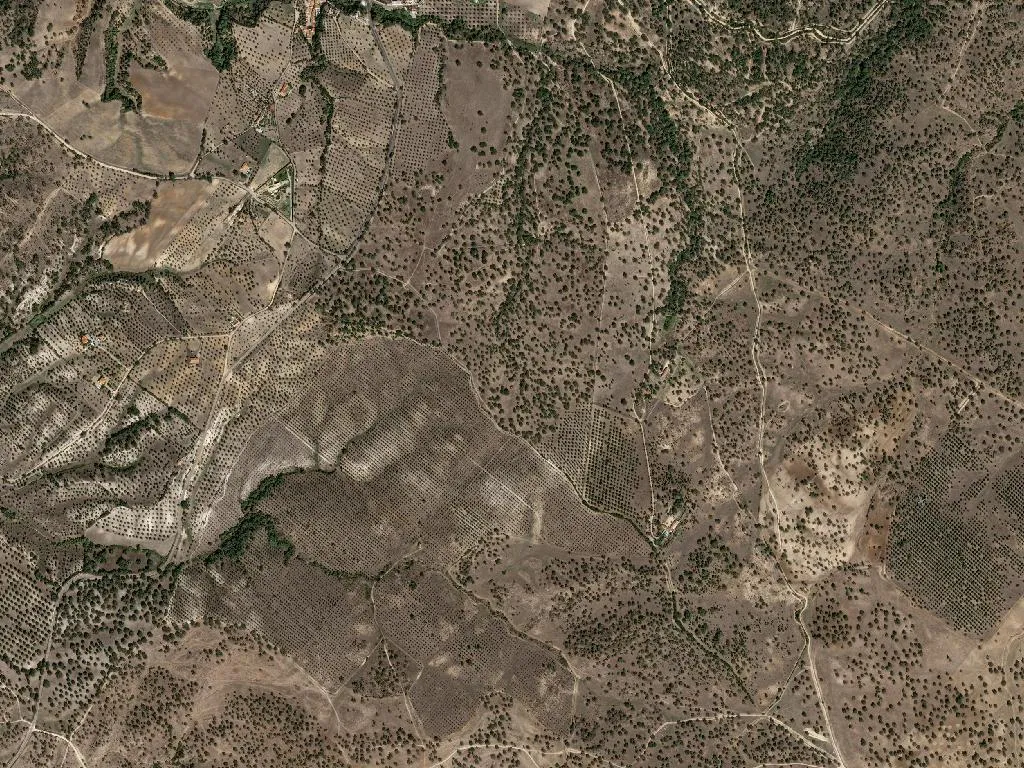
Streets no wider than a cart axle thread the backstage of that limestone amphitheatre. Three-hundred-and-forty souls are scattered across 83 km² of olive groves and cork oak montado—barely four inhabitants per square kilometre, a statistic you feel in the lungs. Elderly residents outnumber under-25s six to one; you sense it in the slow afternoon cadence, in the absence of children’s voices when school lets out.
Brotas straddles the N2—Portugal’s 739-km “Route 66”—which guarantees passage but not pause. Those who stop usually do so for the sanctuary or for the optical illusion of the curved terrace. Those who linger check into the lone guesthouse, a converted manor that lets you live at the village’s metabolic speed rather than the tourist calendar’s.
Flavours that endure
There are no tasting menus, only recipes that refuse to die. Lamb stew is built with IGP Borrego de Montemor-o-Novo, its gravy thickened with farm-yard mint. Dogfish soup arrives at table steaming and rusty with paprika; bread is still baked in a wood-fired oven behind the café. Local honey and cold-pressed olive oil appear unannounced—no provenance spiel required; the bees work the surrounding orange groves and the lagar still crushes fruit from family groves.
What remains
At dusk the low sun ignites the whitewash and shadows stretch like poured tar. The amphitheatre reveals its original purpose: amplification. Not of voices—those are scarce—but of the Alentejo’s dense quiet, where every sound is given its own paragraph: the metallic clack of a gate, the sanctuary bell rolling across the olives. The hush that follows is not absence but concentrated presence, as if the entire village were breathing through one pair of lungs, slowly, at the pace stone and lime dictate to anyone wise enough to stay.