Full article about Cabeção
Cork-oak roads lead to Cabeção, Mora—sip house red beside 16C church frescoes, sleep under eucalyptus, book lamb ahead.
Hide article Read full article
What you'll find in Cabeção
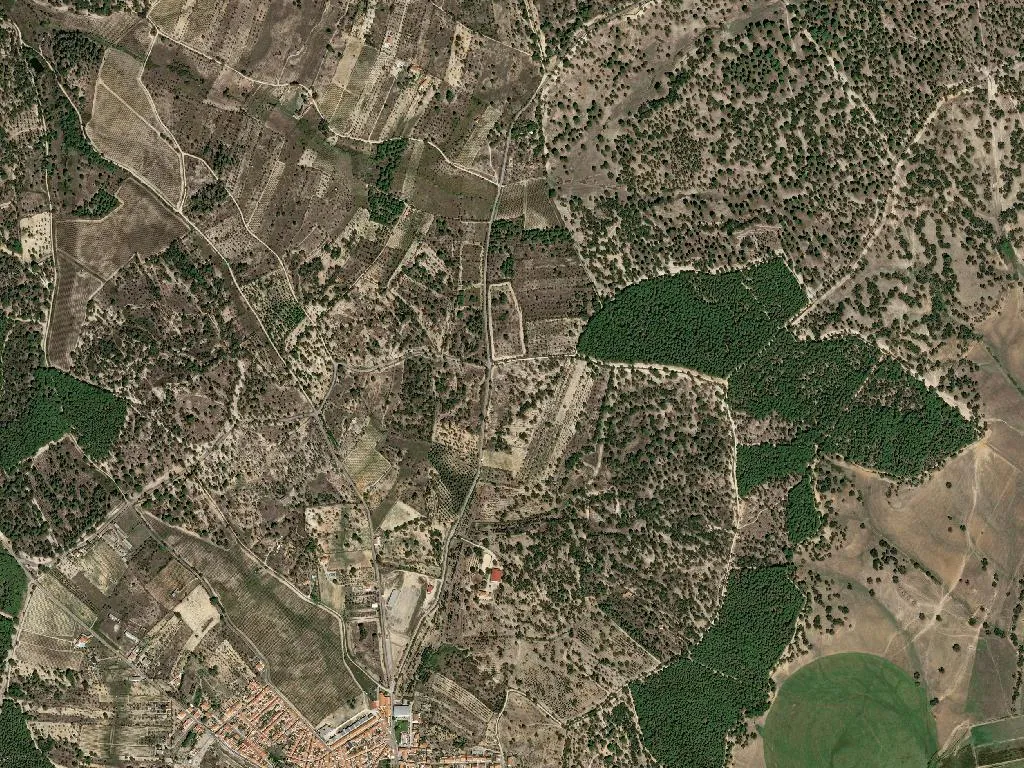
The N18 is the only dignified approach: a straight, fast cut through cork oak and stone-pine before the asphalt fractures into speed bumps and the village sign appears. Eight-hundred-and-sixty-three people live here, scattered across 48 km² of montado at 132 m above sea level—enough altitude for the evening air to carry the smell of eucalyptus down from the ridge.
What to see
The parish church is the single listed building. If the iron door is locked, cross the square to the house with the green shutter; Sr Joaquim keeps the key between his groceries and the coffee machine. Inside, sixteenth-century frescoes flicker across the vault—azurite and cinnabar still bright where the sun never reaches.
Everything else is Alentejo standard: whitewash, terracotta gutters dissolving into powder, a bandstand that no band has used since the Carnation Revolution. The exception is the 1923 cast-iron gazebo in Praça da República, shipped up from a Lisbon foundry and still wearing the maker’s plate—Fábrica de Fundição de Ovar, 1922.
Where to eat
Order the lamb a day ahead. It arrives from Montemor-o-Novo, labelled “borrego de raça”, and is roasted on Sunday mornings at O Cantinho. Twelve euros buys half a shoulder, bronzed potatoes, a glass jar of house red and the television tuned to RTP1. Bread is driven in from Mora—the village oven closed when the last baker retired two decades ago. In April, after the rain, locals collect wild asparagus from the verges and fold them into migas, the bread-crumb sauté that tastes of smoke and spring.
Where to stay
Four holiday cottages are listed on Booking; only Avó Lurdes has air-conditioning that actually cools. August sells out two months ahead; any other month you can ring the night before and negotiate the price downwards over a glass of medronho.
Getting there
Leave Lisbon on the A6, peel off at Évora, follow the N18 to Mora, then the N370 for the final 18 km. Fill the tank at Intermarché in Mora—after that the pumps charge tourist tolls.
When to go
Mid-March for almond blossom, when the hills look dusted with icing sugar. Mid-October for mushrooms, but apply first to Mora town hall for a foraging licence. August is a terracotta furnace; December will cancel your weekend with a single Atlantic front.