Full article about Pavia: Alentejo village where cork swallows the bell
Granite pillory, Roman bones and lamb stew scented with rosemary—Pavia keeps its stories low
Hide article Read full article
Bronze, stone and silence
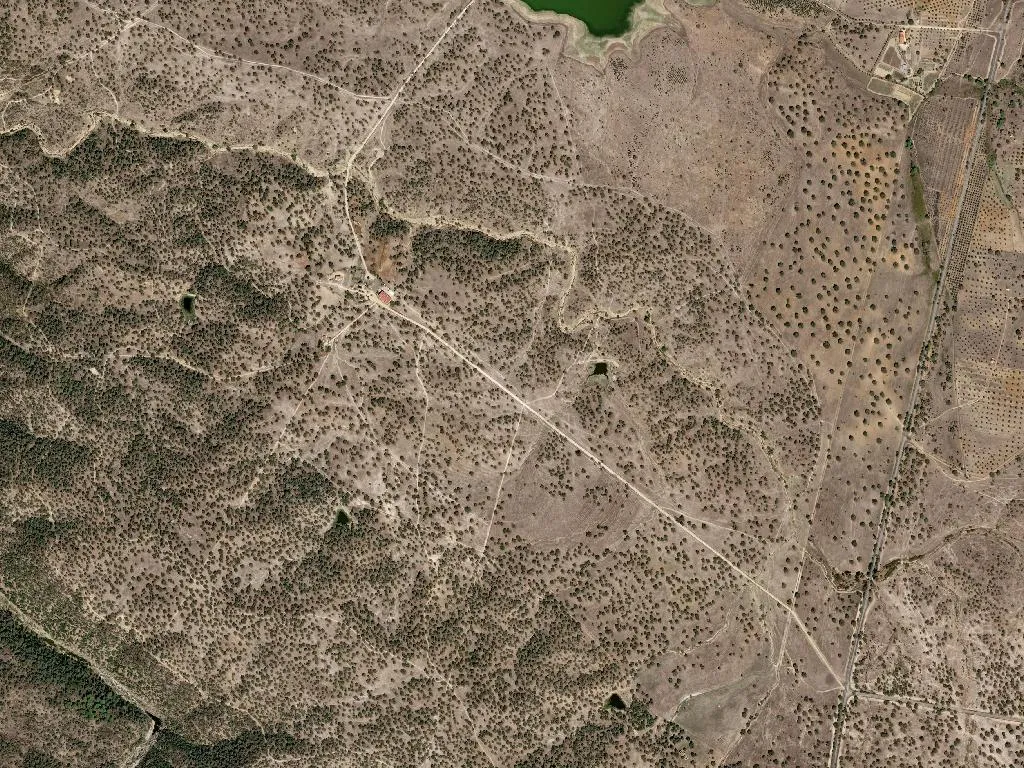
At three o’clock the parish bell fires three clipped notes across 31 square kilometres of Alentejo cork and holm oak. No masonry throws the sound back; the trees simply swallow it. In Pavia’s mediaeval core the afternoon light ricochets off limewashed façades, landing finally on the only Manueline pillory in Mora municipality, carved from grey granite the year King Manuel I granted the village its 1519 charter.
Stone, carving and Roman bones
The mother church rebuilt after the 1858 earthquake layers late-Gothic ribs over a later, sober skin. Inside, a gilded baroque retable drinks in what little colour slips through tall windows. A side-niche holds a reliquary no bigger than a tea-caddy: splinters of Roman martyrs’ bones that crossed the continent in the 1500s to end their journey here. Outside, a 1606 cross shows the weary figure of the Senor dos Passos; a few paces away the little jail that closed in 1974 now keeps company with ox-yokes and priests’ gold-thread vestments.
Beyond the vanished walls the hermitage of Nossa Senhora da Saúde waits for the second Sunday of May. At 10.30 sharp the statue is carried out to the wheeze of the village band; by dusk the square is a tangle of coloured bulbs, accordion and chouriço smoke. José “O Tinoco” has supplied the latter every year since 1983.
Lamb, wild asparagus and cinnamon
In kitchen hearths spring Montemor-o-Novo IGP lamb is rubbed with montado rosemary and thyme, then slid into wood ovens. Maria “A Formiga” has served her mint-fresh lamb stew at the Tasca do Zé since 1983; between March and April she folds wild asparagus, gathered from shale crevices, into peppery migas. Grandmothers still ladle coriander-laced dogfish soup – a souvenir carried inland by Setúbal fishing families who settled here in the 1950s.
At Café Central, cinnamon-dusted bolinhos de tacho cool on brown paper; Dona Alda’s almond queijinhos sit plump and uneven. Wines come from the Granja-Amareleja co-op, meals finish with Sr Joaquim’s medronho firewater distilled three kilometres away.
Cork, cranes and transhumance
The Seda stream slices the parish diagonally, creating wetlands where egrets and Egyptian vultures breakfast at dawn. The Cork Route footpath runs eight kilometres from the village to Herdade da Serra, passing stripped-bark cork oaks and circular stone huts that once marked Braganza-era boundaries.
From the Azinhal lookout the Alentejo plain unrolls like tilled gold. Centuries-old olive trees, still milled at the 1956 co-op, throw writhing shadows; Merino flocks move under the eye of António “O Cabrito”, Pavia’s last transhumant shepherd.
Improvised verses and Milky Way nights
On 23 June São João’s bonfires flare in the main square. Challenge-singing survives in the parish hall: Joaquim “O da Bica” and Manuel “O Sete” trade rhymes over campaniça guitars, a duel unbroken since the 1970s. The October livestock fair, licensed in 1923, still fills the first weekend with bleating lambs and reused honey jars from the Serra d’Ossa.
When the village lights blink off around midnight the football pitch becomes an observatory. Bypassed by the IP2 in 1999, Pavia’s sky stays ink-black; the Milky Way spills overhead while wind combs the holm oaks and, somewhere out in the dark, Bobi the mastiff keeps watch on Sr Costa’s herd.