Full article about Granja’s 18-Pitch Silence, Scented With Thyme & Lamb Smoke
Granja, Mourão: hear wheat sway over 18 football pitches per villager, taste thyme-scented IGP lamb, feel Alentejo hush.
Hide article Read full article
The Silence Has Weight
Dawn breaks reluctantly over the Alentejo plain, and Granja's silence presses against the skin. Not absence, but presence: wind threading through wheat stalks, the distant groan of an iron gate, a single dog's bark carrying for miles across the 92 square kilometres where only 514 souls reside. At 241 metres above sea level, this parish in Mourão municipality stretches so thinly that each resident commands nearly eighteen football pitches of space.
Geography of Absence
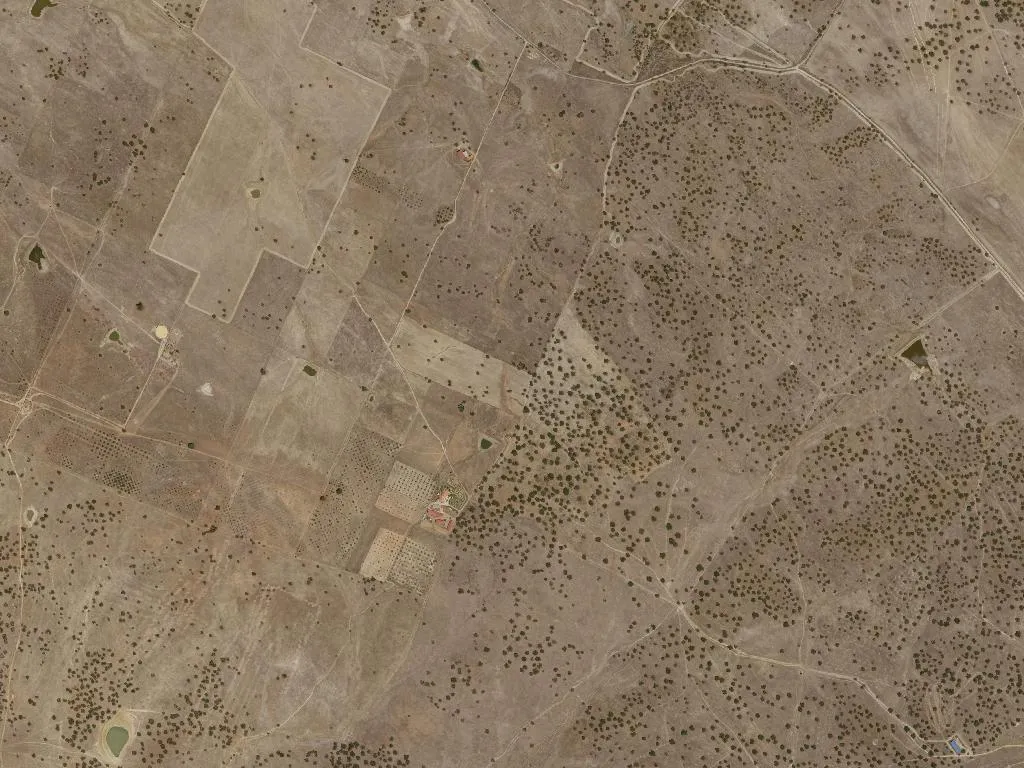
The land arranges itself in horizontal strata — olive groves plotting charcoal lines against ochre earth, wheat rectangles shifting from emerald to burnt gold with the seasons. Beyond them, always beyond, the serrated silhouette of the Mourão range. The horizon here possesses an almost violent vastness; Alentejo light carves shadows so sharp they seem etched into the soil. Distance deceives: that cork oak appears a five-minute walk until twenty minutes later you're still approaching. Summer heat pools thick as mercury in the midday hours, while winter damp penetrates bones when the sun drops behind the hills.
White-washed cubes scatter across the landscape, their lime facades glaring against terracotta earth. In the original settlement, granite doorsteps bear the concave memory of decades of boot leather. Painted doors — Mediterranean blues, sea-greens — punctuate the monochrome like punctuation marks in a run-on sentence. The rhythm is prehistoric: activity concentrates in the first three hours after sunrise, then the village retreats into siesta stillness so complete it feels monastic.
Taste of Territory
The kitchen here operates on radius zero principles. Borrego do Baixo Alentejo, granted IGP status in 1996, grazes within sight of where it will be eaten, its flesh infused with wild pennyroyal, pepper-mint and thyme that push through limestone cracks. Slow-cooked with garlic and paprika, it releases an aroma that hangs heavy as incense, mingling with holm oak smoke from the hearth.
Queijo de Évora arrives at table still bearing the imprint of muslin cloth, its creamy centre the result of slow curing in mountain caves. The accompanying bread — thick-crusted, dense-crumbed — demands jaws that work like millstones. Local wines, grown on vines that have learned to survive 45-degree summers, carry the thermal memory of August in their tannins: they need time to exhale, to unclench.
The Mathematics of Extinction
Of those 514 residents, 179 have passed their 65th birthday. Fifty are children. These numbers whisper what no one voices: the arithmetic of abandonment. Weekday afternoons, silence stretches so thin you can hear the municipal fountain's splash from three streets away. A moped buzzes like an angry insect. Somewhere, a roller blind clatters down.
Nine self-catering houses — all former agricultural workers' cottages — host weekenders who come precisely for this acoustic vacuum. They walk the agricultural tracks that braid through estates, past dry-stone walls colonised by sulphur-yellow lichens. In March, poppies erupt in scarlet swathes that last precisely eight days before vanishing like they never existed. October brings the smell of newly-turned earth, rich as Christmas pudding, promising next year's harvest.
When the light tilts and shadows elongate until they dissolve into dusk, Granja reveals its essential truth: this is not a place you pass through, but a place that passes through you. The wind continues its eternal combing of ancient olive branches. And in the cooling air, the scent of warm earth mingles with woodsmoke from a fireplace lit too early, anticipating the night chill that will settle like dust on these plains where space itself has become the final crop.