Full article about Amieira: Alentejo’s whisper-quiet olive parish
Where 266 souls bake bread at dawn and cork oaks outnumber tractors ten-to-one
Hide article Read full article
A Languid Expanse of Olive Groves
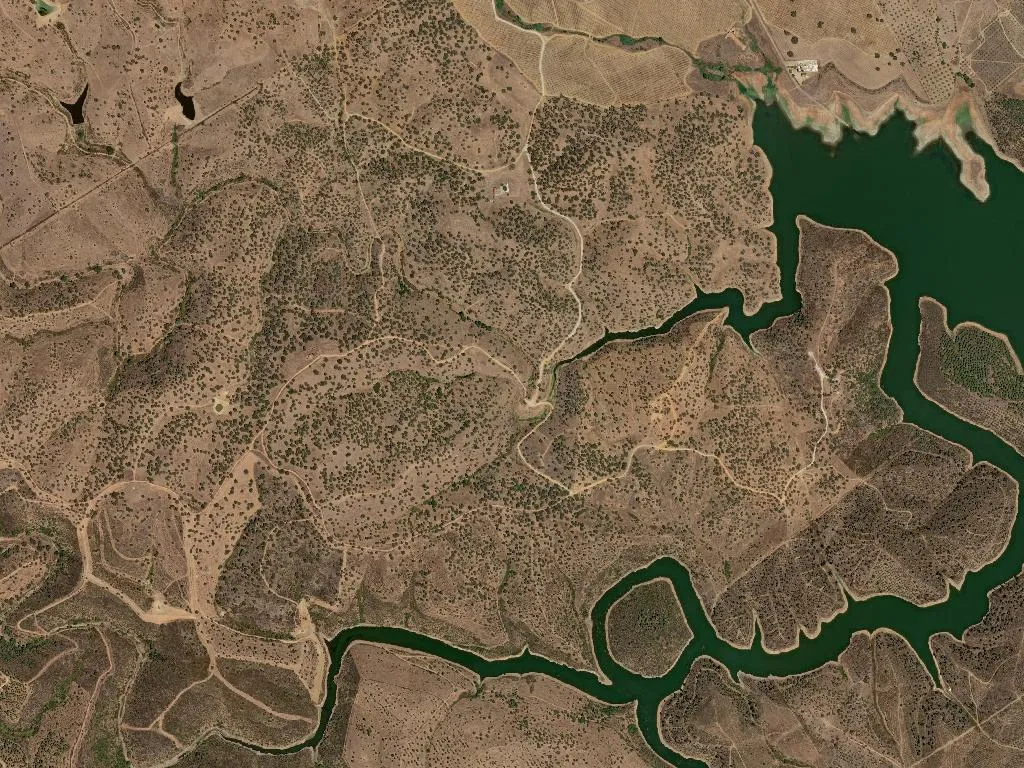
The plain stretches without hurry, punctuated by olive trees that were already here when your grandfather was still a boy. Heat settles into the earth as if it owns the place – it knows every corner, it doesn’t knock. Silence is only broken by sparrows quarrelling and the dry rustle of holm-oak leaves. Amieira breathes to a rhythm that has never acknowledged clocks: here you plant when the sky says so, not when the calendar commands.
With 266 souls across almost ten thousand hectares, the parish operates at minimum density – three people per square kilometre, enough to greet everyone on a Sunday afternoon and still have time for an espresso at the bar. The statistics tell of quiet ageing: 101 elders to 16 youngsters. Yet the numbers soften when you discover that 87-year-old Sr António still rides his Honda out to the cork oak grove, and Maria do Carmo can name every verge-side herb, including those no one ever taught her.
Bread kneaded before dawn
Local food is not performance – it is simply what exists. DOP olive oil runs gold across crusty Alentejo bread that D Ilda kneads at five o’clock because “bread never asks the time”. DOP Évora cheese, cured in the storeroom that once served as her father’s cellar, develops a creaminess that clings to the roof of the mouth, a reminder of milk from sheep that graze wherever they please. When the season arrives, lamb is roasted in the wood-fired oven of a bakery that closed in 1998 but which Sr Joaquim keeps ready “because you never know”.
There are no fusion experiments here, only perfected repetition: gestures passed on like family secrets, recipes that survive because no one has found fault with them.
Between vineyards and olives
At 162 m above sea level, Amieira slots into the landscape as if it were always there. Vineyards trace ruler-straight lines, interrupted by olive groves where harvesting is still done with a stick – machines can’t tell a sound branch from a spent one. Schist soil, baked by a sun that doesn’t do half-measures, releases its stored warmth after dark, creating temperature swings your grandfather can’t explain but your palate registers in the first sip of red.
Walking these fields at dusk is to feel the mercury drop as if someone has turned off a tap – sudden, decisive. When the wind rises it carries the scent of dry earth and herbs no one planted but which insist on returning: thyme, rosemary, Aleppo pine that D Ilda gathers for dinner.
Where silence has flavour
Fifteen guest places – spread between restored schist cottages and villas left by families who emigrated – welcome those who seek precisely this: absence of queues, schedules, tour-operator pop-ups. No need to book three months ahead; ring the week before and say “it’s Joaquim, the one who comes every year”. You will wake to a rooster not pinned on Google Maps, watch the light change over the fields as if someone were flicking television channels, feel the specific gravity of silence inhabited by so few that everyone still knows each other by name.
At day’s end, when shadows lengthen and the air finally cools, you carry the tactile memory of dust on your shoes and the persistent taste of olive oil on your lips – small, concrete traces of a place that feels no need to explain itself, only to be visited by those who understand that the best of the Alentejo is what never makes the brochure.