Full article about Oriola: Alentejo’s hushed white village where oil is gold
Dawn-lit lanes, cork-twisted groves and lamb-scented migas in a 402-soul plain
Hide article Read full article
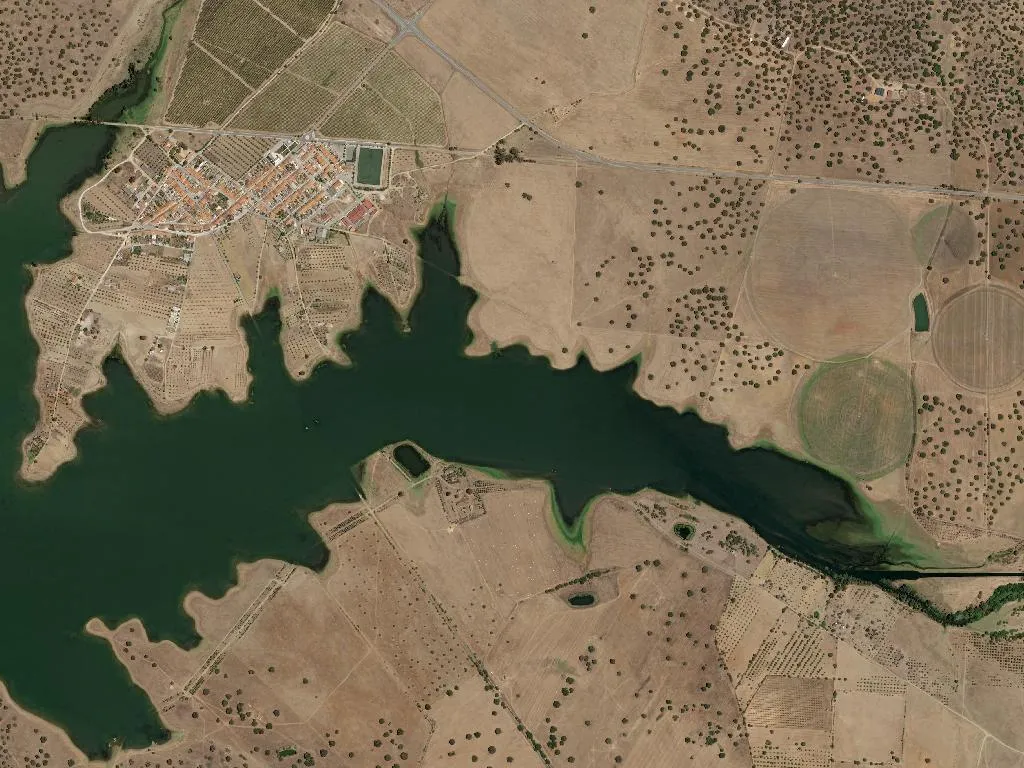
Dawn slips through the chinks of whitewash, throwing yard-long shadows down the uneven paving where every footstep ricochets between walls. In Oriola, 35 km south-east of Évora, silence has body: a low growl of a dog, the iron scrape of a gate, wind combing the 36 km² of rolling plain. Four hundred and two people live here—roughly a single screening at the Curzon—scattered among olive groves, solitary cork oaks and cubes of white-washed stone that expand and contract with the seasons.
Stone and oil
The village sits at 187 m, high enough for the late-afternoon sun to skate across wheat stubble and olive foliage until the land looks lacquered. Density is ten souls per km²; there is air between houses, heat between trees. DOP Azeite do Alentejo Interior needs exactly this: cold winters that force the fruit to thicken, cloudless skies that ripen it slowly. Trunks older than the republic twist like baling wire; in November the mills release a mist of crushed olives that smells of wet slate and green banana. Pour the finished oil on warm bread and it stains the crumb the colour of young wheat.
What the table remembers
Évora DOP sheep’s-milk cheese arrives chalk-centred, oozing to cream at the rind; the salt is the same that once preserved the city’s Roman temple. Borrego do Baixo Alentejo IGP grazes the surrounding montado, its flavour tuned by rockrose and wild thyme. In the single tasca open on Saturday the joint goes into a wood-fired oven with nothing but garlic and pork fat; the juices are caught with migas—fried bread that drinks the lamby liquor. Cheese is sliced thick, paired with a loaf whose crust shatters like caramelised sugar.
Arithmetic in the square
Of the 402 residents, 113 are older than 65 and only 47 have not yet turned 15. Knowledge moves by bench osmosis: old men in berets track every passing car; grandmothers still strip pennyroyal for tea. The parish church closes one side of the Largo; the other three are claimed by the bakery (firing since 1987), the chemist and the cash-only café where the television is always muted. By five the sky drains to indigo; windows glow one by one, yellow rectangles cut into granite. Inside, the news flickers across Alice’s sitting room—she is 89, collects herbs at dawn—and the scent of holm-oak smoke leaks from chimneys, settling over the streets like a second, warmer night.