Full article about Santana’s White Alentejo Silence
254 m above the wheat plain, Santana bakes lime-bright, echoing with sheep bells and cardoon-rennet
Hide article Read full article
Whitewash and heat haze
Sunlight ricochets off the lime-washed walls. Not a tree in sight. Santana perches at 254 m on the rolling wheat plain between Évora and Beja, its horizon dissolving into bleached sky. White houses throw the heat back; silence is broken only by a distant dog or the rasp of a van stirring ochre dust from the dirt road.
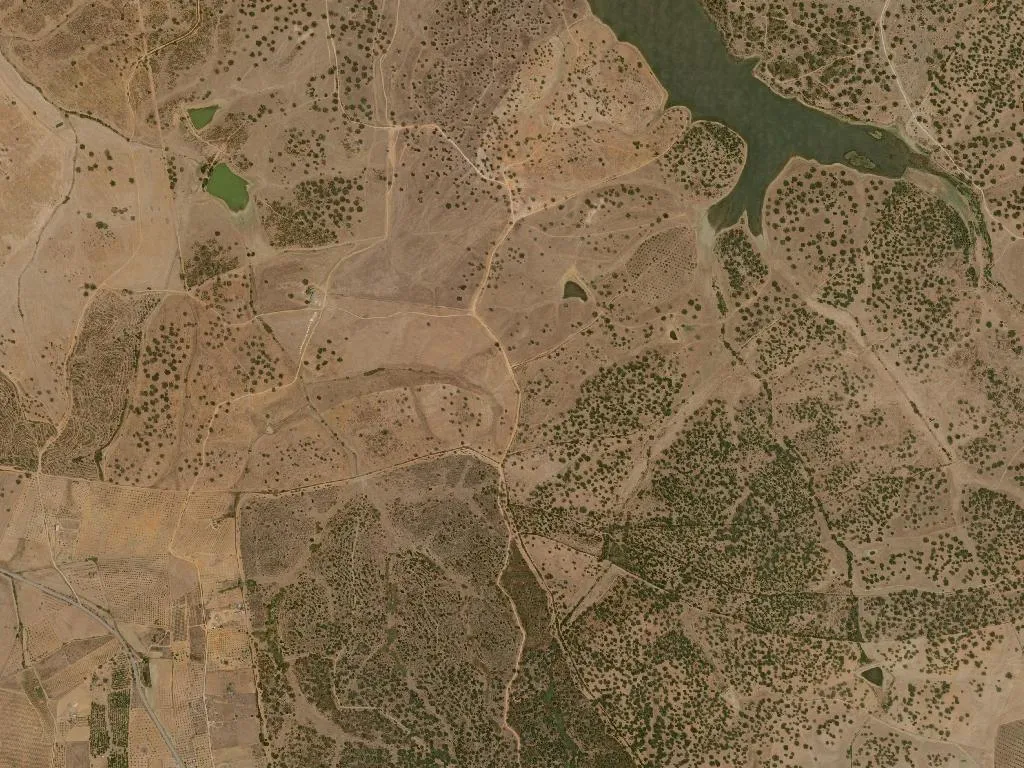
Olive groves and sheep’s-milk wheels
4,195 ha of olive trees fan out in every direction. The oil carries DOP Alentejo Interior status—cold-pressed, throat-catchingly bitter. Three small dairies still work: wheels of DOP Queijo de Évora age on rough pine shelves, merino sheep’s milk forming a natural rind that smells of cardoon rennet and sea salt. Bread appears at 7 a.m. in the village bakery; by nine it is gone. Flocks graze the open montado; IGP Borrego do Baixo Alentejo lamb is roasted in wood-fired ovens with roadside rosemary and wild oregano.
Population tally
474 residents, 131 past retirement age, 47 under ten. After lunch the streets empty, shutters drop, cats claim the walls. There is one guest house—three rooms, book 48 h ahead. No restaurant; the café will cook if you telephone before noon.
What lands on the table
Winter: coriander açorda with a poached egg. Spring: wild asparagus sautéed with smoked pancetta. Summer: migas—fried bread crumbs—under strips of pork. Clay-pot red is sold by the litre; bring your own bottle, pay €4. The café shuts at eight. No ATM; nearest groceries are 15 km away in Portel.
Dusk brings the scent of dry earth. On the plastic table in the square, two men slap cards down, the deck marking time.