Full article about Landeira, where Alentejo silence tastes of sheep-milk cheese
In Vendas Novas’ oldest village, cork shade, clay-red wine and cicadas fill the wide 64 km²
Hide article Read full article
The village that outlasts the clock
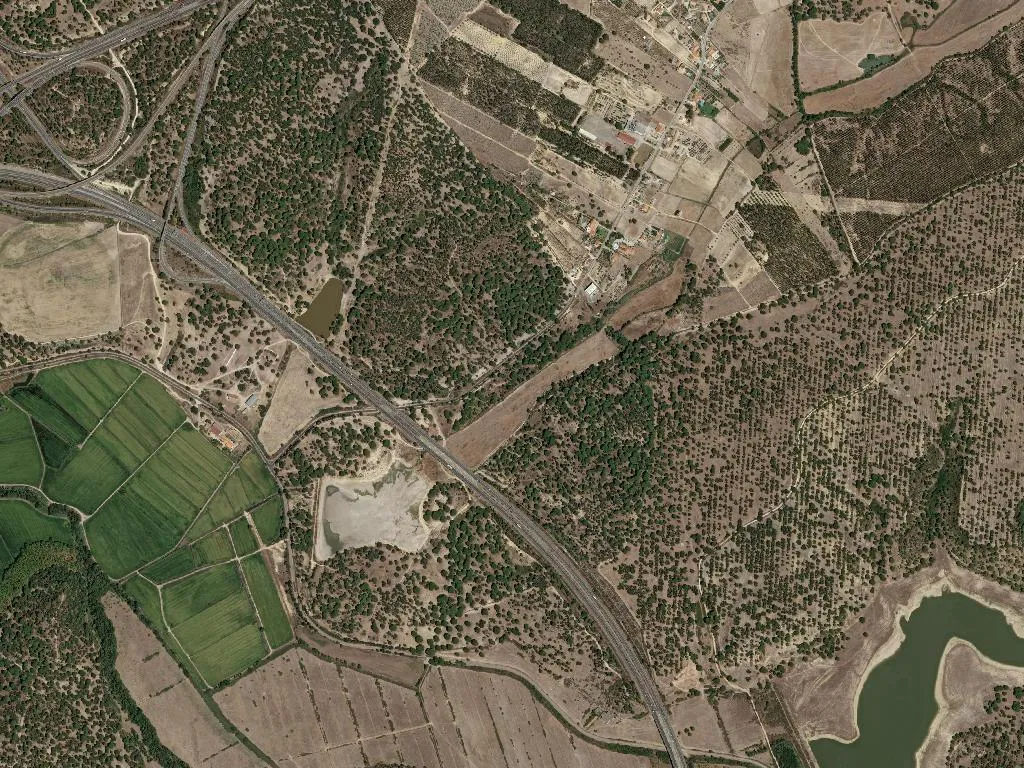
Dust hangs in the air long after the car has passed. A single dog barks, then nothing — only the papery shift of cork-oak leaves and the high electric whine of cicadas when the sun climbs above the wheat. Landeira occupies 64 km² of southern Alentejo so completely that its 620 inhabitants amount to barely ten per square kilometre. Space here is not emptiness; it is a third lung.
Paper trails and pasture law
The parish archives, kept in a back room of the council office, record “Landeria” as early as 1626, making it the oldest village in the municipality of Vendas Novas. Linguists argue over the name — either from the Latin landus, open field, or landeiro, common grazing ground — but a walk between the hamlets of Moinhola and Monte Outeiro settles the question. Temporary streams score the soft folds of earth, draining toward the Sado only when winter remembers to rain. Cork and holm oak cast shifting polka-dot shade; there are no mountains, no signposted parks, just the low-lying geometry of tomato rows and rice paddies stitched into alluvial soil 39 m above sea level.
Milk, crumbs and clay-red wine
Inside kitchens tiled with 1950s blue-and-gold azulejos, Queijo de Évora DOP is still coagulated with cardoon thistle. The result — a wobbling disc with the acidic bite of sheep’s milk — appears at the monthly market beside loaves of pão alentejano whose crusts blister from wood-fired brick ovens. Cooking follows the thermometer: tomato açorda in August, lamb stew when the nortada wind arrives, migas fried with crackling on any given Thursday. Purslane soup stains the bowl an almost chlorophyll green; pudding is sericaia, a cinnamon-dust cloud that collapses under a spoonful of candied Elvas plum. Locals pour Alicante Bouschet and Trincadeira into thick glass tumblers, bottles parked directly on the linen cloth — no ceremony, just the taste of iron-rich earth.
Saints, accordions and 73 per cent
June belongs to São João. The parish council bankrolls processions, street barbecues and a folk-dance ring where the Rancho Folclórico de Landeira revives steps first noted by a field ethnographer in 1958. August brings outside troupes to the Encontro de Folclore — embroidered waistcoats, button accordions, teenagers who refuse to go home until the sky pales. These are not performances for tourists; they are diary dates for a community whose last local-election turnout reached 73 per cent, a figure Westminster hasn’t seen since 1992.
Where to aim the wheels
Mother Church
1960s concrete, unremarkable yet always open. Sunday Mass at 11 a.m.; stay for the unaccompanied canto ao desafio if the cantor is in form.
Village Library
Rua da Igreja, open Tuesday and Thursday 2 p.m.–5 p.m. One corner is given over to scythes, olive-pruning hooks and cork axes; sepia photographs annotate the tools.
Wine Estates
Quinta de Sousa and Monte Outeiro receive by appointment. The tasting flight pairs three vintages with bread-and-cheese made 200 m away. Book through the parish council 48 hours ahead.
Outlying Chapels
Nicolau, Bicas, Quinta de Sousa — key kept by the nearest house. Knock; someone will towel dry their hands and let you in.
Evening slants across the tomato stakes, gilding the ridged bark of cork trees. A drift of wood-smoke, the echo of your own footsteps on calcada, the hush that only 9.6 neighbours per square kilometre can create — these are the details that cling to the skin long after the N4 has carried you back toward Lisbon.