Full article about Ciladas: Alentejo’s sky-high hamlet of stone and silence
Above cork plains at 234 m, Ciladas keeps 16th-century bells, lost hermitages and Copper-Age rampart
Hide article Read full article
Stone, sun and solitude: inside Ciladas, the Alentejo village that time forgot to erase
Dawn peels open the sky above a white-washed hamlet that appears to float 234 m above the surrounding cork plains. The air is thin, almost mineral, laced with the iodine scent of rock-roses that cloak the ridges. Below, three seasonal streams—Borba, Asseca and Mures—scratch invisible seams across the schist before slipping wordlessly into the Guadiana. A single church bell tolls, dividing the day as it has done since the 1500s, while the village answers to two names on the map: Ciladas and São Romão.
Walls that prayed and watched
“Ciladas” hints at traps or snares, a reminder that this ridge once mattered to border strategists. What remains is faith made masonry: the parish church of São Romão rises dead-centre, its bulk grown from a 16th-century Gothic kernel and re-clad in the 1600s. Inside, marble-dusted altarpieces and carved 17th-century saints keep vigil in the half-light. Every 15 August the village honours its patron—an obscure monk from Panóias near Valpaços—by turning the tiny square into an open-air refectory of grilled peppers, wine and polyphonic chatter.
Three kilometres south-east, the private chapel of Nossa Senhora dos Remédios still stands inside the walled citrus garden of Forte de Ferragudo, proof that salvation here was sometimes a family affair. Even the abandoned hermitage of Nossa Senhora de Ciladas, lost among olive roots on the Carvão estate, marks a parish absorbed only in 1966, its feast day quietly deleted from the calendar.
Strata of older lives
Walk the surrounding cork estates and the ground itself leaks history. At Castelos, Casa da Moura and the modest hillock called Castro da Briôa, University of Lisbon digs led by Ana Margarida Arruda have unpicked layers that run from the Copper Age to Iron-Aime tribal strongholds. Briôa’s 400-metre summit still shows ribbed ramparts of stacked schist; from here the Guadiana valley unrolls like a tactical map. What you notice are absences—post-holes, a vanished gate, the negative space of a round house—rather than heroic ruins, yet the silence is articulate.
Cork, cistus and secret water
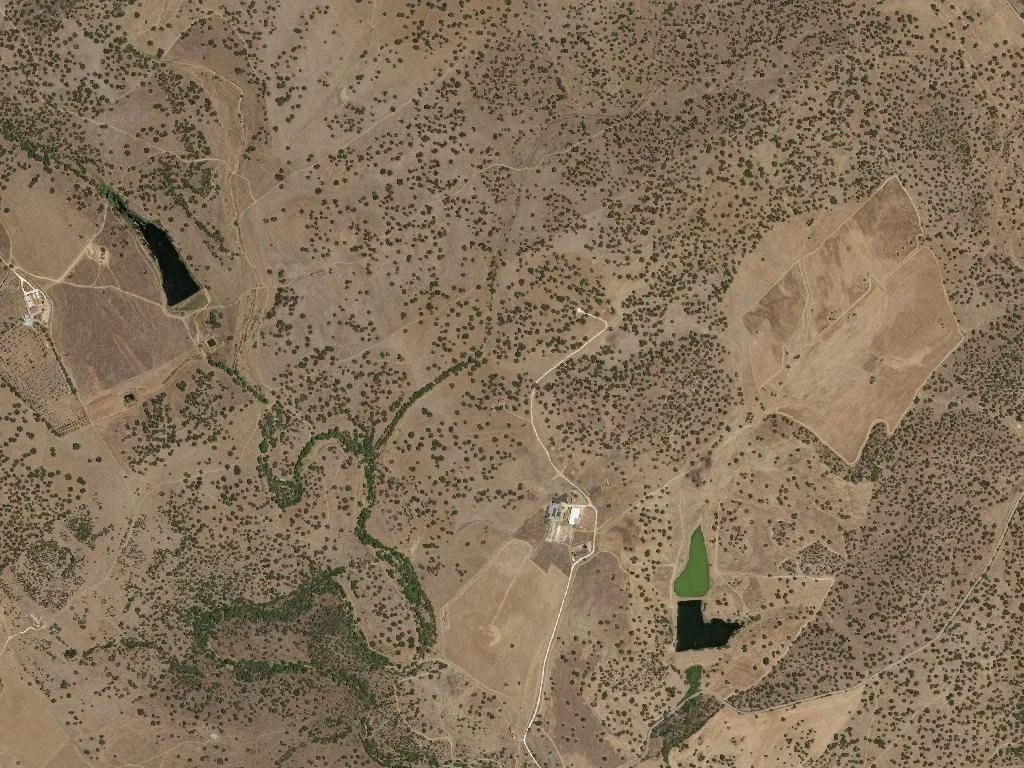
Ciladas sits in the transition zone between cork oak montado and the low, grey scrub locals call esteval. The darker green of holm oak pools around Quinta do Forte and Fatalão, but thin soils and constant wind keep the landscape honest. Winter sharpens the mercury to –7 °C (January 1941 is still spoken of); August pushes it past 42 °C. Between extremes run three shy watercourses, only audible after heavy rain, yet they dictate where olives, sheep and the occasional plot of tomatoes can survive.
A kitchen that needs no updating
Alentejo classics arrive at table unadorned and impeccable. DOP Queijo de Évora, small and chalk-sharp, is followed by couverts of Estremoz smoked sausage—chouriço grosso, farinheira, morcela—all demanding thick-crusted bread and green-gold olive oil. Plums from Elvas appear both as jam and as a syrupy conserve spooned over requeijão. Local restaurants—really just two dining rooms run by farming families—pour Borba reds whose tannins are tuned to the region’s temperature swings.
Modernity in slow motion
Electricity arrived in 1972, mains water in 1970, a GNR police post in 1968. The village pharmacy opened as late as 1991; before that you drove to Vila Viçosa for aspirin. Even the bullring, erected in 1993, lasted only fourteen seasons, its shuttered gates now a canvas for stork nests. With 816 residents spread across 107 km², Ciladas has the demographic density of the Scottish Highlands, yet fibre-optic cable follows the same stone walls that once carried shepherd paths.
Dusk settles; the western light strikes schist walls the colour of oxidised Madeira. Across the plain Vila Viçosa’s ducal palace glints like a distant liner. The wind keeps its appointment, carrying the rasp of cicadas and the faint clink of a goat bell. From this ridge the world feels intelligible—close enough to see, high enough to keep its distance.