Full article about Vila Viçosa: Dawn Marble & Hushed Footsteps
Alentejo’s marble town wakes with palace shadows, cork smoke and a 1494 Madonna who still parades.
Hide article Read full article
The silence that teaches you to listen
It begins with hush — not the absence of sound, but a disciplined quiet you have to earn. At 07:15 the streets are still negotiating with last night’s cool air; shutters are down, espresso machines asleep. A single set of footsteps ricochets across the Terreiro do Paço and you realise the town hasn’t yet decided what it wants to say. Vila Viçosa sits 363 m above the Alentejo plain, high enough for the light to feel surgical, low enough for the marble to bounce it back into your eyes until everything looks over-exposed. The whitewash hurts; the stone dazzles. You are, without warning, inside a camera obscura aimed at the sixteenth century.
A palace that swapped crowns
The Ducal Palace doesn’t announce itself — it simply keeps going. One hundred and ten metres of mannerist façade, a granite run-on sentence that terminates in a pair of discreet towers. Inside, the gold leaf is so insistently bright it feels like a lawsuit waiting to happen; the Flemish tapestries keep their own counsel. This is where, on 1 December 1640, a group of conspirators declared the end of Iberian rule and handed the Portuguese crown to the Duke of Braganza. The palace still behaves as though the paperwork might need amending: footmen appear from nowhere, doors sigh open, light pools on the parquet like spilled ink. Walk five minutes uphill and the castle — rebuilt in the 1490s because the dukes could — gives you the explanatory diagram: cork oak savannah to the east, marble quarries to the west, the silver thread of the tiny Rio Calém doing impersonations of a river in August.
Church bells, cork smoke and the cante that refuses to be archived
The parish grid is tight as bobbin lace. The collegiate church of Nossa Senhora da Conceição, started in 1494, contains a Manueline retable you are obliged to linger over; on 8 December its Madonna is carried through the streets in a slow-moving braid of 3,000 bodies, pausing at Café Lopes for espresso calibration and meteorological analysis. Next door, the Convento das Chagas — founded 1514, female-except-for-the-confessor — is open only when the key-keeper is in a good mood, which happens precisely when your Lisbon cousin arrives with weekend luggage.
Holy Week still works here: eighteen float-borne Passion scenes that have processed since 1744, candle-wax and brass-band cologne embedded in the cobbles. August brings the Feira de São Bartolomeu, a country-hardware swap-meet where pruning shears from Borba change hands for the price of a lunch in Évora. What lingers after the stalls are folded is the Cante Alentejano — not scheduled, not miked, just two voices beginning a call-and-response when the wine has reached the necessary viscosity. The marble that spent the day throwing sunlight back at the sky now drinks in the sound and won’t give it back.
What the marble tastes like
The stone is everywhere — door jambs, kerbstones, even the urinals at the petrol station — but hunger demands something softer. Start with coarse Estremoz chouriço, curing in a cork-smoke fog that drifts across the road like a polite ghost. Açorda de marisco when the Atlantic remembers to send prawns; shoulder-of-lamb stew thickened with backyard thyme and bay from a tree older than the republic. Évora’s DOP-certified sheep’s-milk cheese, small enough to fit in a jacket pocket, arrives on the table at exactly the moment the local red — tannic enough to chew — is poured into a glass that weighs as much as a paperback.
Dessert is toucinho-do-céu, a yolk-and-sugar confession that predates cholesterol. The candied plum from Elvas, half-tart half-sweet, is the cousin no one marries but everyone flirts with.
Cork oak country as antechamber
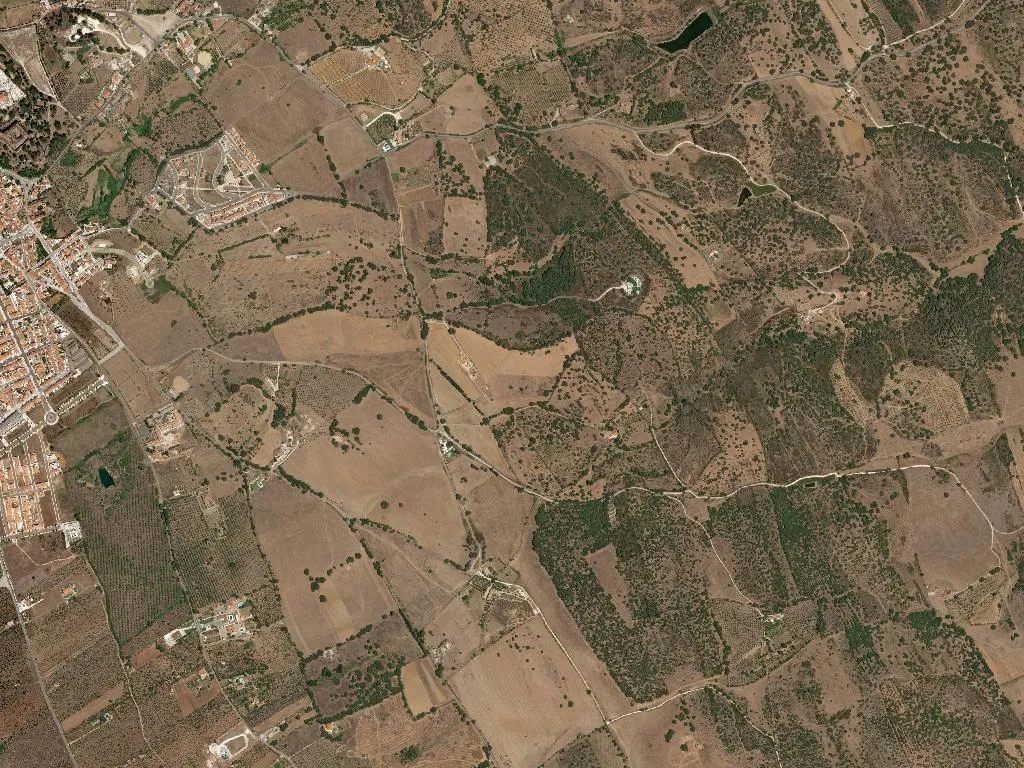
Outside the walls the montado takes over: cork oaks with the bearing of retired colonels, holm oaks twisted like question marks. In early spring the rockrose releases a scent that triggers nostalgia for a place you haven’t left yet. Marked trails exist, but the useful ones are improvised, ending at the house of a smallholder called Zé who pours a cloudy red from a plastic jug and produces bread his wife peppered with chouriço that morning. The marble changes temperature as the day drains away: glare-white at noon, honey just after lunch, bruised-rose at dusk. Somewhere between the last glass and the first song you understand the transaction: Vila Viçosa is not a destination you tick off, it is a conversation you keep picking up, one you may never bother to finish.