Full article about Martim Longo: chestnut smoke & border ghosts
In Alcoutim’s hilltop village, autumn fires, church dust and giant tales outlast the young
Hide article Read full article
Chestnuts on the fire
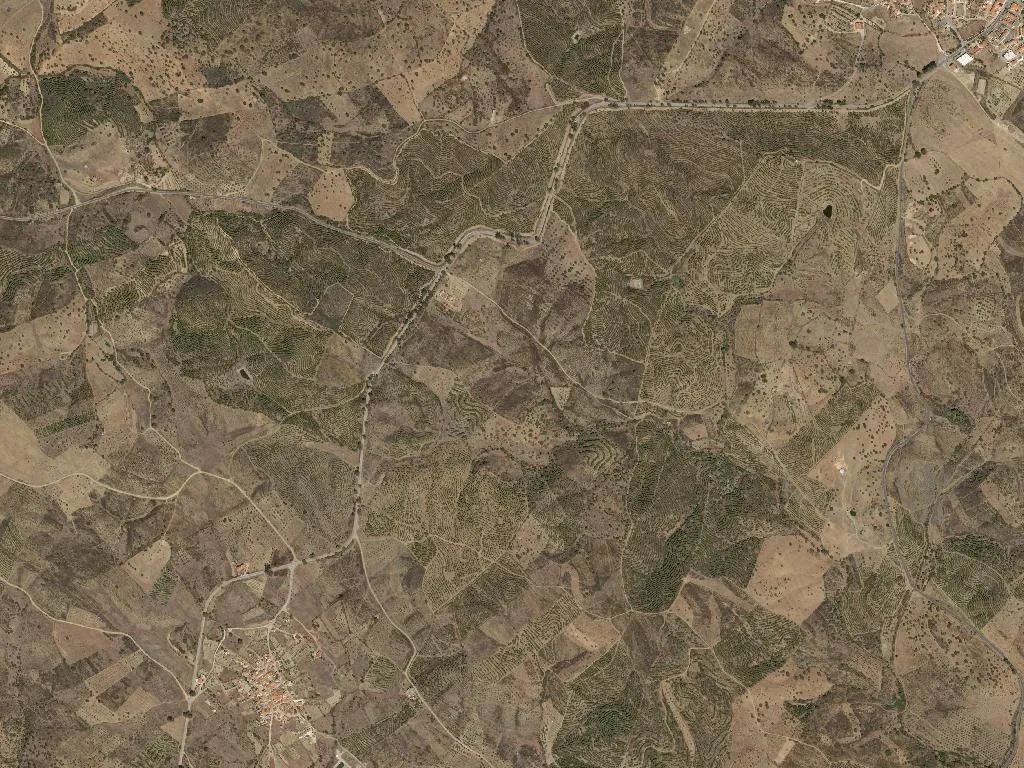
The gun-shot crack of splitting shells ricochets around the cobbles. October has turned the square into an open-air kitchen: smoke from holm-oak logs coils above trestle tables, and the air smells of burnt sugar and butter. This is Martim Longo’s Festa da Castanha, the one weekend a year when the village remembers it once mattered. At 261 m above sea level, 45 km north-east of Faro and a hard 25 km from the Guadiana, the place feels closer to Mértola than to the marina bars of Vilamoura. Locals pour jeropiga—last year’s grape must fortified with bagaço—into chipped glasses that once held supermarket yoghurt. Someone tunes a viola; the first improvised couplet mocks the mayor’s new haircut. No one checks their phone. There is still no signal.
The tall man on the ridge
Elders insist the village is named after a giant shepherd who could see Spain while standing on tiptoe on the hill behind the cemetery. Whether Martim Longo existed is debatable; the story is not. The settlement grew around the chapel of São João Baptista, but the border was the real parish boundary: centuries of cattle raiding, coffee contraband and torch-lit mule trains at closing time. Today only 928 people remain on the roll, and on weekday mornings it feels like fewer. The young left for Évora’s car plants or the strawberry farms near Beja; those who stayed are now past the age of starting again.
Stone, lime and flaking gold
The parish church squats at the top of a flight of granite slabs polished smooth by funeral processions. Inside, the air is thick with beeswax and the metallic tang of old censers. Father António—seventeen years here, voice like a cracked bell—recites the epistle while ceiling plaster drifts down like pale snow. The gilded carving is peeling; there is no money for restoration, but the widows prefer it this way, proof that time keeps its own ledger. Below the steps the village fountain still runs glacial; summer children prefer it to tap water because it tastes of moss and iron. Across the lane the old Episcopal Palace keeps its broken windows; a stork has rebuilt her nest on the collapsed chimney, unconcerned by the absence of bishops.
Goat stew, breadcrumbs and high-altitude plonk
Tasca da Serra is open when the door is unlocked. Inside, three Formica tables share the room with a fridge that hums in B-flat. Maria cooks chanfana the way her mother did: bode bravo from Zé Manel’s herd, last year’s red, and sweet Spanish paprika smuggled in the glove box. The migas are made with yesterday’s bread—today’s is still singing—and the asparagus grows along the verge to Pereiro. Wine arrives in an unlabelled two-litre bottle drawn from Seixal’s vineyard at 500 m; it tastes of schist and iron, a flavour the British expats in Tavira call “rustic” and the locals call Tuesday.
Cork oaks and ruined mills
The mill trail starts behind the church: six kilometres that the fit do before lunch on Sundays. Five watermills lie in ruin, their millstones split like broken teeth; only the stone troughs survive, filled now with last autumn’s leaves. Halfway round, a cork oak with a girth the size of a Mini has hollowed itself into a childhood smoking den. The hillside smells of rockrose and flowering rosemary; in July the only sounds are cicadas and Adelino’s tractor grinding uphill at nine sharp to spray his oranges.
Kings, fado and the grape harvest
On Epiphany four elderly men and a boy with a Chinese accordion still tour the streets singing the Janeiras. Housewives produce olive-oil cakes so fragile they fracture if you breathe. In August a Lisbon troupe sets up in the bandstand to serenade tourists with Coimbra fado, but the real music happens after Sunday mass when Zé Cupertino unhooks his guitar and launches into modas that never made it onto Spotify. The harvest is a neighbourhood affair: six families own vines, everyone else owns secateurs. The first must is sampled straight from the lagar—warm, purple, still fizzing—and any grapes that make it home are boiled into arrope for the doctor’s wife in São Bartolomeu, who pays in cash and silence.
At six the sun slips behind the ridge and the village turns the colour of burnt sugar. The sky widens, star by star, until the Milky Way feels like a roof you could touch. Woodsmoke from the previous day’s burn drifts in, mixed with the café dog’s single bark. Martim Longo stays where it always was, half memory, half stubbornness, gripping the hillside like a hand-me-down coat that still keeps out the cold.