Full article about Azinhal: Where Algarve Oranges Outnumber People
Stone-pine scent drifts past 479 souls in Castro Marim’s hilltop citrus parish.
Hide article Read full article
The Geometry of the Algarve Interior
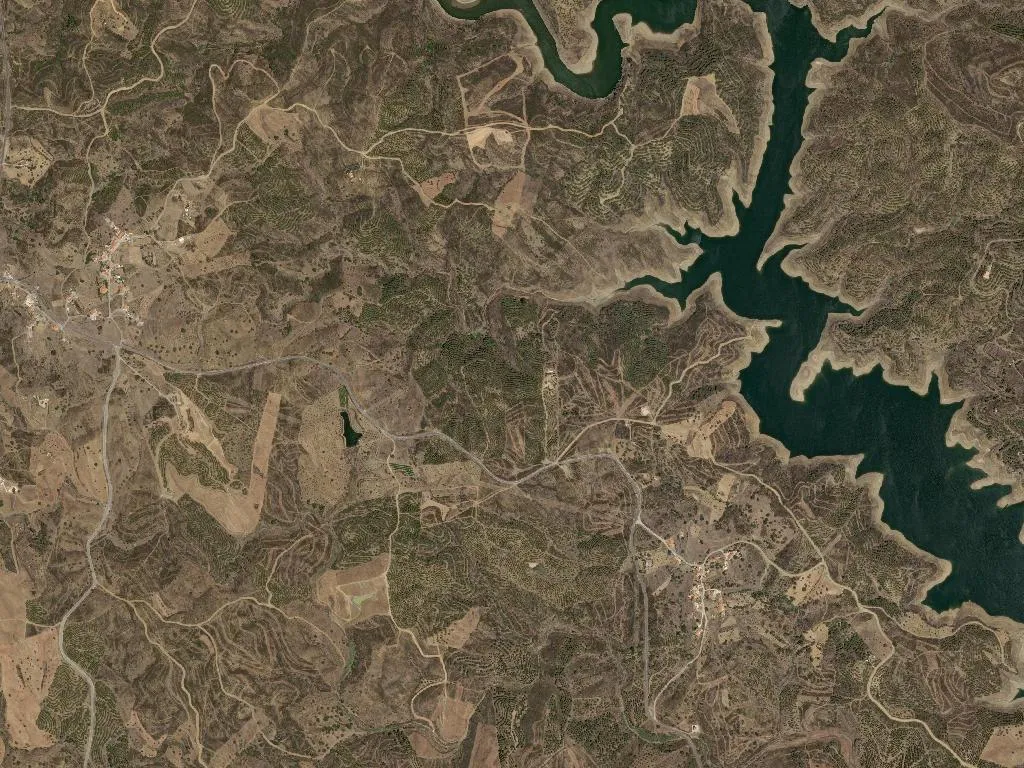
Sunlight ricochets off the slate roof of Azinhal’s parish church as if someone has left a cast-iron pan on the hob too long. From the belfry, a single bell tolls; the note travels across 68 sq km of russet barrocal and dies before it reaches a neighbour. At 110 m above sea level—exactly the height of Castro Marim’s castle keep when seen from the air—this is the point where the Algarve stops apologising for not being a beach. Only 479 people are registered here, giving the parish the same density as a London borough after an evacuation drill. They greet one another by first name, the way you recognise the cashier in your local Tesco Express, and the only timetable that matters is the agricultural calendar: pruning in January, blossom in March, oranges in November.
Seven People per Square Kilometre
The settlement pattern is parsimonious. Low whitewashed houses appear every half-mile, stitched together by tracks the colour of paprika. Between them, citrus orchards and elderly carob trees twist their elbows like arthritic relatives. Azinhal’s micro-climate—hot days, cool nights, Atlantic breezes funnelled up the Guadiana valley—qualifies its fruit for the Algarve Citrus PGI. The skins are thin, the pith almost candied; the same oranges supply the breakfast buffet at Vila Real de Santo António’s riverside cafés. In spring, orange-blossom drifts through open windows and mingles with resin from stone pines, a scent that lingers on T-shirts long after you’ve driven home.
Demography here is a ledger of departures. Twenty-eight children are enrolled in the primary school; 225 residents have bus passes for pensioners. The ratio is starker than ordering an espresso after lunch in Castro Marim and being handed a meia-de-leite by mistake. Along Rua da Igreja, women in housecoats shell favas on doorsteps, needles of sunlight picking out every stitch in their cardigans. At 13:00 the shutters slam, wood creaks like an aunt’s knee, and the village enters its mineral siesta. Even the swallows seem to fly more quietly.
Between Barrocal and Salt Marsh
Ten kilometres south, the terrain collapses into the Castro Marim Nature Reserve, where salt pans glint like shattered mirrors and greater flamingos stand on one leg, the avian equivalent of a Spanish day-tripper holding a beer. A web of rural lanes—part farm track, part pilgrimage route—leads from Azinhal to the reserve’s edge. You can walk it in two hours, the soil changing beneath your boots from flaky schist to the fine blond sand of the salt-marsh. On the horizon, the Guadiana draws a silver line between Portugal and Spain; abandoned tidal mills keep watch like ruined chess pieces. Until the early 1990s those mills paid wages: “Half the village worked there,” my host shrugs, “then the EU declared the marshes a reserve and the jobs dried faster than salt itself.”
Tourism arrives, but by invitation only. There are five legal lodgings in the parish—Monte da Azinhal, Casa da Oliveira and three others—each with fewer beds than a Notting Hill boutique hotel has lobby chairs. No one offers sunset yoga; instead you wake to a cockerel that belongs to Sr Joaquim, buy bread still steaming from Castro Marim’s wood-fired bakery before eight, and feel the morning coolness harden into noon as if someone has turned a dial marked “August”.
The Weight of Silence
Darkness in Azinhal has texture. Without street lighting, the Milky Way feels like an intrusion. Stars press down like thumb tacks on velvet; the only interruptions are the village dog announcing a fox and, once in a while, the soft collapse of an orange dropping onto straw. Wood smoke rises in vertical threads, winter’s version of the cork-oak columns you passed on the way in. There is no curated “rural experience”, no gift shop selling artisanal sea-salt chocolate. Instead you get what the parish has always traded: distance, quiet, and the slow respiration of red earth under an enormous sky.