Full article about Ferragudo’s Lime-Washed Lanes Glow Against the Arade
Salt wind, grilled sardines and river light define this Algarve fishing village.
Hide article Read full article
Lime-wash and River Light
At noon the lime-wash on the houses flares so white it feels physical, a brief scald on the forearms. Across the narrow lane the Arade slips past, carrying Atlantic salt inland while gulls wheel above the yellow-and-blue doors. Ferragudo has always worked this edge: 540 hectares pinned to the right bank where the tide negotiates every breath of the village.
The name is a red herring – from ferrum, iron – yet nothing here glints of metal. What lingers instead is the scent of grilled sardine that drifts from lunch-time kitchens and the low clink of mooring rings against painted hulls. Of the 1,973 residents, 644 are over sixty-five; they still own the mornings, gossiping over espresso cups while the 177 teenagers sleep off last night’s football results. By late afternoon the 376 holiday lets exhale their occupants onto the quayside and the demographic arithmetic dissolves in rosé.
Stone and Current
Population density reads 365 per km² on paper, but Ferragudo refuses to feel crowded. Streets climb a modest 34 m from the quay, then surrender to alleyways wide enough for a single donkey – or today, a rented Fiat 500. Chimneys stand at four-pitch attention; storks balance on the ridgelines like punctuation marks.
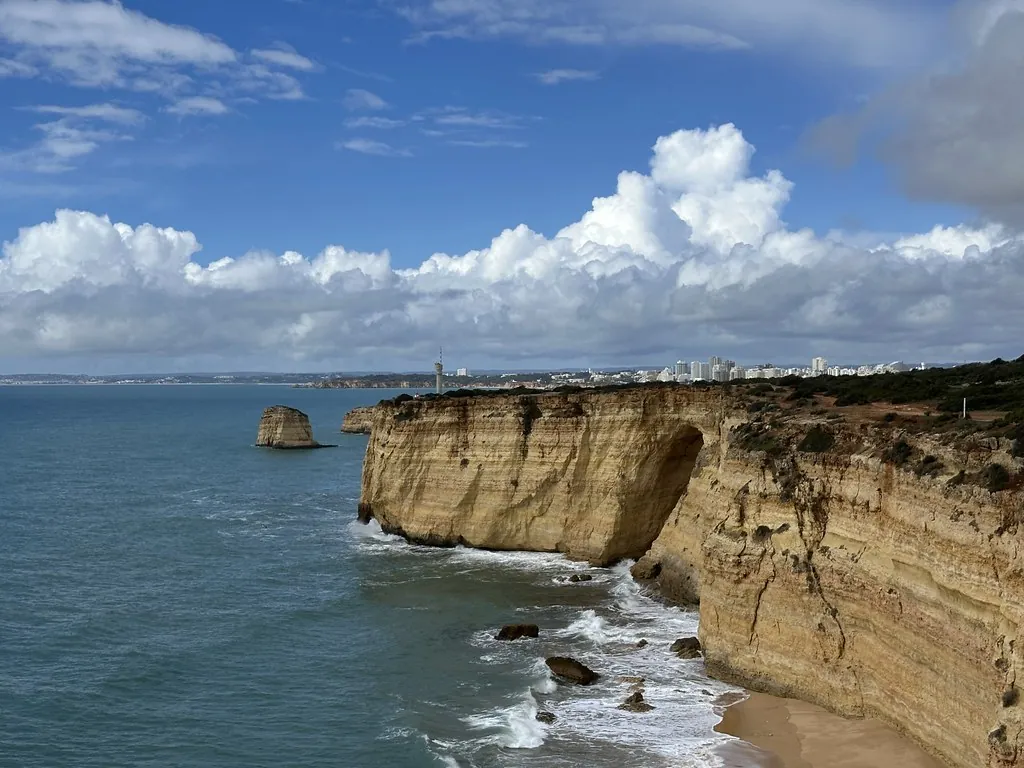
There are six listed monuments, five stamped with public-interest status. At the river mouth the Fortaleza de São João do Arade keeps its seventeenth-century vigil, dark stone roasted to charcoal by salt wind. From the battlements you can clock Portimão’s high-rises on the opposite bank, the sweep of Praia Grande to the west, and the Atlantic rolling in as if on castors.
Oranges and Brine
No neon signs announce lunch. Instead, follow the coriander trail to a tasca where the waiter simply asks “white or red?” while the cook flips dourada over charcoal. The Algarve’s PGI-protected citrus leaves the orchards at dawn, crates dewy and tangerine-bright; by breakfast the fruit is already juice on someone’s table in London.
The river keeps the rhythm. High tide buries the sandbanks; low tide reveals a polished mirror of silt tracked by heron and redshank. An old man on a wall counts the minutes between swells as if auditing the day. He has all the time the teenagers lack.
When the sun drops behind the church façade, the Arade turns molten copper and the wind drops to a whisper. You hear only the soft slap of water under a bow, the delayed chime of the parish bell, the creak of a rope that knows every storm. Ferragudo doesn’t ask for applause; it simply balances its accounts in light, salt and river breath.