Full article about Porches: where clay, cork smoke & whitewash still rule
Inland Algarve hamlet keeps 18 potteries, 1,020°C kilns & 0.8% tourist roofs
Hide article Read full article
Raw clay and identity
The scent of wet clay stings the nostrils before you’ve even crossed the threshold of Olaria Pequena. José Franco set up the workshop in 1968; his granddaughter Catarina now keeps the wheels turning, electric rather than pedal-driven yet still fed by the same seam of red loam dug from plot 3A at Sítio das Quintas, two kilometres away. The regional environmental agency records 7,500 tonnes of it extracted here each year, enough to supply the 18 independent potteries that line the EN125 between Lagoa and Silves. The cobalt-and-yellow tiles glittering in shop windows are not generic “Moorish” souvenirs; they carry the registered pattern of Porches, No. 102 678, deposited in 1954 at the old Fábrica de Faianças Artísticas.
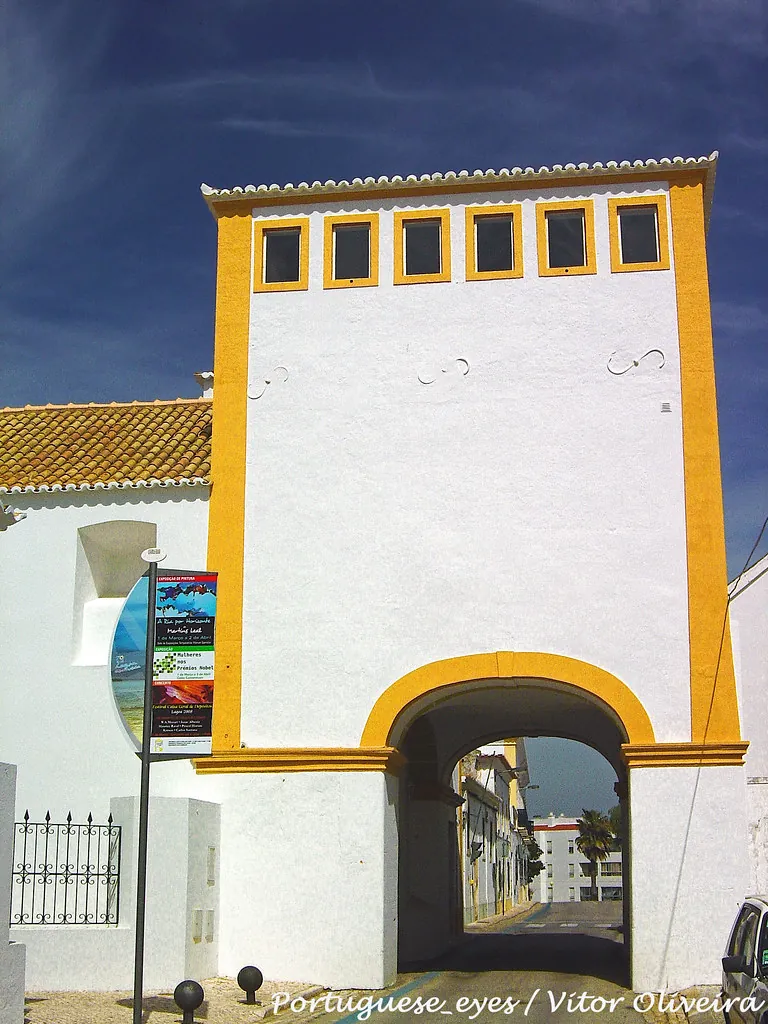
Only one building in the parish enjoys protected status: the Igreja de Nossa Senhora da Encarnação, rebuilt in 1718 on Manueline foundations after the 1755 earthquake. Three empty niches scar its façade; the blue-and-white tin-glaze tiles that once filled them were sold in 1923 to Commendador José Cupertino to decorate the Palácio hotel in Estoril. Collective memory fills the gaps. Idalina, 89, remembers the communal wood-fired kiln on Rua da Fábrica roaring for 48 hours at 1,020 °C on cork-oak logs cut from the barrocal. Around the corner, Cerâmica Sampaio now completes the same firing cycle in 14 hours using an electric kiln, but the lead glaze is still mixed to the 1898 recipe copied from the founder’s notebook.
Planning law has kept the place legible. After 2015, when the rush for holiday lets began, Lagoa town hall capped tourist accommodation at 0.8 % of urban land; whitewashed walls remain exactly that, not concrete shells rendered white. Of 740 tourist beds, 68 % are in villas registered as “local accommodation”. Where a nineteenth-century olive-oil mill once stood (now the Central bakery car park), the original three-press granite lagar survives, its arbutus-wood lid peppered by woodworm.
Light and oranges
Porches sits 64 m above sea-level, a perch that buys it 2,917 hours of sunshine a year (IPMA, 2020) and a January diurnal swing of barely 9 °C. The micro-climate ripens Valencia Late oranges to 12.5 °Brix, sweet enough for the Lagoa farmers’ co-op to secure €0.42 per kilo from Zespri – eight cents above the Algarve average. Eighty-six hectares of citrus within the parish are enrolled in the DOP Citrinos do Algarve, 42 % of the total, mainly at Quinta da Corte and Herdade do Peral.
Demography tilts elderly – 24 % are over 65 – yet the pottery school lodged in the former studio of painters Patrick Swift and Lima de Freitas has graduated 42 ceramicists since 2018; eleven already rent workshops on Rua 25 de Abril for €3.8 per m², half the Carvoeiro rate six kilometres away.
Everyday geography
The EN125 slices through the parish for 3.2 km; a single set of traffic lights, installed in 2021 after three fatal collisions, is the only interruption. From Lisbon, leave the A22 at junction 6 and you’re in Porches in 2 h 10 min without incurring the €20-plus toll on the coastal motorway. Vai e Vem bus 52 links Lagoa to the village three times daily (07:15, 12:30, 17:45; €1.95, valid anywhere in the municipality).
At 17:30, when the sun slips behind the Serra de Monchique, the church façade turns the colour of burnt honey and newly glazed tiles look three centuries old. Next door, Catarina is still at the wheel, trimming the foot of the last plate in an order of 120 for Carvoeiro’s Michelin-starred Bon Bon: 21 kg of clay, 2.5 kg of glaze, 0.7 m³ of natural gas. Invoice total, €684, no VAT. “Enough,” she says, “to pay Mariana’s wages.” The apprentice is 19, started in September, and already calculates the 22 % shrinkage after the final firing without being told.