Full article about Luz, Lagos: where citrus groves scent Atlantic breezes
Morning limestone glow, 1755 fortress shadows, tangerine orchards above Praia da Luz
Hide article Read full article
Morning light on limestone
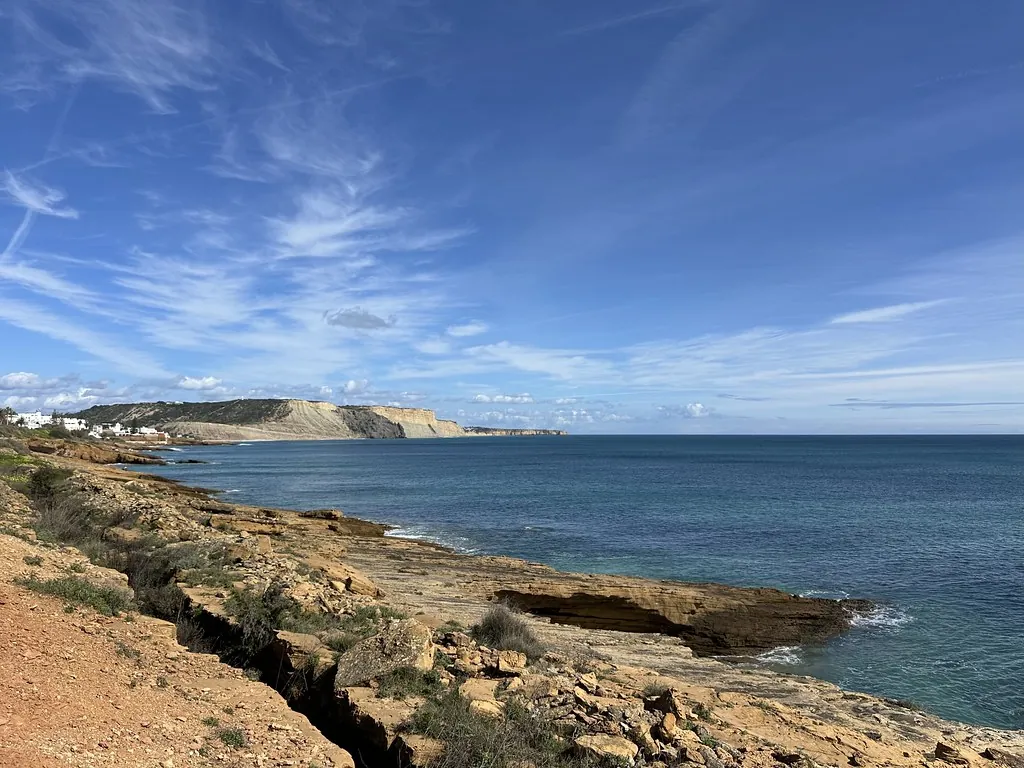
By 8 a.m. the sun strikes the whitewashed façades that face the EN 125, heating the limestone until it feels ready to blister. Between Lagos and the Atlantic, the parish of Luz arranges itself around an older equilibrium: farmland that tilts gently towards the sea, single-storey houses that hoard cool air, the hushed percussion of waves on Praia da Luz always just out of sight.
Spread across 2,178 ha live 4,355 residents, a figure swollen in summer by 1,391 tourist beds—apartments, villas, small gated rows—yet the place still inhales. Density hovers around 200 people per km², clustered near the water; inland, citrus groves and family veg plots exhale unchecked.
Medieval roots on a coastal hinge
No document decodes the name “Luz”. What survives is a parish record dated 1574, noting the visit of the Bishop of Silves to the church of Nossa Senhora da Luz. Through the seventeenth and eighteenth centuries the settlement acted as Lagos’s larder: fish up the coast road, carrots, almonds and carobs down it. Four monuments now enjoy protected status: the mother church rebuilt after the 1755 earthquake; the fortress erected the same year to deter corsairs; Forte da Almádena on the cliff west of the beach; and the Torre de Almadena, a coastal watchtower that once relayed smoke signals to Sagres.
Walk the grid today and you tread two time zones: the tight historic core of cobbled lanes and low lava-stone walls, then a looser outer ring of twenty-first-century flats set back from the cliff. The pressure felt in Sagres or Carvoeiro is absent; cafés still close on random Tuesdays, and the loudest sound at siesta is a sprinkler ticking over a lawn.
Citrus and salt
The Algarve wine route stops short here, but Luz’s signature crop falls under the protected IGP “Citrinos do Algarve”. Oranges, lemons and tangerines root into thin, well-drained soils 75 m above sea level, shielded from north winds by basalt outcrops. Between February and March the groves become snowfields of blossom; the scent collides with Atlantic brine in a way no postcard can bottle.
Fishing boats no longer launch from the slipway—Lagos marina took that traffic—yet the kitchen grammar remains. Order dourada at Restaurante Fortaleza and you receive a fish that was swimming at dawn, split and grilled over charcoal, dressed only with local olive oil, Malden salt and a squeeze of the same lemons that scented your morning walk.
A parish ageing in real time
Census 2021 lists 1,306 residents over 65, against 514 children under 14. Retirement villas outnumber nurseries; British-accented voices fill the Thursday market. Still, the economy is alive: low crime, fibre broadband, a direct bus to Faro airport and the slow, Instagram-resistant glow that turns every hour into a different shade of gold. No one comes to Luz for nightlife; they come for the way the west-facing plaster stores the day’s heat and releases it after midnight while you sit outside listening to the Lagos–Vila Real de Santo António train calling once an hour across the marshes.
Stay long enough and you stop noticing the cliffs, the citrus, the fortified church. What lingers is the quality of luminosity—perhaps the true origin of the name—when the sun drops behind Rocha Negra and the limestone gives back everything it borrowed.