Full article about Boliqueime: Civil-War Bell Rings Above Ocean Blade
From grenade bronze bells to carob-crepe windmills, Boliqueime village fuses ocean, stone and stew on Loulé's highest ridge.
Hide article Read full article
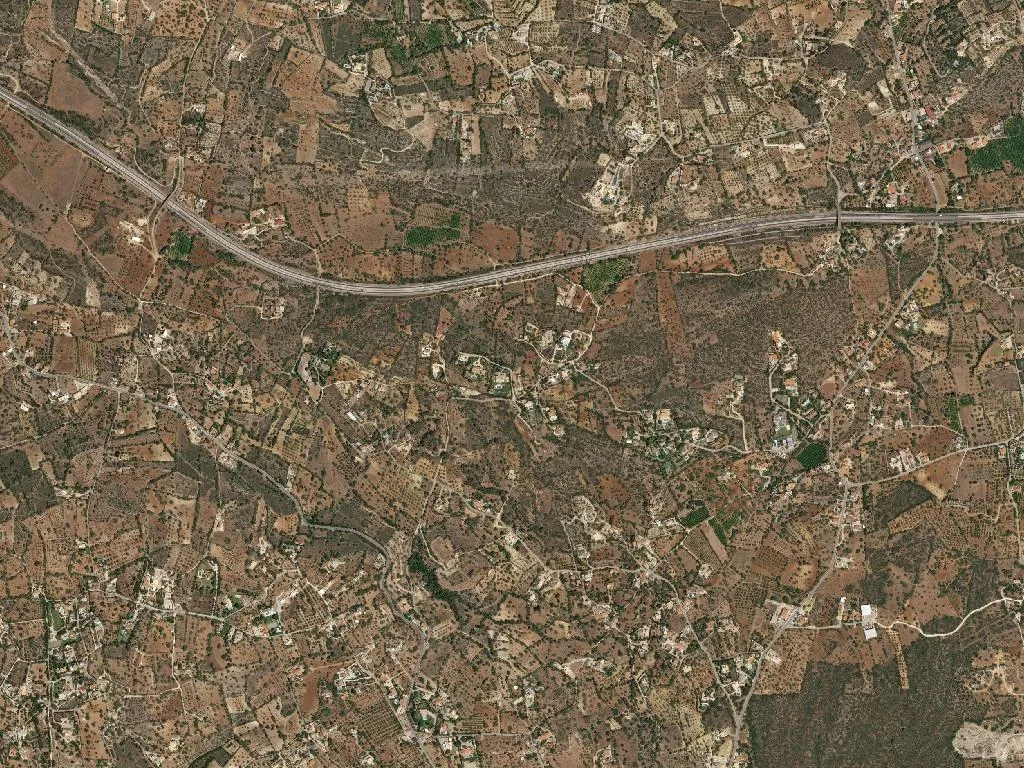
The 19:30 bell at São Faustino is the same bronze that once made grenades. Cast in 1837 from Civil-War scrap, it still rings across the limestone ridge at 144 m, the highest point in Loulé council. Below, the Atlantic shows as a steel-blue blade between ravines; above, carob branches scratch the sky like blackletter on vellum.
Stone & Bread
What looks Tudor is earthquake patchwork. After 1755 levelled the original 1542 church, villagers rebuilt with deeper buttresses and a gilt high-altarpiece hauled uphill from Faro by ox cart. The side altar keeps a 1620 Madonna whose procession once implored rain during the drought of 1929; her face is still freckled with dust from that July parade.
Three windmills survive from the 1930s. Only Cerro da Cabeza’s turns—briefly each September when volunteers grind carob pods into flour fine enough for crepes. Beneath its sails you can finger the wooden socket where an olive-wood pole once swivelled the canvas into the nortada wind.
The 1783 granite fountain—four spouts for the royal road between Loulé and the coast—still runs at a constant 14 °C. On 15 August 1974 the parish clerk read aloud here the decree that finally gave tenant farmers their houses. Builders now queue at dawn to fill plastic drums before heading seaward to construction sites.
Taste of Outcrop & Ocean
Maria Cecília’s two-day-old bread soaks up lamb stew at O Botequim, a room the colour of burnt sugar. Wild asparagus, snapped from the verges of the CM520 in March, arrives folded with black-pork belly and corn-crumbs—the only crumb that won’t collapse into the broth.
Açorda de marisco is ladled next morning: razor clams driven straight from Olhão dock at 06h, coriander snipped from a backyard terracotta, and Alentejo sourdough because Boliqueime loaves are judged too fine to survive the boil. The recipe followed the Quarteira women who came to pick carob in the 1950s, balancing breakfast baskets on their heads.
António Manel’s goat cheese, wrapped in fig leaf and cave-aged for forty days, sells out by 09h at Loulé market. Arrive earlier and O Forno bakery will sell you date fritters glazed with honey from Rosalgar hives; the bees graze on carob blossom, giving the comb a faint cocoa note like roasted nibs.
Ridge-Line Footpaths
The 4.2-km Mill Trail starts by the bandstand, climbs the mule track once used for carob sacks, and ducks beneath cork oaks tattooed with 1974 whitewash. At km 2 the Mina well still holds water in August—Faro mountain-bikers pause here to refill soft flasks before pushing on to the calçada that crowns Cerro do Bando.
From 180 m you can read the coast like a map: Quarteira’s breakwater to Armação de Pêra’s sand ribbon. Resident numbers—103 per km²—double when grandchildren fly in from Lyon or Toronto, reclaiming grandparents’ houses for July.
Twelve trains a day call at the single platform. The first to Lagos leaves at 06:42, the last returns from Faro at 22:38. Mr Aníbal still answers his mobile for the only taxi; he drove a custard-yellow Mercedes 240D in 1987, now a white Dacia with the same frayed business card wedged in the windscreen.
When the 20:05 whistle fades, cane chairs scrape across the churchyard for the “conversation hour” that lasts until the television news flickers on at 21h. Then it is only the tide-clock of limestone scent—iodine rising on the wind to announce high water twelve kilometres away.