Full article about Loulé São Clemente: almond-scented alleys & cork-oak sierra
Loulé São Clemente, Faro: wander medieval lanes, climb sandstone towers, taste medronho firewater and thyme-scented honey beneath cork-oak sierra.
Hide article Read full article
Loulé, São Clemente: where the mountain exhales over white lime
Sound arrives before sight. A metallic murmur, almost rhythmic, drifts up from the stalls of the covered market – brass scales clanking, knives snapping against walnut-dark boards, Algarve voices bargaining in an accent that hoards every vowel. Saturday light slants through wrought-iron gates and paints gold rectangles across the stone floor. Between the pillars you find sun-withered figs that still bend in the hand, coriander bunches dripping well-water, thyme-scented honey and tiny bottles of medronho firewater that taste of strawberry-tree berries and the surrounding sierra.
Three towers, seven centuries of lime
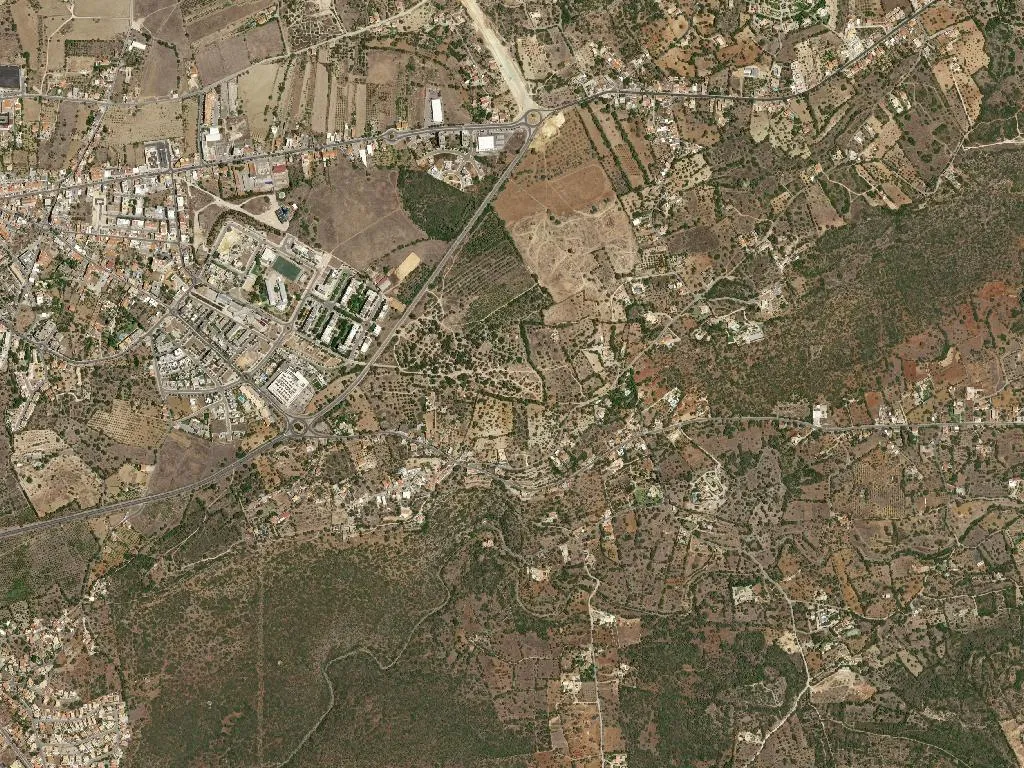
Loulé sits 233 m above sea level – high enough for the air to shed the salt carried from Quarteira, low enough to keep the scent of almond blossom. The name probably comes from the Arabic al-Awlyâ, “the saints”, a souvenir of the Moorish period that lasted from 715 to 1249. What remains of the fortress is three sandstone towers and a short curtain wall. Climb the worn spiral: terracotta roofs tessellate below, a dark-green carpet of cork oak stretches north, and, to the south, a sliver of Atlantic blue glints like polished steel. Below the keep a Roman conduit still feeds a tepid pool; step into the tunnel and the temperature drops ten degrees, the hush thick as masonry.
A Manueline door and a floor that speaks
The medieval quarter threads itself into alleys barely shoulder-wide. The parish church of São Clemente, begun in the thirteenth century and dressed up in the sixteenth, mixes Gothic ribs with Manueline knots: look for the stylised seaweed carved around the south portal. Inside, nineteenth-century panels by the Algarve painter José Francisco da Cruz flicker by candle-light. A block away the former Convento da Assunção (today the town museum) guards what most consider the region’s finest Manueline doorway – stone rope twisted into reef knots, still the colour of burnt honey against freshly limewashed walls. Oak floorboards sigh beneath your feet; the air smells of beeswax and centuries.
Confetti, corsos and a decade of silence
Loulé without Carnival is like the serra without cork oak. The parade began in 1906 and is mainland Portugal’s oldest; Salazar’s regime cancelled it between 1937 and 1946, so when it returned the explosion of papier-mâché and brass bands felt almost revolutionary. February’s streets – otherwise paced by the parish’s 17,930 residents – flood with samba drums and sequins, but the liturgical calendar is equally dramatic: the Festa de São Clemente on 23 November, the barefoot Procession of Senhor dos Passos at Easter, and May’s Festa da Mãe Soberana, one of the Algarve’s biggest pilgrimages, whose brass bands you hear long before the statue appears.
Cork, kites and copper cataplanas
North of town the Loulé ridge climbs to 400 m, its flanks stripped each decade by men with curved axes. The Fonte Benémola walking trail follows the Quarteira stream through a micro-reserve of willow, ash and kingfishers. Southwards the landscape collapses into the tidal lagoons of Ria Formosa; storks and spoonbills swap places with hoopoes and booted eagles. Between the two lie orange groves and olive yards whose fruit is pressed into DOP-certified oil, peppery and green as cut grass.
At the culinary crossroads, order a cataplana de marisco: clams, prawns and monkfish steamed inside a copper clamshell whose clasp concentrates Atlantic iodine into every grain of rice. Dom Rodrigo – threads of yolk, sugar and almond wrapped in coloured foil – translates the spring almond blossom into something you can spoon. Finish with xarém, a maize porridge enriched with prawns and coriander, and you have tasted the Algarve’s holy trinity of wheat, garlic and cilantro.
The anchor in the stone
Late afternoon, when the sun has slipped beyond the castle walls and turned them rust-orange, Loulé gathers itself. Iron shutters rattle down on Rua da Praça. In Largo da Matriz the stone St Clement still holds the anchor that symbolises his martyrdom; his shadow slides across the cobbles until it almost kisses the market façade. The final sound is not a church bell but the sierra wind descending through the three remaining towers, carrying with it the scent of cork dust, warm earth and toasted almond.