Full article about Marmelete: where medronho fumes lace mountain air
Abandoned terraces, glowing stills and Maria’s kale: daily life in Algarve’s hill-cooled hamlet
Hide article Read full article
The perfume of fermenting medronho berries drifts uphill before the village itself appears. It clings to laundry pegged on verandas and drifts into the car as the EN266 swings past kilometre-marker 34, where the cork-oaks thin out and the eucalyptus takes over. Suddenly the road is lined with single-storey houses the colour of sun-bleached cardboard, their doors painted the precise indigo once reserved for swallow wings, terraced so close to the slope they look afraid of the green drop below.
A geography of subtraction
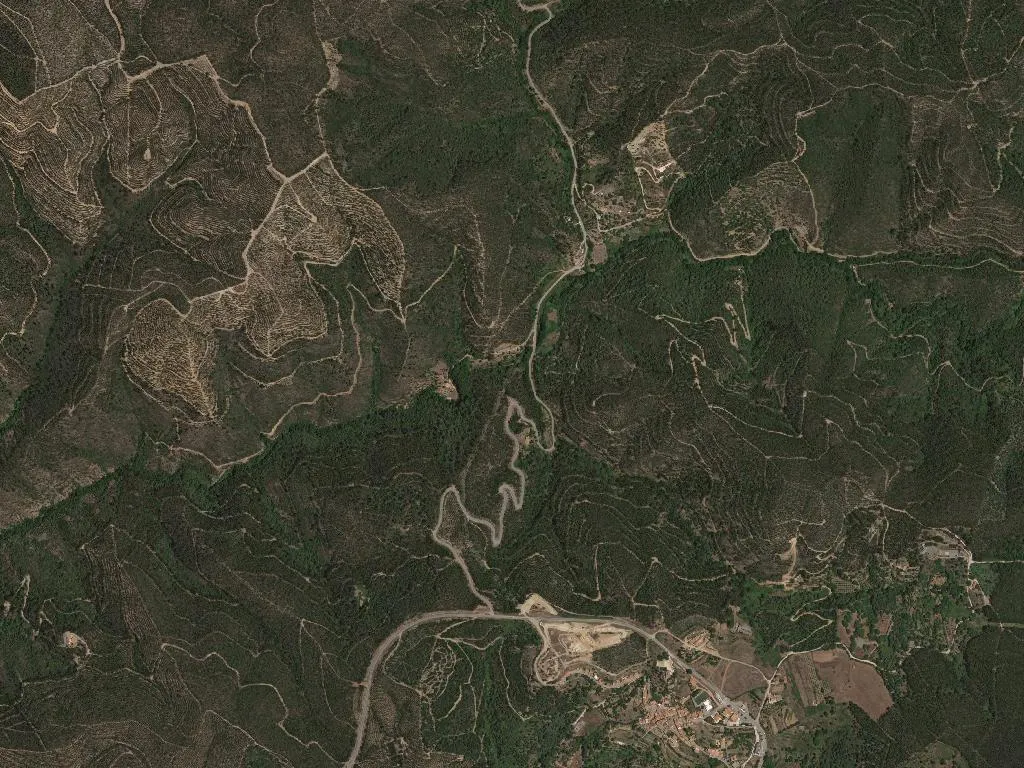
Marmelete sits officially at 233 m, but that number is meaningless on the ground: everything is measured in gradients. The Atlantic is only 52 km west, yet the sea is gossip rather than view; what arrives here is salt carried on westerlies, not coaches of weekenders. Of the 698 names on the parish roll, 204 now sleep in Portimão building sites or Lisbon call centres. Those who remain either have retirement bus passes or school bus passes: 278 pensioners and 60 children who leave for Monchique at 07.30 regardless of frost. The primary school closed three years ago; its classroom is now a day centre where men who once distilled legally beside their fathers doze over Domino cards.
Abandonment, though, has a cut-off point. Old irrigated terraces around Casca, Vale de Lama and Cortelha still shoulder oranges so sharp they bite back. The local bee – small, black, short-tempered – produces honey that granulates within weeks, smelling of toasted rockrose. And between October and January the strawberry-tree fruit ferments fast enough to keep copper stills in Chabouco, Tapa and Barão glowing round the clock, turning summer sunlight into a clear, peppery spirit that burns like a dare.
What lunch looks like when no one is watching
There is no restaurant. There is Maria’s grocery: three Formica tables, the lunchtime news muted on a wall-mounted TV, and whatever pot Maria feels like lifting from the stove – usually kale soup thickened with butter beans, a slab of black-pork shoulder grilled over cork-oak embers, and, if you outstay your welcome, a wedge of bolo de tacho, the steamed clove-and-cinnamon cake that Monchique grandmothers make between bread batches. Chouriço cures for three weeks in the chimney, painted with local sweet paprika and enough garlic to keep the doctor, the priest and the tax man away. If you want fresh goat’s cheese you hand over an empty 75 cl bottle; Sr Aníbal fills it with curds and charges either a litre of home-pressed olive oil or a crisp twenty-euro note – promises are not legal tender here.
On the third Monday of each month canvas awnings half-fill the square. Zé Manel brings bundles of acacia for kindling, Rosa sells mountain honey by the half-kilo, Nando sets out six bottles of medronho – the rest of his annual production is already pledged against the rent on his two hectares of scrub. By eleven o’clock everyone is gone; the Central café returns to its default soundtrack of frothless milky coffee and a toaster that pops like a starting pistol.
Trails the ordnance survey forgot
During the dictatorship and for a decade after the 1974 revolution, the footpaths down to Aljezur and across to Odemira moved contraband: sugar, coffee, even live cattle. Men left at owl-light, navigating by call rather than torch; wives lit their hearths at odd hours – a “clear road” flare to anyone watching from the opposite ridge. The donkeys are gone but their hoof-scars remain in the dried clay; if you scramble up beyond the signed PR4 to the Piscos waterfall you’ll find a polished slab where runners waited for the GNR patrol to pass.
These same paths are now the mountain’s only pressure valve against the trainered invasion from the coast. Officially the route turns back at the old watermill, but the unsigned fork that climbs to the Planalto da Tapa gives Atlantic views on any day the fog relents. Pack barley loaf and two bottles – one of water, one empty in case someone offers medronho in exchange for news from below.
Dusk is announced by a shift in the wind. Down the valley Sr Joaquim is already on his third firing of the still; cork-oak embers crack, copper hums, and the returning medronho smell answers the neighbour’s dog whose bark ricochets through the darkness like a roll-call. Under a single fluorescent tube a knife scrapes salt across cornbread, ready for whoever might still be out there. The serra doesn’t close for the night; it simply lowers its voice, saving breath for tomorrow’s first copper glow.