Full article about Fuseta: Dawn nets & mercury tides in Olhão
Fuseta, Olhão—watch trawlers unload at sunrise, hop 5-min ferries to empty Ilha da Fuseta, taste lagoon razor-clams in whitewashed lanes.
Hide article Read full article
Dawn on the Quay
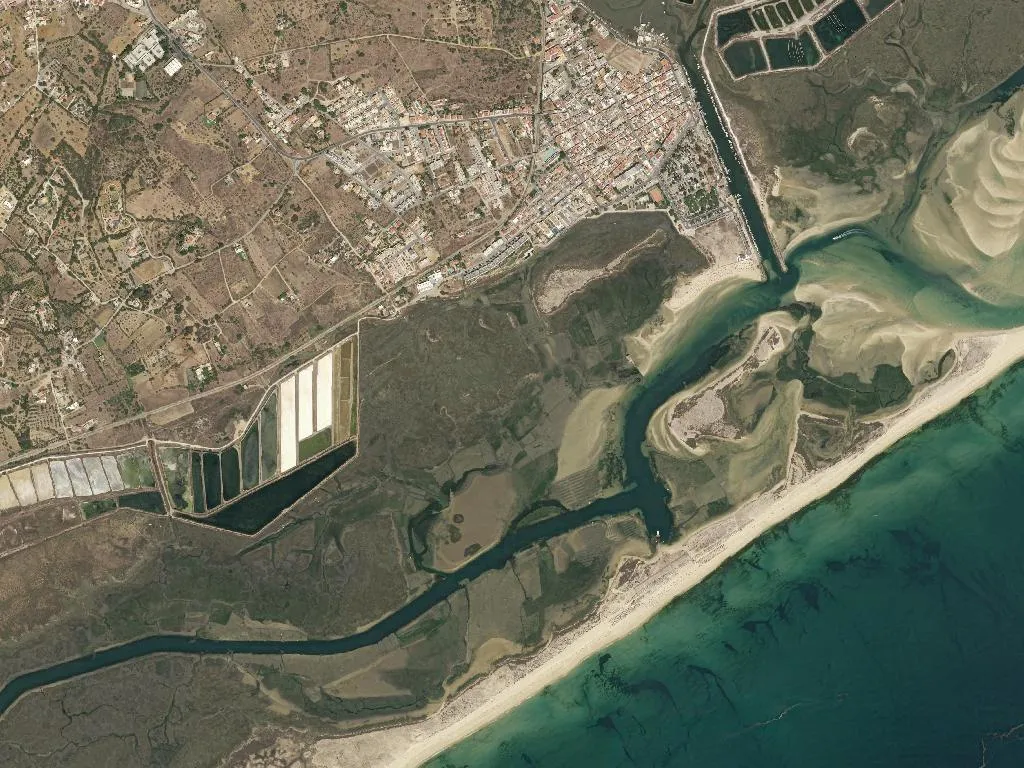
The sun has yet to warm the sand when the first trawlers nose back into harbour. Ropes rasp against rust-streaked gunwales, polystyrene crates thud on stone, a gull folds its wings and spears the water. Fuseta wakes with the tide—always has. Perched a mere 1.7 m above sea level, the village inhales and exhales on a lunar rhythm, shoulder-tight against the Ria Formosa Natural Park as if the lagoon were an older sibling it refuses to leave.
The settlement spreads low and compact—150.9 hectares of cobbled lanes just wide enough for a donkey and the south-easterly that slips in without knocking. No Unesco plaques, no coach parks, no baroque balconies. What you notice instead is the light of Portugal’s eastern Algarve: a fierce, unfiltered glare that makes the whitewash glow like bone at midday and exposes every cracked tile before dusk forgives it.
Salt-water, Sandbar, Island
At the wharf, small ferries swap mainland for island in five flat minutes. The lagoon is bottle-green, eelgrass combing the current; terns hover without moving a feather. On the far side, Ilha da Fuseta unrolls—kilometres of blond sand anchored by prickly pear and dwarf palm. The Atlantic side is cooler, bluer, changeable. Late afternoon turns the channel into mercury: sky and water soldered along a molten seam.
Among the 4,633 permanent residents the sea still writes the CV. Men in wool caps mend purse-seines on the pier, fingertips knotting nylon faster than most people type. At the daily market down Avenida da República, women in housecoats sell razor-clams and baby cuttlefish, their hands smelling of brine and iodine. Ask one of the parish’s 1,412 pensioners and they’ll recall when the cannery opposite the church employed half the street, and tuna arrived in such shoals you could walk the decks on silver backs.
Blossom and Bouillabaisse
Head inland past the last house and you hit the rectilinear citrus groves that earn the Algarve’s DOP stamp. For eleven months the fragrance is polite; in March the air turns thick as custard with orange-blossom. Back in the harbour-side tascas, menus are written in chalk for good reason. Razor-clam rice requires nothing but itself—perhaps a breath of coriander, a slice of chilli, the estate-bottled olive oil that locals buy refilled from five-litre drums. If the boats were unlucky with bream, the stew becomes conger; if octopus is plentiful, it arrives braised in its own purple ink. The rule is simple: lunch knew the ocean before breakfast did.
Tide Clock
The 227 holiday lets—most self-catering flats with roof terraces and purple bougainvillea—fill with families who want Atlantic surf without the instructor megaphones. Even in August you can lay your towel a ten-minute walk from the ferry and hear only lark-song. Population density is 131 people per km² on paper; in practice it feels like the place has mastered social distancing by instinct.
Dusk is the village letting out a long breath. The last ferry unloads, outboards tilt, gulls settle on the breakwater. What remains is a hush of water sucking at pier pilings, the metallic clink of a winch, reeds brushing shins. The night smells of salt and living mud—not fetid, but fertile, like a wet garden under moonlight. A heron lifts from the opposite bank, a white comma against the indigo. Tomorrow the sun will scorch the same walls, the same ropes will creak, the same tide will shoulder the sand. In Fuseta, repetition is not monotony; it is ballast.