Full article about São Bartolomeu de Messines: rust-red trails of the Algarve
Walk crimson sandstone paths where poet João de Deus shaped Portugal’s ABCs amid almond groves.
Hide article Read full article
The earth announces you first
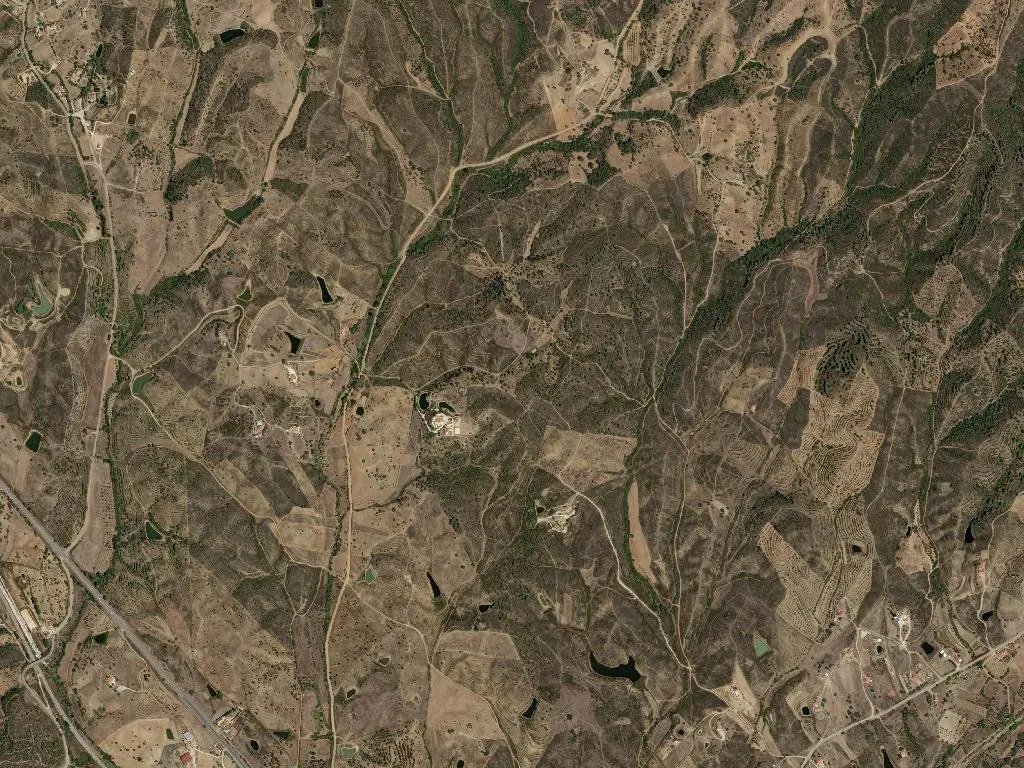
The soil stains your soles the moment you step out of the car. It is the colour of rusted iron, a red so saturated it seems to throb when the early sun skims it. Geologists call the rock beneath it “Grés de Silves”, a Triassic sandstone that bleeds into every footpath, every field margin, every pair of walking boots that passes through São Bartolomeu de Messines. The pigment clings like a watermark, a reminder that this 240 km² parish – the largest in the Algarve – has been a working surface since the Upper Palaeolithic. Flint flakes from Gregórios, Cumeada and Vale Fuzeiros are kept in Silves museum to prove it; the rest is still under your feet.
A poet who taught Portugal to read
In 1830 the sandstone witnessed the birth of João de Deus, the pedagogue-poet who would later wrench Portuguese literacy out of church vestries and into nursery classrooms. His Cartilha Maternal turned the alphabet into nursery rhymes and sold 300 000 copies within a decade – no small coup in a country where half the population still signed with a cross. The house where he first inhaled the smell of wet red earth is now a two-storey museum: whitewashed walls, original floor tiles, the desk at which he underlined vowels in crimson ink. Outside, a 2.4-km circular walk leaves from the smallpox-victim chapel of Nossa Senhora da Saúde, crosses almond terraces and returns along the railway cutting that once carried the poet to university in Coimbra. Download the free audioguide; it times the gusts of rosemary and rockrose so precisely you can almost hear nineteenth-century children reciting “A for Ave”.
Castle that vanished, church that stayed
The Arabs were here first. An 11th-century customs ledger from the Almoxarifado of Silves lists “Mussiene” as a fortified hamlet supplying figs and iron to the coast. The castle was already gone by the time the parish charter was signed in 1539, its stones cannibalised for field walls. What survives is a constellation of small churches – Matriz with its Manueline door, Santa Ana smothered in 18th-century azulejos, São Sebastião whose bell is still rung by pulling a rope through a side window. Most unexpected is the parish council offices: a 1982 post-modern grid of concrete and coloured glass by José Veloso, exhibited at Portugal’s first national architecture biennale. It sits beside the daily market like a Rubik’s cube dropped among fig crates.
Guerrilla shadows in the hills
North of the village the sandstone ridges climb to 349 m at Rocha de Messines, a cliff riddled with cisterns that once watered Moorish orchards. In the 1830s these same hollows sheltered José Joaquim de Sousa Reis, nicknamed “Remexido” – the Shaker – a royalist guerrilla who fought the liberal army with fast mules and faster disappearances. Today the ridge is laced with irrigation pipes feeding the Arade and Funcho reservoirs; the valleys that echoed with musket shot now mirror sky and citrus terraces. Hire a kayak at the Funcho dam and you will drift over drowned olive groves where Iberian lynx prints have been found pressed into the silt.
Almond, fig and the sweets that outlasted Empire
Order coffee in any café and the counter display becomes an edible family tree. Folhados de Messines – puff pastry glued with pump-king-coloured squash jam – sit beside estrelas de figo, five-pointed stars of dried fig and hand-peeled almond bound with sugar and cinnamon. They are the slow-food answer to the pastel de nata, made in kitchens where the radio still plays the afternoon fado. Wash them down with a thimble of medronho, the strawberry-tree firewater that tastes like grappa on holiday, or ask for a glass of local red: the Algarve DOP may officially stop at Silves, but growers here bottle under the IG Algarve label and pour for anyone who pronounces “Trincadeira” without wincing.
Lynx and the long now
Turn off the main road just before the white-on-blue sign that reads “Barragem do Funcho” and you reach the Iberian Lynx Breeding Centre, the only one outside Andalucía. From the gate you will not see a cat – the enclosures are buried behind berms to keep the animals wild – but you can book a behind-the-scenes tour and watch CCTV of cubs learning to pounce on rabbits fired from mechanical launchers. The centre is compensation for the Odelouca dam further west; its existence means the red earth now grows lynx as well as citrus. Between releases, the parish has quietly expanded its accommodation stock to 120 rural beds, most of them converted haylofts with plunge pools and fibre-optic. The 19th-century station still stands 1 km west of the centre; four trains a day rattle through on the slow line from Lagos to Faro, carrying commuters who read João de Deus on their phones.
By late afternoon the sandstone cliff above town glows the colour of Madeira held to candlelight. Sparrows quarrel in the gutters of the mother church; the air smells of hot schist, bruised rosemary and, somewhere out of sight, figs caramelising in sugar. You leave with the dust on your shoes still pulsing, a portable reminder that Messines does not do spectacle – it does duration.